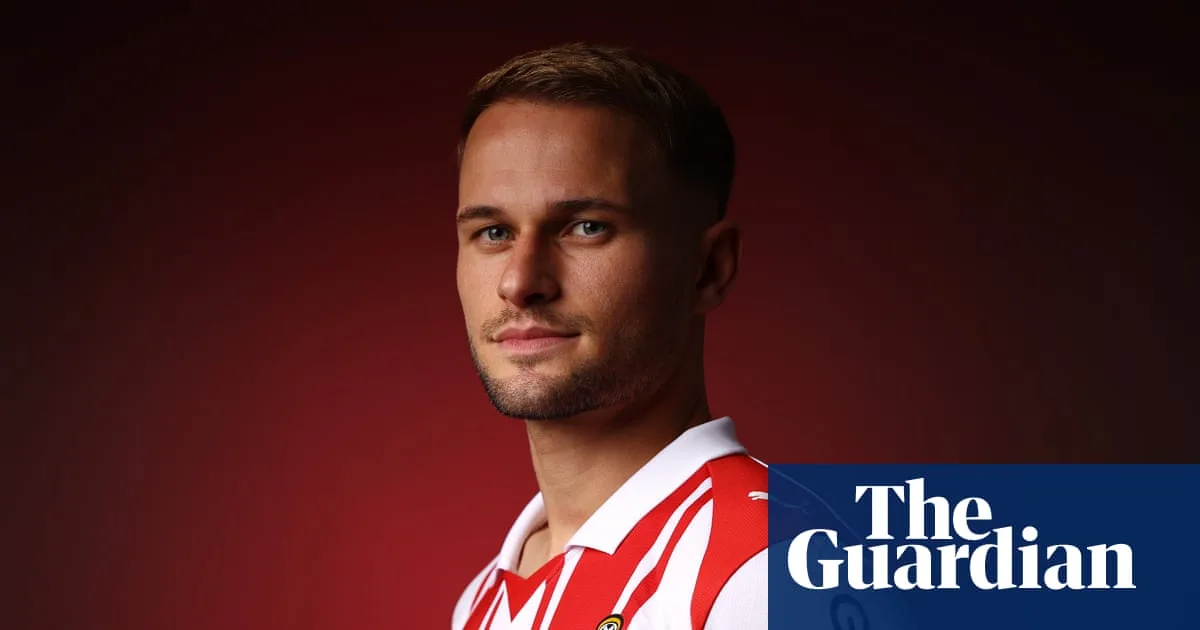
Southampton midfielder Léo Scienza has revealed how he overcame profound personal tragedy and professional setbacks to establish himself in what he describes as football's most challenging league. The Brazilian's journey from the depths of despair to Championship success reads like an extraordinary script, yet it's the reality of his turbulent career.
A Life Shattered on His Birthday
Seven years ago, Léo Scienza's world collapsed completely. On his twentieth birthday, his father passed away, plunging the young footballer into a darkness he struggled to escape. "You know when everything is bad and nothing makes sense any more?" Scienza reflects. "My life had no meaning any more."
The Brazilian midfielder spent two months locked in his room, having lost the will to live. "After he died I just wanted to stay in my dark room doing nothing," he admits. "I didn't want to see anyone, I didn't want to talk to anyone."
From Brazilian Rejection to Swedish Struggle
At the time of his father's death, Scienza was facing rejection from major Brazilian clubs, playing for meagre sums of £20-£40 per game with fading hopes of professional success. Seeking escape, he accepted an offer from agents promising a trial with a Swedish top division club.
Instead, he found himself at Fanna, a fifth-tier club approximately 80 kilometres north of Stockholm. "I went to Sweden with all the positivity in the world, with many dreams," Scienza recalls. "But it was shit. I went through every possible difficulty you can imagine."
The living arrangements proved inadequate, and payment issues left him struggling to afford basic necessities. "My dream of being a professional football player turned into working to have something to eat the next day," he reveals.
Confronting Depression Through Football
Scienza's difficulties in Sweden plunged him back into depression. "I cried almost every day," he confesses. Yet remarkably, it was during this challenging period that he began to rebuild himself. "Even though the league was awful I started to pick myself up," he says. "As difficult and complicated as that moment was, I learned and grew up a lot."
The midfielder credits psychology with helping him navigate his mental health challenges. Having experienced panic attacks from an early age following the death of a godfather, he maintains regular therapy sessions. "My psychologist is one of the most important people in my life," Scienza emphasises. "You need someone to talk to, to let your feelings out."
The Remarkable Turnaround
Despite the adversity, Scienza managed to score ten goals during his season in Sweden's fifth tier, attracting attention from German club Schalke. His departure from Sweden was dramatic – he left his accommodation in a hurry with just a suitcase, relying on a friend's help to escape.
After two years with Schalke's B team without breaking into the first team, he faced further uncertainty. "I was afraid to go to the fourth, fifth or sixth division in Germany," he admits. "It's amateur football, you can't make a living from it."
His career finally gained momentum at Ulm in Germany's third tier, where his twelve goals earned him a move to Heidenheim. There, he achieved something extraordinary – scoring a 95th-minute winner in a playoff game that kept Heidenheim in the Bundesliga.
Embracing the Championship Challenge
Southampton secured Scienza's services last summer for approximately £8 million, and he has embraced the Championship's unique challenges. "I am playing in the most difficult league in the world," he declares. "It isn't the Premier League. It's the Championship."
He describes the competition as "a bloodbath" characterised by intense physical demands. "There are very big clubs, all of them with a lot of investment," he observes. "There are two or three players on you all the time."
Scienza demonstrated his value to Southampton by scoring the winning goal against Sheffield United on Wednesday, and now prepares for Sunday's derby against Portsmouth.
Reflecting on the Journey
Looking back on his darkest moments, Scienza reveals he experienced suicidal thoughts. "My life had no meaning any more, I didn't want to be alive any more," he says of the period following his father's death. "But I chose to process what happened, accept that I have no control over it, and move on."
He now jokes that his career resembles that of a Football Manager player, acknowledging the unpredictable nature of his journey. When asked about potential international recognition, he responds with characteristic humility: "I know how many good players there are in my position. But my life has been so crazy that I answer that I don't know."
From the Swedish fifth tier to the Championship, through personal tragedy and professional uncertainty, Léo Scienza's story stands as a testament to resilience in football's demanding world.