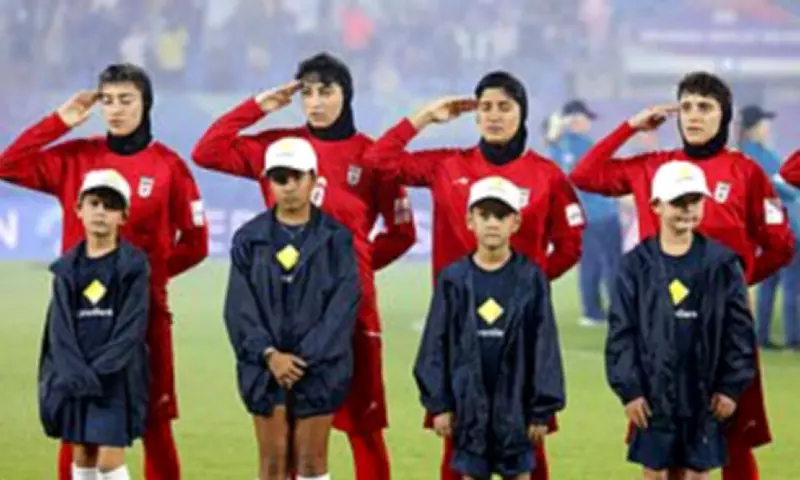
Iranian Women Footballers Secure Refuge in Australia Following Silent Protest
In a dramatic development, five members of the Iranian women's national football team have departed their training camp and successfully sought refuge in Australia. The players—Fatemeh Pasandideh, Zahra Ghanbari, Zahra Sarbali, Atefeh Ramazanzadeh, and Mona Hamoudi—are now confirmed to be in a secure location under the protection of Australian authorities.
Political Backlash and Safe Haven
The office of Iran's exiled crown prince, Reza Pahlavi, disclosed that the athletes have been relocated to a safe house managed by the Australian Federal Police and other agencies. This move occurred earlier on Monday from their Gold Coast hotel, following intense scrutiny over their future. Pahlavi, an Iranian dissident based in the United States, announced on social media platform X that these "courageous athletes" have joined Iran's national Lion and Sun Revolution, referencing the pre-1979 flag symbolising resistance against the current regime.
The players' decision to seek asylum stems from a controversial incident during the Asian Cup hosted in Australia last week. They refused to sing Iran's national anthem before a match against South Korea, prompting Iranian state-controlled television to label their silent protest as "the pinnacle of dishonour" and "the height of shamelessness and betrayal." Presenter Mohammad Reza Shahbazi further warned on air that traitors should face harsh consequences, especially in times of war, escalating fears for the players' safety.

Escalating Tensions and International Response
Amid the fallout, the team's subsequent matches saw them singing and saluting the anthem against Australia and the Philippines, raising concerns that they were coerced into compliance. Their tournament concluded on Sunday night with a 2-0 loss to the Philippines in Queensland, after which approximately 200 protesters surrounded the team bus, chanting "let them go" as police intervened. Distress signals were observed from inside the bus, including one player performing the international SOS gesture by tucking her thumb and folding her fingers, indicating a plea for help.
Pahlavi emphasised that the players face "dire consequences" if they return to Iran due to their act of civil disobedience, highlighting an "ongoing threat" against them. The Australian government has faced mounting pressure to safeguard the team's welfare, with community groups urging Home Affairs Minister Tony Burke to intervene. Rana Dadpour, founder of women's rights group AUSIRAN, advocated for private meetings with the players before their scheduled departure later this week, warning of potential execution upon return to Iran.
Global Pressure and Future Uncertainties
While Australian officials have been cautious about public discussions to avoid further endangering the women and their families, Dadpour noted that international pressure has historically influenced the Iranian regime, citing cases where execution orders were delayed or halted due to global attention. The team, staying at the Royal Pines resort on the Gold Coast, remains at the centre of a diplomatic and humanitarian crisis, with calls for comprehensive support if they choose to remain in Australia.
This situation underscores the broader struggles faced by Iranian athletes under the current regime, blending sports with political defiance and human rights advocacy. As the world watches, the fate of these five footballers highlights the precarious balance between national loyalty and personal safety in authoritarian contexts.