England's Wembley Nightmare: Tuchel's Tactical Gamble Backfires Against Japan
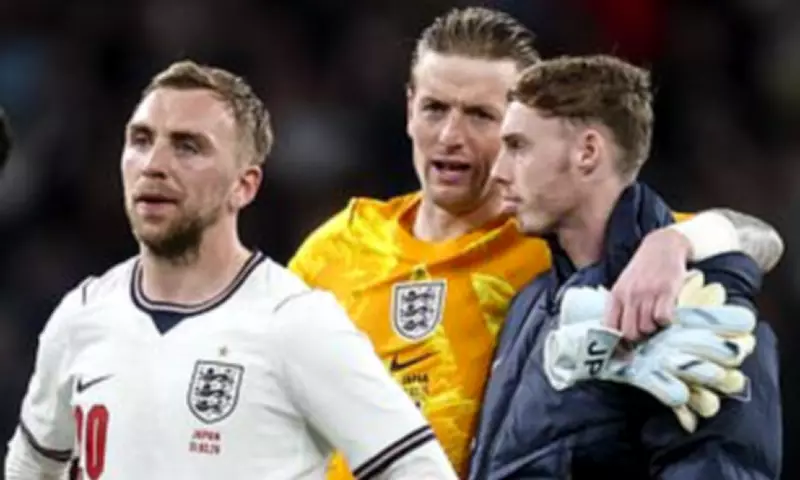
Fast, devastatingly clinical, and aesthetically pleasing football defined a magnificent evening for Japan at Wembley Stadium. For Thomas Tuchel's England, however, this was ninety minutes of pure torment. Most damningly, England largely orchestrated their own downfall as Tuchel's decision to abandon meticulously crafted plans in pursuit of experimentation and sophistication spectacularly misfired.
A Chaotic Forward Line Without Leadership
In the absence of the injured captain and talismanic centre-forward Harry Kane, a new attacking configuration was introduced. Yet, the positional ambiguity was palpable—at times, it was genuinely difficult to discern who was playing where. The consequence was arguably England's worst performance under the stewardship of the man entrusted with delivering the World Cup. They appeared sluggish, devoid of imagination, and painfully predictable, making them a dream opponent for Japan.
Only when second-half substitutions injected urgency and a set-piece threat, coinciding with Japanese fatigue, did England begin to pose any danger. By that juncture, Japan could easily have been three goals ahead. Alarmingly, England have now faced three teams from the FIFA top twenty under Tuchel's tenure, recording two losses and one draw—a deeply concerning trend.

An Unnecessary Formation Change
Just as England were finalising preparations for the upcoming World Cup in America, Tuchel inexplicably opted for a radical formation shift. Having navigated qualifying with a flawless record using a reliable 4-2-3-1 system, it was bewildering to see him discard it merely because Kane was unavailable.
The notion that Phil Foden would operate as a false nine proved illusory; in reality, it resembled a disjointed 4-2-4, evoking memories of the dismal 2024 defeat to Greece under interim manager Lee Carsley. Kane cannot feasibly play every minute in America, so Tuchel must decisively select and commit to a replacement—be it a traditional number nine like Ollie Watkins or dynamic runners such as Anthony Gordon or Marcus Rashford.
For much of Tuesday night, the system simply failed. Morgan Rogers, arguably England's premier number ten on current form, was deployed elsewhere, raising tactical questions. Tuchel's substitutions on the hour mark amounted to an admission of error, briefly improving England's display. This performance may even signal an extended absence for Foden from the national team, a regrettable but currently justified outcome given his form.
Loose Play and Costly Errors
This match served as a sobering rehearsal for the challenges of a World Cup in an oppressive American summer, where games may become pedestrian, lacking rhythm and incision. Success will hinge on the ability to accelerate play at critical moments and minimise mistakes—the very 'big moments' Tuchel emphasises.
Japan, buoyed by 7,000 ecstatic fans, demonstrated precisely how to execute this approach. Despite ceding 70% possession, they transitioned with blistering speed and precision when opportunities arose, nearly securing a two or three-goal lead before England's late set-piece rallies. Crucially, Japan avoided the costly errors that plagued England. Cole Palmer, arguably England's brightest attacker, conceded possession for the decisive goal, while Kobbie Mainoo's similar mistake allowed Japan to strike the crossbar just before halftime. Such profligacy in America will ensure an early tournament exit.
Squad Selection Dilemmas Intensify
Tuchel's loyalty to Jordan Henderson and Dan Burn, valued for their off-field influence, now faces scrutiny. With squad depth paramount, can England afford such luxuries? Compelling alternatives have emerged at Manchester United: Kobbie Mainoo has proven his international midfield credentials, and Harry Maguire's inclusion seems non-negotiable. Both, with minimal domestic fixtures remaining, offer superior quality without fatigue concerns, making their cases compelling.
Henderson, turning thirty-six during the tournament, was absent after a turgid display against Uruguay, while Burn received merely nine minutes across two games, deployed only in a desperate aerial search. Notably, only Maguire received rapturous Wembley applause upon introduction—a telling contrast.

Surprise Defensive Contender Emerges
Ben White, a late squad addition, has bolstered his World Cup prospects with two progressive performances, despite being booed by a minority at Wembley—an issue unlikely to persist among travelling supporters. Presuming Reece James is first-choice right-back, competition includes Tino Livramento, Jarell Quansah, Djed Spence, and Trent Alexander-Arnold. With Livramento likely included and Alexander-Arnold controversially overlooked, White's versatility as a centre-half grants him a genuine 'puncher's chance' for selection.
No Need for Panic Yet
England managers must navigate extreme post-match reactions, and Tuchel, a practitioner of daily meditation, is adept at maintaining perspective. While this camp has not been progressive, history offers solace: before the last World Cup, England's chaotic 3-3 draw with Germany sparked similar despair, yet they triumphed in Qatar with a six-goal opener. Tuchel can proceed knowing his core squad remains intact.
Barring injuries, England's likely lineup for the Croatia opener in Dallas on June seventeenth is: Pickford; James, Konsa, Guehi, O'Reilly; Rice, Anderson; Saka, Rogers, Gordon/Rashford; Kane. The foundation exists, but Tuesday's defeat underscores that tactical coherence and disciplined execution are non-negotiable for World Cup success.