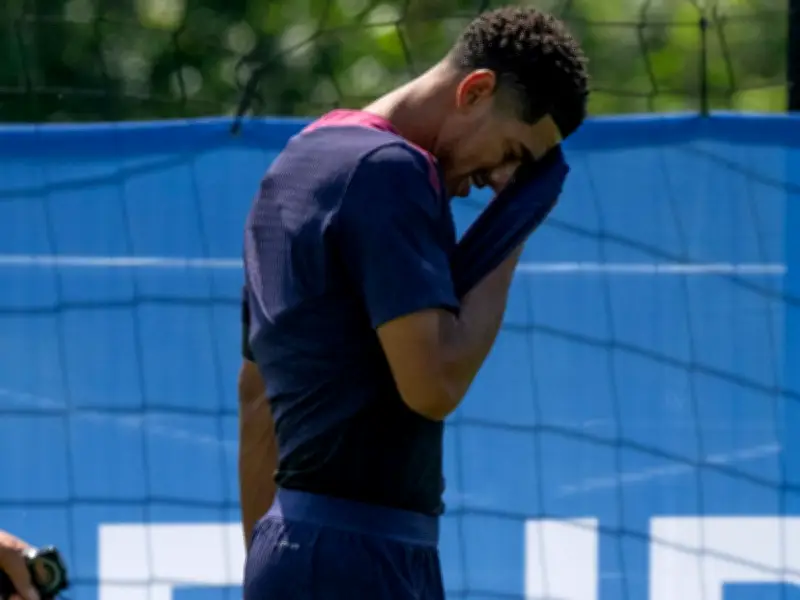
England are preparing for another punishing examination in sweltering heat when they take on Norway in the scorching conditions of Miami, where players could shed the equivalent of eight pints of perspiration. Thomas Tuchel's squad will fight for a semi-final berth to arrange a clash with either Argentina or Switzerland in the World Cup.
Previous Heat Challenges
The Three Lions have already endured testing circumstances at elevation, having squeezed past Mexico 3-2 in baking temperatures at the Azteca Stadium and 7,350 feet above sea level. Miami presents lower altitude, but offers no respite from the brutal weather.
The US National Weather Service has issued a heat warning ahead of the fixture, cautioning that the blend of temperature and humidity could drive the real-feel reading to a stifling 43 degrees. Compounding the difficulty, a cloud of Saharan dust swept across the Atlantic earlier this week and has triggered health warnings - especially for those with allergies or breathing problems.
Potential Sweat Loss and Physiological Impact
Should the quarter-final extend to extra-time, players could shed approximately two litres hourly - meaning 120 minutes equals roughly four litres, or eight-and-a-half pints. Speaking to the outlet, Dr Foster, a lecturer in Environmental Physiology at King's College London, explained: "At the kind of workloads expected in elite outfield football players, it is impossible to consume enough fluid to fully prevent the impact of high heat and humidity. This will start to manifest in a reduced performance as the match progresses."
"At the start of the match, their deep body temperature will be 37.5 to 38C. Toward the end of the match, this will likely approach 39.5-40C in those who work the hardest. Getting to such a high temperature rapidly increases the perception of fatigue, as your body is desperately trying to stop you from exercising and therefore producing heat. Heart rate will increase by about 20-40 beats per minute, and water loss through sweating will be very high, approaching two litres per hour."
Effects on Muscles and Electrolytes
Dr Foster continued: "Your muscle temperature will be higher, meaning they will consume energy stores faster. High humidity also accelerates dehydration, which ultimately means your heart has to work much harder to keep blood pressure stable. Competing at a higher heart rate makes the exercise feel harder, causing an earlier onset of fatigue and ultimately an impaired performance."
"Furthermore, we lose electrolytes in sweat, such as sodium, potassium, and chloride. These electrolytes are critical for nerve function, so if we lose them, we also lose muscular performance and accelerate the sensations of fatigue in the brain."
Cooling Strategies and Match Details
While hydration breaks continue to divide supporters, they offer crucial safeguards for players battling scorching conditions. "We need to use this time to aggressively cool the player so we can get their body temperature to return to normal levels," Dr Foster added. "The players could also ingest ice slurry drinks instead of cold water alone, as this will cool the body 5-10 times faster."
The fixture is scheduled to get underway at 10pm UK time - providing tonight's thunderstorm warnings don't cause any postponement - with the Three Lions reverting to their iconic all-white kit. They were compelled to don navy shorts against Mexico in the last round owing to FIFA's Equipment Regulations, which stipulate under Rule 6.2.1 that each piece of one side's strip must stand out distinctly from the corresponding garment worn by their opponents.