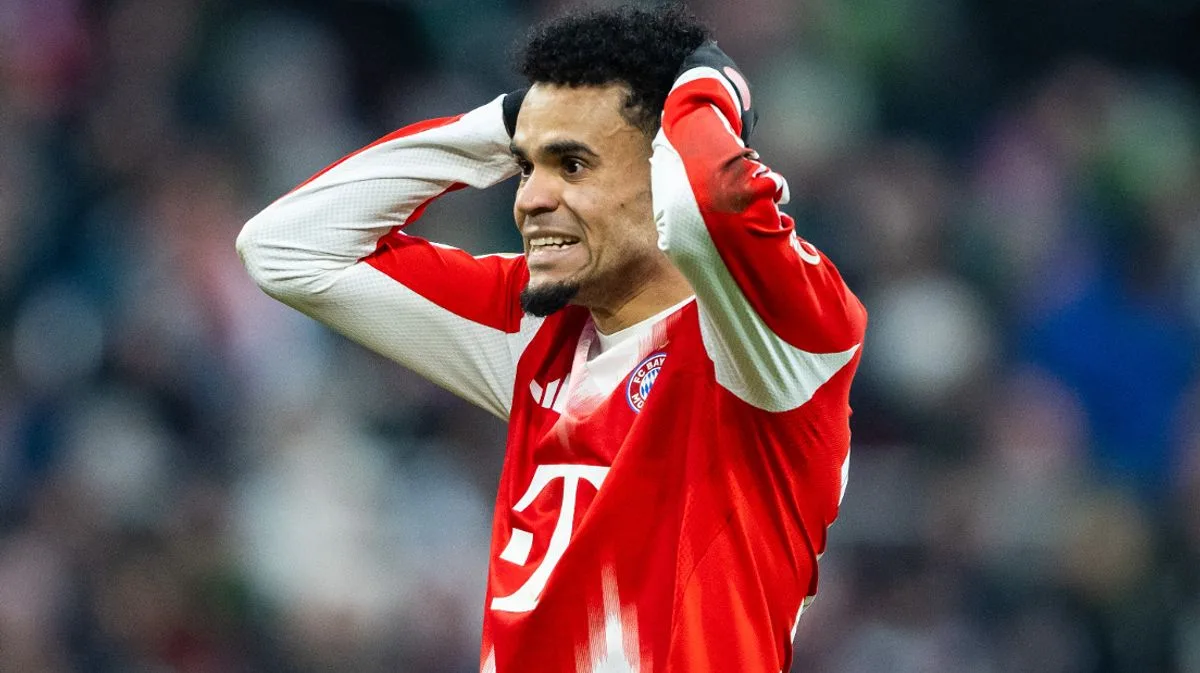
Luis Diaz's Contract Contains Unusual German Language Clause
Former Liverpool winger Luis Diaz faces potential financial sanctions from Bayern Munich due to a unique clause in his contract related to his struggles learning the German language. The Colombian international, who joined the Bundesliga giants in a £65.5 million transfer last summer, has been performing exceptionally on the pitch but encountering difficulties off it.
On-Field Success Versus Off-Field Challenges
Since his high-profile move to Germany, Diaz has delivered outstanding performances with 19 goals and 15 assists across 33 appearances in all competitions. His contributions have helped Bayern maintain their position at the top of the Bundesliga and achieve second place behind Arsenal in the Champions League's league phase.
However, the transition to life in Germany has presented significant challenges for the 28-year-old forward. Like all non-German speaking signings at Bayern Munich, Diaz is contractually obligated to attend language lessons two to three times weekly, as reported by German publication BILD.
Contractual Obligations and Financial Implications
The language requirement is not merely a suggestion but a formal condition written into Diaz's lucrative contract, which exceeds £200,000 per week. Failure to demonstrate adequate progress in German could result in financial penalties ranging from €5,000 (approximately £4,400) to €50,000 (approximately £44,000), with the exact amount dependent on his level of compliance.
"The most difficult thing for me and my family was, and still is, certainly the language," Diaz recently admitted to Sky Sports. "But I knew that I would fit in very well here, that I would contribute to the team's success – just as I had done before in Liverpool. So FC Bayern placed their trust in me, and I'm trying to repay that trust on the pitch."
Historical Language Struggles and Current Support Systems
This is not the first time Diaz has faced language barriers during his professional career. During his three-and-a-half-year tenure at Liverpool, he similarly struggled with English, often relying on Spanish-speaking teammates like Alexis Mac Allister and Darwin Nunez for communication assistance.
At Bayern Munich, Diaz initially benefited from Portuguese international Joao Palhinha, who speaks Spanish and acted as his translator upon arrival. However, Palhinha's subsequent transfer to Tottenham Hotspur left Diaz without his primary linguistic support.
Vice-captain Joshua Kimmich has since stepped into the translation role, noting: "We have a few guys who can speak a bit of Spanish. His English is also okay. So we're managing that as a team." Kimmich has witnessed numerous Spanish and South American players navigate similar challenges during his extensive tenure at the club.
Comparisons with Other International Players
Diaz is not alone in his linguistic struggles at Bayern Munich. England captain Harry Kane has also taken considerable time to adapt to the notoriously difficult German language. Speaking in December, Kane acknowledged he is "slowly understanding a bit more" but remains far from fluent, setting a personal goal of conducting a short conversation or completing his first interview in German by the season's end.
The inclusion of language clauses in player contracts reflects Bayern Munich's commitment to cultural integration and communication within their multinational squad. While such provisions are relatively uncommon in football contracts, they demonstrate the club's emphasis on ensuring players can effectively communicate both on and off the pitch.
As Diaz continues to excel in his footballing performances, his progress in German language acquisition will be closely monitored by club officials. The potential financial penalties serve as both motivation and consequence for his linguistic development, creating an unusual intersection between athletic performance and language proficiency in professional football contracts.