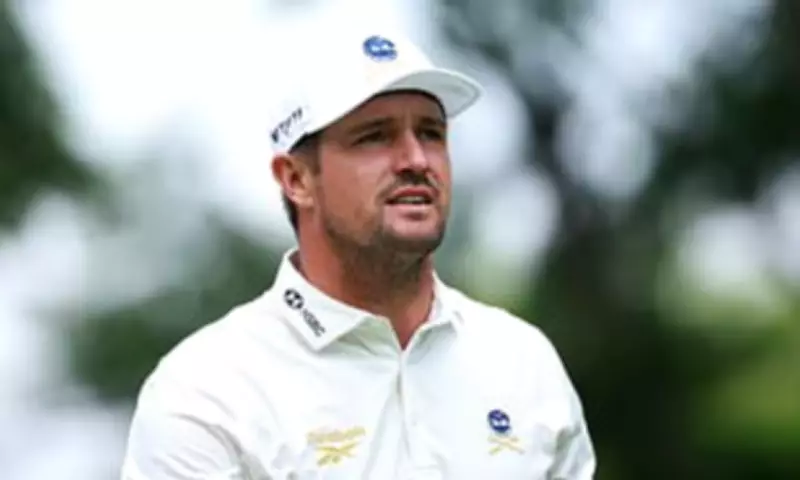
American golfer Bryson DeChambeau reportedly engaged in discussions about potentially departing the LIV Golf circuit during the recent Masters tournament, with sources indicating he is demanding a staggering sum of up to $500 million to commit his future to the embattled breakaway league. This development comes as the entire future of LIV and its rebel players has been plunged into serious doubt following reports that Saudi Arabia's Public Investment Fund (PIF) might terminate its enormously expensive venture.
LIV Golf's Precarious Financial Position
Last week, the stability of LIV Golf was thrown into question amid emerging reports that the Saudi Arabian Public Investment Fund, which has injected nearly $6 billion into the controversial project since 2022, could be preparing to call time on its costly investment. Tour executives were urgently summoned to an emergency meeting, while multiple player agents confessed to the Daily Mail that they were completely in the dark regarding whether the venture was on the brink of collapse, particularly given the ongoing geopolitical tensions in the Middle East.
LIV Golf chief executive Scott O'Neil has publicly stated that the league possesses sufficient funding to operate through the conclusion of the current season. However, he acknowledged that survival beyond the coming months remains uncertain, casting a shadow over DeChambeau's own future with the circuit after 2026.

DeChambeau's Contractual Situation and Demands
Bryson DeChambeau is currently in the final season of his existing LIV Golf contract, a deal originally worth a reported $125 million when he defected from the PGA Tour on a four-and-a-half-year agreement. According to detailed reports from The Athletic, DeChambeau and his management team utilized portions of Masters week to conduct meetings with various golf officials, exploring his potential options should he decide to exit LIV Golf.
The Athletic further reveals that DeChambeau is understood to expect a monumental financial package, potentially reaching $500 million, to re-sign with the Saudi-backed league. This astronomical demand surfaces in the wake of several high-profile defections from LIV, including notable players like Patrick Reed and Brooks Koepka, who have already made their returns to the PGA Tour.
Alternative Career Paths and Negotiation Tactics
Interestingly, DeChambeau had a prior opportunity to abandon LIV earlier this year through the league's Returning Member Program but reportedly declined the option. During recent negotiations with interested parties, the 32-year-old golfer, already one of the sport's most recognizable figures, even referenced his highly successful YouTube channel as a significant asset.
DeChambeau has amassed over 2.5 million subscribers on the platform, with his videos garnering massive view counts, including challenges featuring former President Donald Trump (17 million views) and golfer John Daly (10 million views). He has previously hinted at the possibility of transitioning to a full-time content creator role and reportedly suggested in recent talks that he might be open to focusing solely on producing digital content while only participating in golf's four major championships.
Internal Optimism Amid Financial Realities
Despite the swirling speculation, there is said to be a degree of optimism within the rebel circuit that DeChambeau will ultimately choose to remain with LIV Golf. He was observed in conversation with CEO Scott O'Neil during LIV's recent event in Mexico City, fueling hopes of a continued partnership.
However, The Athletic reports that there is also a clear concession among league officials that the era of distributing contracts guaranteeing hundreds of millions of dollars to players is effectively over. This financial tightening coincides with DeChambeau's recent competitive struggles; he missed the cut at the Masters and subsequently withdrew from the final round of LIV's Mexico City event, citing a wrist injury.
The coming months will prove critical for both Bryson DeChambeau and LIV Golf as they navigate these complex financial negotiations and an uncertain future in the global golf landscape.