Chelsea's Crisis Deepens as Rosenior's Reign Nears Collapse
It would come as no shock if Chelsea and Liam Rosenior parted ways following their fifth consecutive Premier League defeat without scoring a single goal. However, the true responsibility for this debacle lies squarely with the club's hierarchy above him.
A Captain's Despair Symbolises Club Chaos
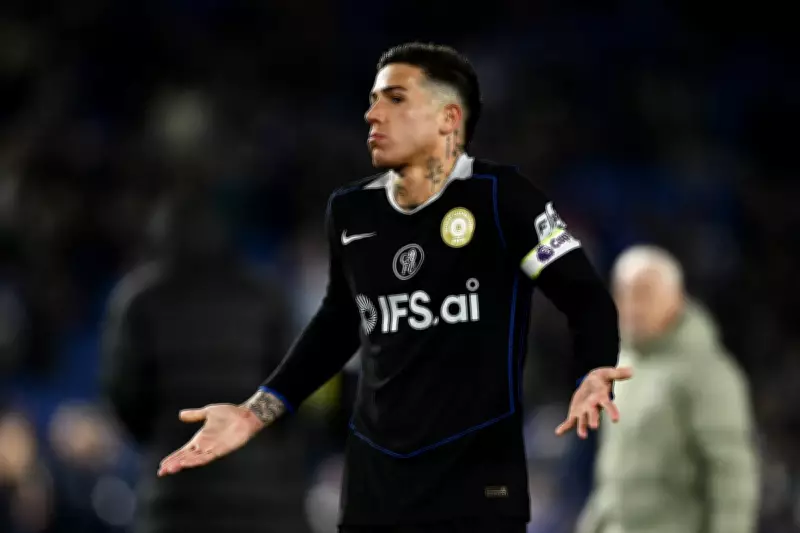
During yet another humiliating evening, all eyes were drawn to Chelsea captain Enzo Fernandez. Standing motionless before the away supporters, he could only shrug his shoulders in a gesture of utter helplessness. The fact that Fernandez wore the armband merely two weeks after being dropped from the first team only amplified the sense of farce surrounding a club torn apart by poor decision-making.
What was Fernandez actually doing there? What was he thinking? Perhaps this bizarre image perfectly captured the entire club's current state. As one Chelsea insider described it, this was "a sad night for the club." Most visibly evident is their dreadful performance on the pitch. What exactly is Liam Rosenior attempting to achieve with this team?

Players Failing to Respond to Manager's Vision
Whatever Rosenior's tactical plan might be, the players are clearly not responding. This dismal run has now culminated in the club's worst sequence of results since 1912, a staggering statistic that underscores the depth of their crisis.
As television cameras repeatedly focused on Behdad Eghbali and other members of Chelsea's leadership during the match, observers couldn't help but wonder whether they were deciding Rosenior's fate in real time. Few would be surprised if a club statement regarding his departure emerged imminently.
Rosenior's Post-Match Admission of Failure
Rosenior's defeated post-match interview with Sky Sports even resembled one of those classic exit speeches. He described Chelsea's performance as "unacceptable" and "indefensible," admitting he was "hurting" and that their display did not "represent this great football club."
Though these words appeared directed toward the players, by the interview's conclusion they amounted to a form of public self-flagellation. Rosenior couldn't even bring himself to look up, his body language speaking volumes about his shattered confidence.
Ownership's Failed Financial Experiment
Nevertheless, the primary focus should remain fixed on Chelsea's hierarchy. They bear ultimate responsibility for this catastrophe. They have transformed a beloved social institution into what resembles a reckless financial experiment.
They committed the common error of believing themselves smarter than the established norms of a 166-year-old sport, and reality has delivered a harsh lesson. This situation represents a rare football morality play about private equity attempting to exploit the sport for financial gain.
Questionable Managerial Appointment
The Rosenior appointment itself was merely the logical - or perhaps illogical - conclusion of this flawed approach. Widespread suspicion suggests he was largely selected because the hierarchy viewed him as someone they could control more easily than established managers.
This assessment might seem harsh toward a forthright young coach, but he now finds himself in the unfortunate position of receiving sympathy rather than respect. The situation has deteriorated so severely that this appointment threatens to destroy a promising coaching career entirely.
Lost Promise and Authority Issues
Despite jokes and fair criticism directed at Rosenior, he previously enjoyed respect as a promising young coach. Even leading Premier League clubs acknowledged his adeptness at pure tactical elements of coaching.
The fundamental problem, however, is that successful management requires all the additional elements beyond mere tactics. Rosenior has been found desperately wanting in these areas, with constant insider questions emerging about his authority over the squad. Players have reportedly felt he has "changed" significantly during his brief tenure.
Premature Promotion to Pressure Cooker
Again, this development should surprise nobody. A young coach has been prematurely promoted to what was already among the most pressurized positions in football, made infinitely more complicated by the ownership's "unique" approach to club management.

How can any team culture possibly develop when constant transfer turnover of young players prevents stability? Little wonder that established figures like Marc Cucurella and Cole Palmer might be contemplating their futures at Stamford Bridge.
Inevitable Acceptance of Poisoned Chalice
Despite these obvious challenges, Rosenior couldn't realistically decline such a prestigious opportunity. Already working within the ownership group, he would have recognized this chance might never reappear. So here they stand together at the disastrous outcome of multiple poor decisions - not merely a 3-0 defeat at Brighton, but a full-blown tailspin threatening their entire season.
Dark Clouds Gathering Ahead
Worse may still await Chelsea. Can anyone genuinely envision them defeating Leeds United in Sunday's FA Cup semi-final? What would the ownership do then? Internal sources indicate they have no prospective replacement lined up, raising serious questions about their strategic planning.
A crucial final point emerges from this debacle. The opposition themselves represented a fitting image of what functions successfully in modern football, particularly ironic since Chelsea's ownership initially sought to replicate Brighton's model.
Misunderstanding What Makes Brighton Successful
Typically, Chelsea got this wrong too. There's no value in attempting to import everything from Brighton if you cannot also implement their sophisticated analytics system. That's what genuinely makes their model work and fortifies their club culture.
One might question how Chelsea's ownership missed this fundamental element, but that would itself miss the larger point. This outcome - a comprehensive 3-0 victory for a Championship club against the last English champions - was entirely predictable. It represents the inevitable result of multiple catastrophic decisions made at the highest levels of Chelsea Football Club.