Michael Carrick's Interim Success Fuels Manchester United Managerial Speculation
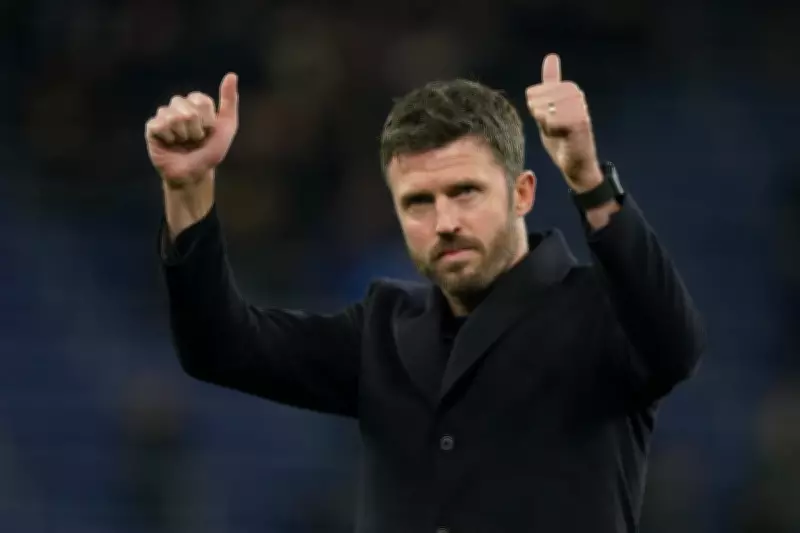
The caretaker caveats remain firmly in place, but Michael Carrick's common-sense revolution has undeniably brought a profound sense of calm to a club that had been thoroughly frazzled by a prolonged feeling of constant crisis. The fundamental question now facing Manchester United's hierarchy is whether this interim success represents a viable long-term solution.
A Statistical Transformation Under Carrick's Leadership
If the actual Premier League table presents a pleasing outlook for Manchester United, an alternative version proves even more striking. Taking 13 January as the starting point—the date Carrick assumed temporary control—United sit top with an impressive 16 points from just six matches. This represents two points more than Chelsea, six better than Liverpool, and eight superior to Aston Villa, their closest rivals in the overall standings. During this period, United have secured victories against both Arsenal and Manchester City, demonstrating their capability against elite opposition.
The significance of this start date is far from arbitrary. It marks when Carrick took the reins, initially expected for approximately five months. Yet with each passing week, the likelihood increases that he might retain them for considerably longer. While Carrick's managerial CV—which includes his dismissal from Middlesbrough last summer—might not have traditionally qualified him for the United hotseat, the Ole Gunnar Solskjaer principle appears increasingly relevant: when a caretaker performs exceptionally well, they often become the logical permanent appointment.

Shifting Odds and European Ambitions
Following Monday's hard-fought victory at Everton, the statistical landscape shifted significantly. According to Opta's predictor model, United now possess a 72 percent probability of securing a top-five finish this season. This marks a dramatic reversal from the final weeks under Ruben Amorim, who consistently squandered opportunities to climb into fifth position. While United's official seasonal objective was European qualification, the unofficial ambition was almost certainly Champions League participation.
Amorim appeared to be wasting a golden opportunity during a campaign when nine other Premier League clubs were burdened by European commitments. Carrick, in contrast, has seized the initiative. Should United achieve this goal, his initial two results—victories over Manchester City and Arsenal—may prove most significant, essentially representing six bonus points that helped remedy some of the damage inflicted during Amorim's tenure against supposedly easier opposition.
The Anti-Amorim: Carrick's Contrasting Approach
Carrick has steadily consolidated United's position through an innate ability to downplay expectations while concealing his ambitions, though he has described managing United as the "ultimate" honor and expressed feeling at home at the club. While his prospects have been elevated by managerial excellence, the field of potential rivals appears to be thinning. Thomas Tuchel has committed to a new contract with England, while Oliver Glasner's reputation has diminished amid a fractious departure from Crystal Palace.
As Solskjaer previously demonstrated, being the incumbent can provide substantial advantages, particularly when powerbrokers made such disastrous errors with their previous appointment of an outsider in Amorim. Carrick effectively represents the anti-Amorim—the insider, the safe pair of hands. His light-touch management contrasts sharply with Amorim's explosive public utterances. Tactically, he employs a back four rather than the Portuguese manager's back three. Furthermore, as demonstrated by Benjamin Sesko's impactful substitute appearances, Carrick is extracting more from summer signings despite their arrival during Amorim's tenure.
Player Endorsements and Squad Harmony
Making United's hierarchy appear competent in their recruitment decisions certainly enhances Carrick's candidacy. There was a palpable sense of wasted potential under Amorim; despite United's evident failings, the squad never justified a 15th-place position. Currently, they appear a cohesive unit with both spirit and strategy.

Carrick's common-sense revolution has been facilitated by clever tactical tweaks and astute substitutions. From the outset, he demonstrated clarity of thought by establishing a starting eleven that prospered immediately, only altered due to injuries—Matheus Cunha replacing Patrick Dorgu, and at Everton, Leny Yoro deputizing for Lisandro Martinez. That common sense could be considered revolutionary serves as a damning indictment of the previous regime.
Player endorsements for the interim manager prove particularly instructive. Sesko, who isn't even starting regularly, described the coaching staff as "unbelievable," suggesting a fine blend that contrasts with Amorim's perceived clique. Bruno Fernandes revealed he told Carrick during his previous caretaker spell that he possessed the qualities to become a great manager.
The Long-Term Considerations and Challenges Ahead
The notion that familiarity with the club provides advantages has often been mocked when lazily trotted out by numerous former United players. However, Carrick has genuinely appeared at ease in familiar surroundings, demonstrating understanding of both players he previously coached—like Fernandes and Harry Maguire—and those who arrived during his absence, such as Dorgu.
The caretaker caveats nevertheless persist. The permanent role presents fundamentally different challenges: managing a larger squad beyond thirteen regular starters, navigating the departures of veterans like Casemiro and possibly Maguire, handling congested fixture lists with European commitments, and proving he can build a side for future seasons while making astute signings. For now, however, the calm he has instilled perfectly suits a club wearied by perpetual crisis. The results speak for themselves: Amorim's best six-game return yielded just 11 points, while Carrick's "sweet 16" mean United likely don't need exceptional performances in the run-in to secure Champions League qualification. That achievement, in turn, could well lead to Carrick managing in Europe's premier competition on a permanent basis.