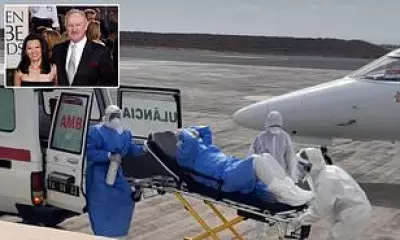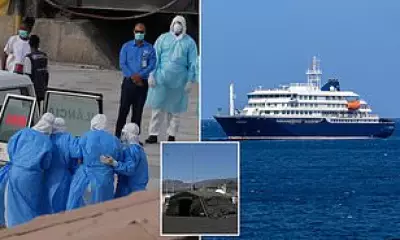
Infectious disease experts have warned that there will be more hantavirus cases, with the most recent outbreak likely triggered by a 'super-spreader'. The head of the World Health Organisation (WHO) similarly told countries to prepare for more cases in the coming weeks.
Outbreak on the MV Hondius
Three passengers - a Dutch couple and a German woman - died after travelling on the doomed MV Hondius, when the first victim fell ill. It is believed that he may have been infected at a landfill site on the outskirts of Ushuaia, a birdwatching spot popular with tourists and overrun with scavenging rodents.
Super-Spreader Theory
Now leading virologists say it is plausible that Leo Schilperoord, who has been dubbed patient X, was a super-spreader. If accurate, he is the reason why the deadly disease is spreading between humans at unprecedented rates.

'Hantavirus isn't new,' Professor Paul Hunter, an epidemiologist at the University of East Anglia, said. 'But it is the first time an outbreak has occurred on a cruise ship - an environment which is really good at spreading infections, whether that's Covid, influenza or norovirus.'
Rapid Spread Explained
Experts believe it is unlikely that a mutation in the virus is behind the rapid spread of infection between humans - making it no different from other cases of the Andes strain, which is rife in parts of Argentina. But what makes this particular outbreak different is that it may have been picked up by a super-spreader four days before boarding the ship, creating the perfect storm.
Whilst experts do not fully understand what makes someone a super-spreader, it is believed that a small group of people can infect far more people than average. There are a number of theories, but no definitive answer. Prof Hunter speculates it could be to do with the immune system of the super-spreader - which may not be good at suppressing the virus, or alternatively sheds more of it.
But one thing seems fairly certain - especially since Covid - it is pretty much impossible to know who will be a super-spreader. And according to Prof Hunter, there is 'convincing' research that shows super-spreaders of hantavirus do exist.
'It is plausible then that what we're seeing is that the [birdwatching] couple picked up the virus at a landfill site. One of both of them then happened by chance to be a super-spreader in an environment where spread is particularly easy. This is the best explanation we have at the moment as to why hantavirus is spreading so rapidly between humans,' Prof Hunter added.
'As I said, hantavirus isn't new. But it's the first time something like this, where the disease has made the jump to humans and is spreading, has happened.'
Risk Assessment
He added that if this is the case, then existing assessments which suggest the virus does not pose much of a risk to members of the public in the UK who have not been in close contact with a super-spreader, remain valid. However, he cautioned: 'We still need to keep a very careful eye over the next few days because you can never predict with 100 per cent accuracy what an infectious disease is going to do.'
There are currently nine confirmed cases and two further suspected cases of the virus.
About Hantavirus
Hantavirus, which can cause deadly lung damage and organ failure, is usually spread by rodent urine, droppings or saliva. When the virus makes the jump from rodents to humans, it is usually because viral spores have been inhaled. There are around 40 confirmed strains of the virus, including the Andes strain, which is the only known hantavirus to pass from human to human.
Vaccine Development
The deadly outbreak has unsurprisingly drawn scientists' attention to a widely overlooked pathogen. Currently there are no targeted treatments for hantaviruses, meaning when an outbreak like this happens, there is no first line of defence. That being said, there are now some promising vaccines in development - with speculation that some could be moved through the pipeline more quickly if hantavirus looks like it is going to become the next pandemic.

The current question is whether it would be economic to develop a vaccine when typically it has not posed much of a threat. Vaccines do exist that target some of the so-called Old World viruses in Asia, but none yet that would help protect against New World diseases such as the Andes strain. An international team of scientists, spearheaded by experts at the University of Bath, are currently working to develop a new antigen against the disease. But more work needs to be done before it can be approved for use, meaning at present, early medical intervention is the only way to combat the virus.