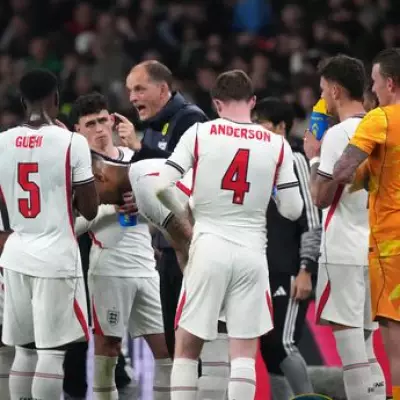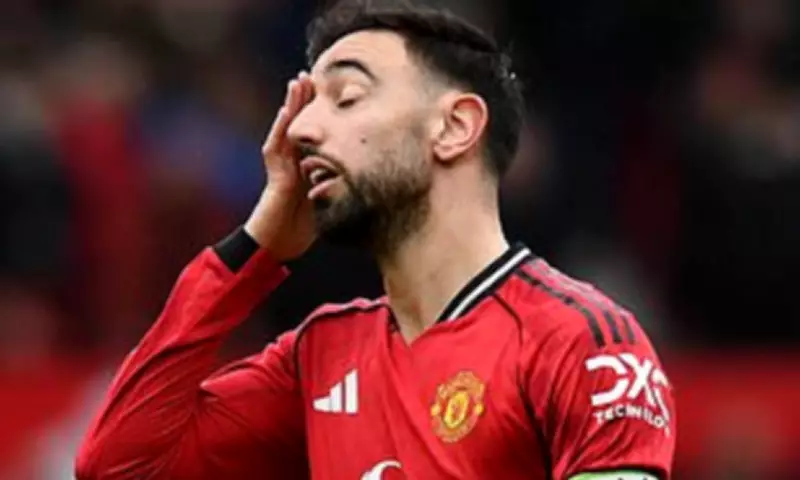
Manchester United interim manager Michael Carrick has publicly stated he has no issue with captain Bruno Fernandes expressing visible frustration towards his teammates during matches, provided the intent is constructive and aimed at elevating the team's overall performance.
Constructive Criticism Versus Negative Body Language
Fernandes has openly acknowledged that his on-pitch demeanor, which includes vocal complaints and animated gestures, can sometimes irritate his colleagues. However, Carrick emphasises that context and motivation are crucial. "If it's coming from the right place and the intention is to want to do better for everybody, and everyone stays positive with it, then I've got no issue with that at all," Carrick explained.
The United boss drew a clear distinction between healthy pressure and detrimental negativity. "I think as long as it's meant in the right way, when it's not the wrong body language or the negative kind, it's healthy to push each other. It's not a personal thing. It's a case of performance and getting the best out of each other."

Historical Precedent for Fiery Exchanges
Carrick, drawing from his extensive experience as a player and now coach, noted that such interactions are not uncommon in elite sport. "I've seen players over the years where they just kind of argue for the sake of argument to fire each other up. There's definitely that and there's no harm in it. As I say, it's not personal. It's for the good of the team and for the good of each other."
Carrick's Own Management of Emotion
While Carrick has generally maintained a composed sideline presence during his nine-game tenure, he admitted there have been moments requiring a fiercer approach, particularly following the team's sole defeat under his charge at Newcastle United.
"There's a time and a place," he added. "Obviously we're disappointed at times and disappointed with the result at Newcastle. So there's feelings there. It’s picking the moment. Certainly at times we've been a little bit frustrated or a little bit more animated."
He framed emotional expression as an integral, manageable component of top-level football. "But that's how it is. It's a sport, it's elite performance. You've got to play with emotion and feeling, and sometimes that is a bit more aggressive. It's a bit more intense sometimes, so you've got to manage that. If I don't manage that, you can't expect the players to create the right emotion."
Authenticity in Leadership
Carrick rejected the notion of performing a role, instead advocating for genuine reaction. "But the emotion is part of it. I wouldn't say I've put on a performance. I think I go with how I feel at the time. Certain times it's a little bit louder maybe, sometimes a bit more feeling, other times it's calm. It depends what the group want and need at certain points as well."
Player Autonomy on Pre-Match Rituals
Ahead of United's Premier League fixture against Bournemouth, Carrick was also questioned about player-led pre-match huddles, a topic highlighted after Chelsea players surrounded referee Paul Tierney before a recent kick-off.
Carrick adopted a hands-off approach, granting his squad full autonomy. "To be honest, at that stage it's up to the players and how they want to go about it really. I don't get involved in that part of it really. I'll say my bit in the changing room and before kick-off."
He concluded by reinforcing his trust in the playing group's judgement. "But in terms of that, if they want to do it and they feel it helps them, then great. If they felt they actually don't want to carry on and do it then I'm fine with it. At that moment, they're on the pitch. It's up to them as a group. They've got to go into battle and they've got to have that feeling between them. Whatever suits them. So I'm quite calm about what they do at that point."