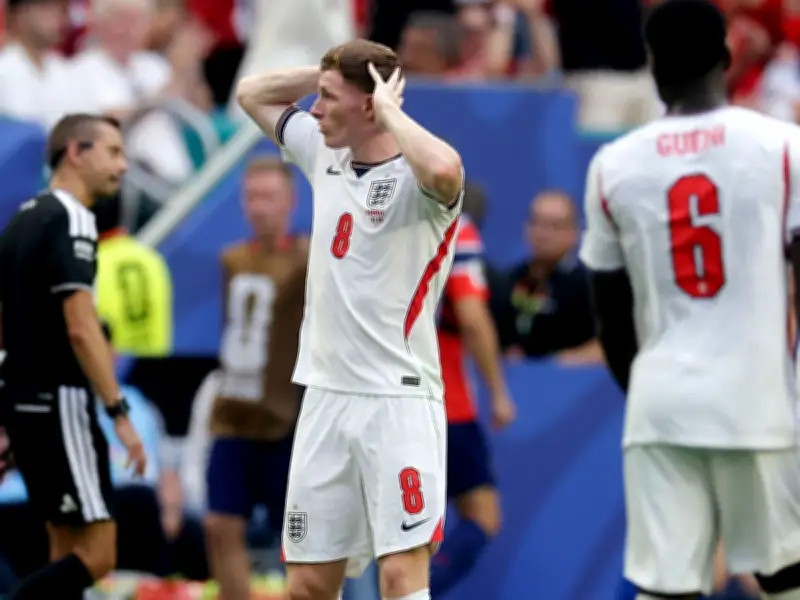
England's progression to the World Cup semi-finals has sparked fresh controversy after new footage led to suggestions that Jude Bellingham's vital equaliser against Norway ought to have been disallowed. It was part of a double controversy involving Whitley Bay's Elliot Anderson, with the Geordie at the heart of two key decisions which impacted the game.
Match Overview and Controversial Build-Up
Thomas Tuchel's team recovered from a goal down to defeat Norway 2-1 after extra time in their quarter-final, with Bellingham netting twice to secure a blockbuster semi-final showdown with Argentina. However, focus has now shifted to the build-up to England's opening goal after replays appeared to reveal the ball making contact with the overhead sky camera wire from a Norway goal kick.
As goalkeeper Orjan Nyland launched the ball forward shortly before the interval, television footage indicated it clipped the suspended camera system before falling to Anderson, who controlled it with a sublime piece of skill and swiftly passed to his former Newcastle United teammate Anthony Gordon. Gordon then laid it off for Bellingham to level the scores for England.
Laws of the Game and Immediate Reactions
According to FIFA's Laws of the Game, play must restart with a dropped ball if the ball touches a match official or an outside agent, including overhead equipment such as a camera suspended above the pitch, reports Wales Online. This prompted immediate objections from Norway's players, who maintained England's equaliser should have been chalked off.
Norway manager Stale Solbakken was spotted confronting referee Clement Turpin as the teams departed the pitch at half-time, while both Nyland and Erling Haaland were also captured on camera pointing towards the sky, insisting the ball had struck the camera system.
Pundit and VAR Analysis
Former Premier League referee Mark Clattenburg, appearing as a pundit for Fox, felt the incident warranted review by the video assistant referee. The Geordie ref said: 'VAR can interfere if that contact of the ball on the camera cable is part of a reviewable incident. An attacking phase of play leading to a goal is part of the VAR reviewable incident. It should have been picked up by VAR.'
FIFA's Response and Technology
FIFA subsequently addressed the controversy by releasing footage from the connected match ball's sensor, maintaining there was no evidence the ball had made contact with the overhead wire. In a statement posted on social media alongside the data, FIFA said: 'Before England's goal in minute 45+2 against Norway, the sensor in the Connected Ball showed no peak in the 'heartbeat of the ball' when in the air, and therefore no evidence that the ball touched the overhead wire and changed the movement of the ball.'
The governing body further stated that the technology registered no spike in the ball's movement, which it claims would have been indicative of contact with the cable. Notwithstanding FIFA's clarification, the incident continued to split opinion amongst supporters, with many questioning why the apparent contact was not scrutinised more rigorously before the goal was permitted to stand.
Second Controversy: Disallowed Norway Goal
England ultimately completed the turnaround in extra time when Bellingham netted his second of the evening, securing a 2-1 victory and booking Tuchel's side a place in the World Cup semi-finals. However, Anderson was involved in another incident which left Norway unhappy. Norwegian goalscorer Andreas Schjelderup felt their disallowed goal in the second half, scored by Torbjorn Heggem, should not have been ruled out for Erling Haaland's shove on Anderson.
Haaland pushed the midfielder to the ground before a corner kick was taken, and Turpin ultimately ruled the goal out after a VAR intervention. Schjelderup said: 'I don't think the 2-1 goal should have been disallowed. If it's a free kick, then you can give a lot of free kicks during a football match. It's a very soft foul, and I actually feel a bit robbed. It was a crazy moment.'