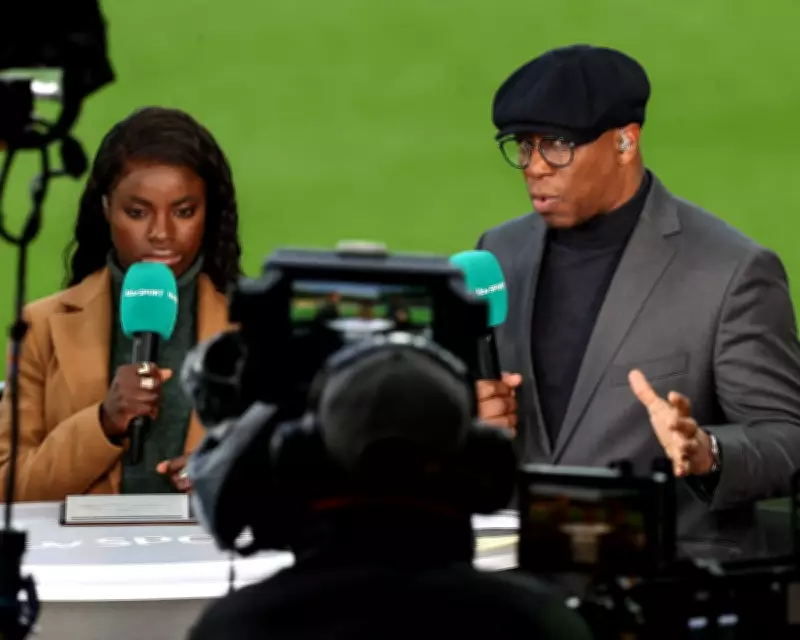
Eni Aluko's Legacy Damaged by Latest Attack on Ian Wright in Punditry Row
Eni Aluko, a former England international and pioneering football pundit, has sparked controversy with her recent broadside against fellow broadcaster Ian Wright. Her comments, made during interviews and on TalkSport, have reignited a one-sided feud that many view as an own goal, potentially eroding her significant legacy in the sport and media.
Aluko's Illustrious Career and Advocacy
No one disputes Aluko's credentials as a player and advocate. With 105 caps and 33 goals for England, she boasts an impressive record including participation in five major tournaments, four FA Cup wins, three WSL titles, and Serie A and Coppa Italia medals. Beyond the pitch, she has been a vocal fighter against racism and sexism, challenging the Football Association over Mark Sampson and seeing Joey Barton receive a suspended sentence for offensive messages sent to her and others.
In broadcasting, Aluko was among the vanguard of former women's players, becoming the first woman to appear as a pundit on Match of the Day in 2014. Her 11-year career in media highlights her trailblazing role, yet she now expresses frustration at slipping down the punditry pecking order.

The Core of the Controversy
Aluko's latest criticism centers on punditry opportunities for the 2025 Women's Euros final, where Ian Wright and Nedum Onuoha were among six pundits across BBC and ITV, while she and former teammate Fara Williams watched from the stands. She argued this exemplifies men taking opportunities in women's football, accusing Wright of failing to champion her as he did for Gary Lineker during the BBC asylum policy row.
This follows similar comments from April last year on BBC Radio 4's Woman's Hour, where Aluko accused Wright of hogging broadcast opportunities and blocking pathways for women. She later apologised, but Wright did not accept it. In her recent remarks, she reiterated concerns about limited opportunities being taken by men, stating, "If we're building a game where the limited opportunities are now being taken by men, where we can't go into the men's game and get the same opportunities, we're stuck."
Valid Points Amidst Wild Claims
While some of Aluko's comments, such as linking pundit quality to cap numbers, are questionable, she raises valid issues. She highlights the lack of opportunities for female pundits in the men's game, with few trusted on major fixtures. This spotlights broadcasters' reluctance to utilise top female talent in high-profile men's coverage, a point that resonates in an industry still lacking diversity and rife with racism and sexism.
However, many believe Aluko has fallen out of favour due to the rise of better pundits like Izzy Christiansen, Anita Asante, Karen Carney, Alex Scott, Emma Hayes, and Lucy Ward, who excel across both women's and men's games. This progress shows broadcasters are willing to feature women, even if arguments persist about higher-profile assignments.
Backlash and Broader Implications
Aluko's interventions have drawn inappropriate and sometimes racist abuse online, with trolls sharing clips of her on-air errors. Such attacks are unjust, as all pundits make mistakes, but her views risk appearing self-serving rather than progressive. By targeting Wright—a beloved and genuine ally of women's football with deep passion for the game—she empowers chauvinistic commentators and anti-diversity factions.
Wright has no obligation to champion Aluko based on gender or skin colour. His support for Lineker stemmed from disagreement with BBC policies and possibly alignment on asylum issues, not blind allegiance. As one of the most respected figures in women's football, Wright's authenticity makes Aluko's attack another massive own goal, damaging her legacy and distracting from meaningful discussions on equality.
Ultimately, this sad episode underscores the complexities of representation in sports media. While Aluko's advocacy has drawn attention to systemic issues, her latest approach may hinder rather than help the cause, leaving her legacy at risk in the eyes of many observers.