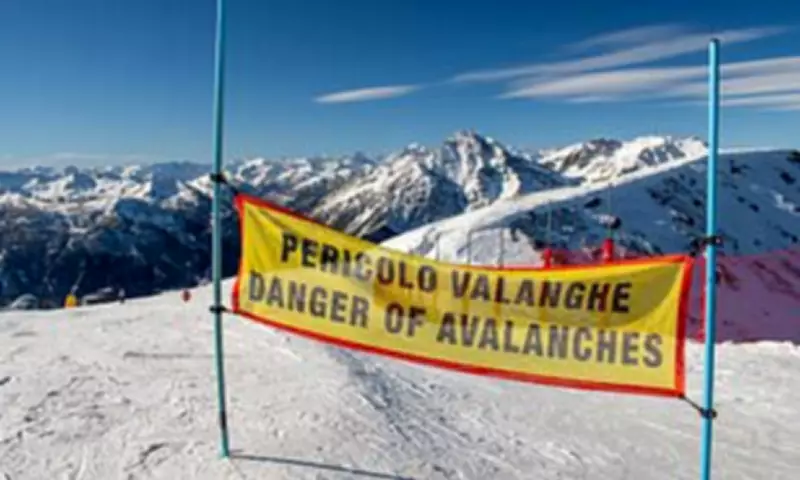
Skiing Danger Rises as Avalanche Death Toll Hits 86 Across Alps and Beyond
With headlines dominated by avalanches and a mounting death toll on the slopes, skiing is emerging as an increasingly perilous pastime. This season has witnessed a total of 86 fatalities, including at least four Britons, as severe snowfall and unstable mountain conditions wreak havoc across the Alps and other regions worldwide.
National Breakdown of Avalanche Fatalities
France has recorded the highest toll so far with 25 deaths, followed closely by Italy with 21 and Austria with 14. Switzerland has reported nine fatalities, while Spain has seen eight. Slovakia has documented four deaths, Slovenia three, and a single death occurred in Andorra. The most recent avalanche tumbled down a steep slope near the Italian resort of Courmayeur on Tuesday, engulfing dozens of skiers. Meanwhile, nine backcountry skiers remain unaccounted for after an avalanche struck near Lake Tahoe in California on Tuesday, coinciding with heavy snowfall in the area.
Unpredictable Weather and Heightened Risks
Recent unpredictable weather conditions underscore the urgent need for caution. Currently, parts of Switzerland and France are under a 5/5 avalanche risk warning—the maximum level, which is very rarely issued. With avalanches reported globally, fears are escalating over the safety of skiing. For instance, an avalanche in Val d'Isere swept away six skiers in an off-piste area, killing one French national and two Britons, as red alerts were issued across the Alps.

As a result, travellers are growing increasingly concerned about the unpredictability of winter sports holidays. Research from winter sports insurance provider SportsCover Direct reveals that three in 10 people are now actively reviewing recent snow conditions before booking, marking a 50 per cent increase compared to the previous year.
Expert Insights on Snow and Avalanche Conditions
'This is a winter unlike any we've experienced in the past few years,' says Frederic Jarry, project manager at the National Association for the Study of Snow and Avalanches in France (ANENA). 'Indeed, the number of days with high avalanche risk (four) in the French Alps and Pyrenees is high since the start of this season (January/February). This is due to two meteorological and snow-related factors we have experienced.'
Jarry explains that early-season snowfall followed by cold, anticyclonic weather favored the formation of persistent weak layers, which were highly active in January avalanches. Subsequent weather systems brought fresh snow with varying wind speeds, covering these weak layers and creating slab structures on many slopes, leading to increased avalanche risk and widespread accidents. In recent days, large amounts of fresh snow have further heightened the risk to high or very high levels.
Rising Dangers from Off-Piste and Dangerous Skiing
However, with ski holidays becoming more popular among novices, Frederic Jarry notes that avalanches are not the sole cause of injuries and fatalities. The increased risk also stems from a rise in dangerous skiing behavior. 'This year, the high number of fatal accidents and deaths is specifically due to the season's unique snow and weather conditions,' he states. 'In terms of avalanches, skiing is just as dangerous as before. The danger itself remains unchanged. As long as there's snow with a slab structure on a slope steeper than 30 degrees, the risk is present.'
Jarry emphasizes that human behavior determines the danger, not the mountain itself. 'Ultimately, it's people's behavior that determines the danger of the activity, not the mountain itself. The mountain, the snow and weather conditions, are constantly evolving. It's up to the participants to adapt their approach and know when to change their plans, abandoning certain routes to choose more suitable and interesting ones.'

Perspectives from Winter Sports Professionals
Former two-time Winter Olympic Snowboarder Aimee Fuller, currently presenting the Winter Olympics on TNT Sports, echoes this sentiment. 'Ski holidays are more accessible than ever thanks to cheap airlines,' she tells the Daily Mail. 'Resorts are busier, equipment is faster and more advanced, and social media has inspired people to chase bigger lines and attempt riskier tricks in the park. That’s amazing in many ways, but it also means more people are skiing terrain that might be beyond their skill level.'
Fuller highlights a disconnect between modern gear making skiing feel easy and the reality of high-speed forces. 'There’s sometimes a disconnect between how easy modern gear makes skiing feel and the reality of the speed and forces involved, a lot of force. A minor mistake at high speed can have serious consequences.' She adds that more people are pushing boundaries, venturing off-piste and into backcountry without proper education or safety equipment. 'The backcountry isn’t just an extension of the piste, it’s a completely different environment. I would never go out and ride in it without an expert, a guide, or a knowledgeable local.'
Insurance and Legal Perspectives on Skiing Risks
Mark Wilkinson, managing director at Norton Insurance Brokers, agrees with this assessment. 'The real shift is that more people are skiing off piste and in uncontrolled areas, where the risks are far higher,' he argues. 'Climate change is also making snow conditions less predictable, with unstable layers forming after mild weather followed by heavy snowfall. When these factors combine with more skiers in high risk terrain, serious incidents become more likely.'
Interestingly, the average number of skiing fatalities has actually declined over the last decade, falling from 31 to 21.7 per year. However, Joanne Brine, a partner in the Personal Injury Department at JMW with extensive experience in ski accidents, reports a rise in injuries. 'I have seen an increase in enquiries from clients who have sustained serious injuries in accidents on the slope over the last two seasons,' she says. 'Whilst the heavy snowfall this year resulting in avalanches seems quite unprecedented, I also see an increasing pattern of enquiries from skiers and snowboarders injured on, rather than off, the pistes.'
Common incidents include skier-on-skier collisions, which can cause significant and life-changing injuries. 'It's easy to read the headlines and think the only danger is when risks are taken, but often the injured party was not taking any excessive risk, or even travelling at speed, collisions commonly happen on the easier blue runs, often where pistes merge,' Brine explains. She has also handled cases involving fatal injuries from ski lift operations and serious injuries due to piste design and layout.
Safety Recommendations for Skiers
To mitigate risks, Joanne Brine advises: 'Always take the precautions you can for your safety, ensuring good quality equipment and a helmet and a comprehensive insurance policy.' She also stresses the importance of heeding warnings from ski authorities, particularly when avalanche warnings are at a four or five level. As skiing continues to grow in popularity, these measures are crucial for ensuring a safer experience on the slopes amidst evolving weather patterns and increasing participation in high-risk activities.