Federal prosecutors in the United States have unsealed a sweeping indictment, exposing a sophisticated gambling conspiracy designed to rig men's college basketball games for substantial illicit payouts.
The elaborate plot, which began with professional matches in China, allegedly shifted its focus to recruiting student-athletes across America to manipulate outcomes through point-shaving as recently as January 2025. The revelations coincide with multiple ongoing NCAA investigations into sports betting violations.
The Mechanics of the Point-Shaving Conspiracy
According to the indictment, the scheme relied on players intentionally underperforming to influence the point spread—the projected margin of victory set by bookmakers. Gamblers collaborating with these athletes could then place wagers with a "higher degree of certainty" on whether a team would cover or fail to cover that spread.

The document charges former college and NBA player Antonio Blakeney with accepting payments from high-stakes gamblers to underperform while playing in the Chinese Basketball Association during the 2022-23 season. In one cited game from March 2023, Blakeney scored roughly 21 points below his average, and his team lost by 31 points, a result that allowed the fixers to win most of their bets.
Prosecutors allege the fixers later recruited US college players, offering payments typically between $10,000 and $30,000 per game, to ensure their teams failed to cover the spread for either a half or an entire contest.
Widespread Impact Across College Basketball
The indictment details that the scheme eventually involved more than 39 players on 17 Division I men’s basketball teams, who manipulated or attempted to manipulate 29 games across the 2023-24 and 2024-25 seasons.
While most impacted games were regular-season contests at the mid-major level, DePaul of the Big East had three games from late in the 2023-24 season cited. The scandal also reached postseason play, affecting at least four tournament games in March 2024, including matches in the Horizon League, Southland Conference, and CollegeInsider.com Tournaments.
Other affected schools listed include Eastern Michigan, Tulane, St. Louis, Fordham, Buffalo, Southern Mississippi, and North Carolina A&T, among others.
Immediate Fallout and NCAA Action
The indictment has triggered immediate suspensions. Kennesaw State’s Simeon Cottle, a preseason pick for Conference USA player of the year, was suspended indefinitely after the allegations surfaced. Eastern Michigan also suspended Carlos Hart. Notably, the charges against Cottle and three other currently competing players do not involve the ongoing 2025-26 season.
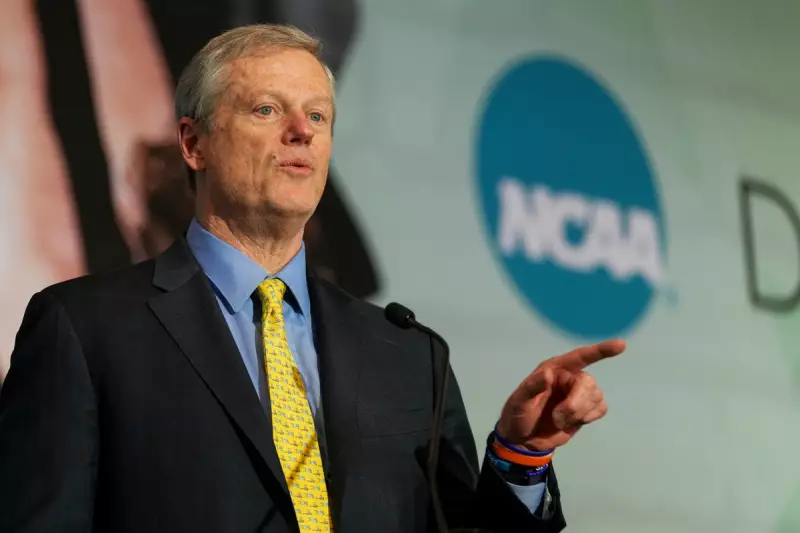
In a statement on Thursday, NCAA president Charlie Baker revealed that enforcement staff have opened sports-betting probes into roughly 40 athletes from 20 schools in the past year alone. Outcomes have included 11 athletes from seven schools being ruled permanently ineligible, and 13 others from eight schools failing to cooperate with investigations.
Previous cases have dripped out over the past year, including bans for players from Fresno State and San Jose State, sanctions against former Eastern Michigan and New Orleans players, and the permanent ineligibility of a former Temple guard for betting on his own team's games.
As federal prosecution proceeds, the NCAA continues its parallel probes, highlighting the persistent challenge illegal gambling poses to the integrity of collegiate sports.