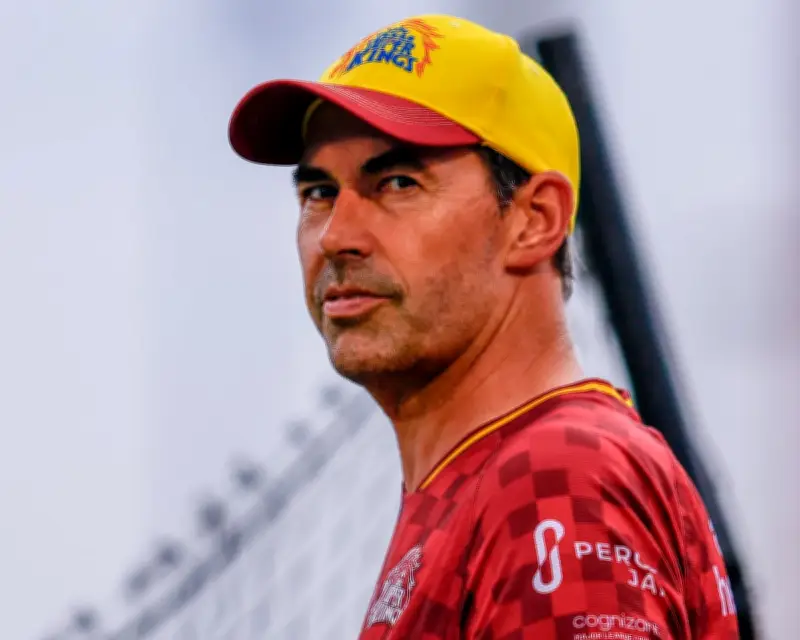
Stephen Fleming’s appointment gives England’s Test team a chance to pivot towards a future that suddenly looks beguilingly bright — though for now it exists mainly in the imagination. The past eight months have been chaotic and miserable, featuring defeat in the Ashes in Australia, a home series loss to New Zealand, the departures of a captain and coach, and the loss of their once rampant self-confidence and a fair amount of respect.
Speaking on Friday, Rob Key, the managing director of men’s cricket since April 2022, refused to admit to any mistakes in that time, though he occasionally and inadvertently damned himself. He explained the thinking behind Fleming’s recruitment, saying of players with so much potential who need refinement: “A lot of it’s about, can we bring someone in who can get this team to do the basics bloody well?” It probably did not need to take four years to realise such a person might be useful.
Key wants sustained success
Key said English cricket needs to do more than enjoy a brilliant two or three years. “You try and set things up so that you have the best chance of success – but not only success, to sustain success,” he said. “That’s what English cricket’s got to do. We have moments where we win series. Australia has success and repeats it. That’s what we need to do. We can’t just have … a brilliant two or three years. We need it to be better than that. And that’s what I think is going to happen, going forward.”
The recruitment came with a complication: the ousted Brendon McCullum remains on the payroll, and with no appetite to put recent improvements in the shorter formats at risk, Key needed a replacement who could work alongside McCullum.
Fleming’s credentials and remit
Key praised Fleming’s leadership. “I’ve never met anyone who said a bad word about his leadership,” he said. Fleming, though previously focused on white-ball cricket, is eminently qualified, has broad experience of the English game and is a great friend of McCullum’s.
Fleming was appointed in the middle of the English summer, with three Tests against Pakistan imminent and two months of inactivity to follow. His first act will be a family holiday, and he will take up the job in September. The remit extends beyond the present team: Key spoke of succession planning, and it has been clear since Ben Stokes voluntarily – and McCullum less willingly – left the dressing room that insufficient thought had been put into preparing future leaders.
Coaching pathway and captaincy choices
Fleming appears keen to address the coaching side. “One of the first things he spoke about was actually that we have a duty to bring coaches through, to upskill, to give them experiences,” Key said. “Next time, you don’t want someone to go: ‘I have to appoint an English coach.’ What you want is English coaches to be top of the list.”
The decision to hand the Test captaincy back to the 35-year-old Joe Root highlighted the shortage of alternatives. England had tried to encourage the next generation, most clearly by picking the then 21-year-old Jacob Bethell to captain last year’s T20 tour of Ireland. Selector Luke Wright spoke at the time about “providing him with the opportunity to further develop his leadership qualities on the international stage”, but the move was widely criticised.
Not ready yet
Bethell has played only nine Test matches and is not considered ready to captain the side; Harry Brook, 27 and far more experienced, was also not deemed ready. “All of this happened a little bit too soon, probably,” Key said. He said work had been done to prepare two more senior players for the captaincy, but by the time a vacancy arose their form had got in the way.
“The shame is their form got in the way of them being able to stay in the side,” he said of Zak Crawley and Ollie Pope. “Then that void wouldn’t have been there as much. I think we would have had two outstanding leaders … We’ve got leaders, they’re just in the white-ball setup at the moment.”
Drawing a line
Fleming’s arrival offers a chance to draw a line under the past four years, a period of spectacular success followed by an equally spectacular unravelling. Key remains optimistic. “I’m as optimistic as ever that we’ve got the best people to take English cricket forward,” he said. “I feel like we’ve had a speed bump in Test cricket over the last six months, but there’s so much potential.”