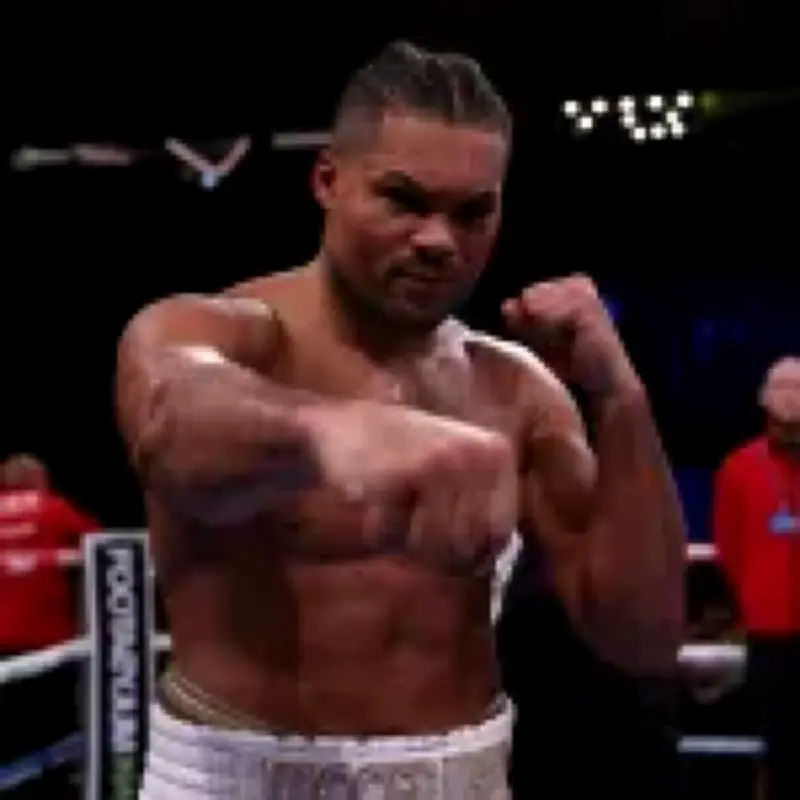
Joe Joyce has no plans to walk away from boxing just yet after opening up on his ADHD diagnosis that has changed his life.
The Putney heavyweight has been on the scene since turning professional after his Olympic silver medal success in Rio de Janeiro in 2016. During his rise to the very brink of world title honours, he carried a reputation for having one of the best jabs in the division and an iron chin before the latter was eventually chipped away in two heavy defeats to Zhilei Zhang.
Diagnosis at 40
Throughout his career, Joyce has often been derided for not having the microphone skills or stage presence some of his rivals possess. Interviews, press conferences and other media obligations are part of the job for any high-profile boxer with Joyce forced to put up with endless unpleasant comments when he struggled.
Joyce's demeanour on such stages has been much the same throughout his career with his recent diagnosis for ADHD [attention deficit hyperactivity disorder] at the age of 40 allowing him to trace it back to some of his earliest memories.
'Growing up, my mum thought I might be dyslexic but I never got tested,' Joyce told Metro. 'Back then you just turned up to school, you did what you were told and tried to get your homework done.
'Even when I was a kid and I was told to tidy my room, it took me so long to do it because I couldn't focus on doing one thing at a time. Getting organised was difficult and has been throughout my life.'
A member of Joyce's training team suggested he undergo testing for ADHD with an estimated 15 per cent of the UK population diagnosed or estimated to be neurodivergent.
'A friend got diagnosed with ADHD and after he told me about it, I thought maybe I would get it done. But life, boxing and everything else has its way of taking up your time,' Joyce continued. 'It wasn't until a new member of my team was talking about it and helped me get a test arranged. I got evaluated and was told I was neurodivergent. It basically described how my brain works and what tools are there to help.
'It was a huge realisation for me and it explained a lot of things, why I find things difficult or different to process. It was definitely reassuring. The things people find simple aren't really like that, for me anyway. I find them difficult. I struggle with it. But now I know what it is, I can try to understand it and I can be more prepared. But I still find things difficult.'
Tools and medication
Joyce has boxed his entire career with his condition and believes it has played a factor outside of the ring and as he prepares to get into it. Since his diagnosis, tools and medication have helped him get to grip with things and make life that little bit easier.
'There's medication you can take which can help flip the switch,' he said. 'I spread myself out a bit too thinly whereas these tools can help me hone in on completing a task.
'I've lived my life so far in boxing and I think at the start of a fight camp I would struggle, getting used to a new routine, making sure I have got all my stuff ready to go out the door and be on time. The first week or so, I find it difficult but once I'm in the routine, I'm more prepared.
'I know how my brain works now and I can choose to be more streamlined with everything. With media stuff, I can practise certain things beforehand. That helps me focus my mind.
'I feel the same about them [interviews and media appearances] but I have the knowledge of how my brain works so I can use the tools and help I've got to structure things so I am more prepared. When I'm being asked stuff, know these things, I know what to do, I know what to say, but it's difficult. But I've got this far on my own so I've made it work even if it hasn't been easy. I've grown up with it and I know it's part of me.'
Career and future plans
It is easy to forget just how close Joyce was to a world title, crowned 'interim' WBO champion after his sensational win over Joseph Parker in 2022 to put himself at the front of the queue to challenge Oleksandr Usyk. He could have sat out and waited his turn but instead welcomed the toughest challenges.
Since his two brutal defeats to Zhang that cost him his world title shot, Joyce has been trying to climb the ladder again. But typically of him, he has not taken an easy path. After a comeback victory over Kash Ali, he took fights against Derek Chisora and Filip Hrgovic, losing both. In July, he travelled to Russia to fight the unbeaten Artem Suslenkov. The night ended in somewhat strange circumstances with the Londoner taking a step back in the 11th round, hit with more blows before the referee stopped the contest.
Joyce insists the conclusion to that fight was not him waving the white flag or a lack of desire to go on. While he said earlier this year he feels he is not yet in a financial position to retire from boxing, his link-up with new trainer Sugar Hill Steward has him excited about his prospects again.
The former British, Commonwealth and European champion is targeting a return to the ring in early 2027, currently ticking over as part of Tyson Fury's fight camp ahead of his showdown with Anthony Joshua next month.
'I should be in a better place with all my career fights and maybe be in a better position,' Joyce said. 'I want to continue anyway and finish my career in a good light. So when I look back, I am happy knowing I did all I could and made enough money to be comfortable and allow me to move into other things.'
He continued: 'Sugar is adding a different element to my boxing. I've had great trainers over the years but I am still learning new things. He's got a missing piece for me. As you get older, it takes longer to learn things; my first fight with him [against Suslenkov] I was learning and trying to incorporate what he was showing me but it takes time to gel. But the more time I spend out there and the more work we do together, the more it can stick.
'I would like to get back into a winning place and finish on a high.'