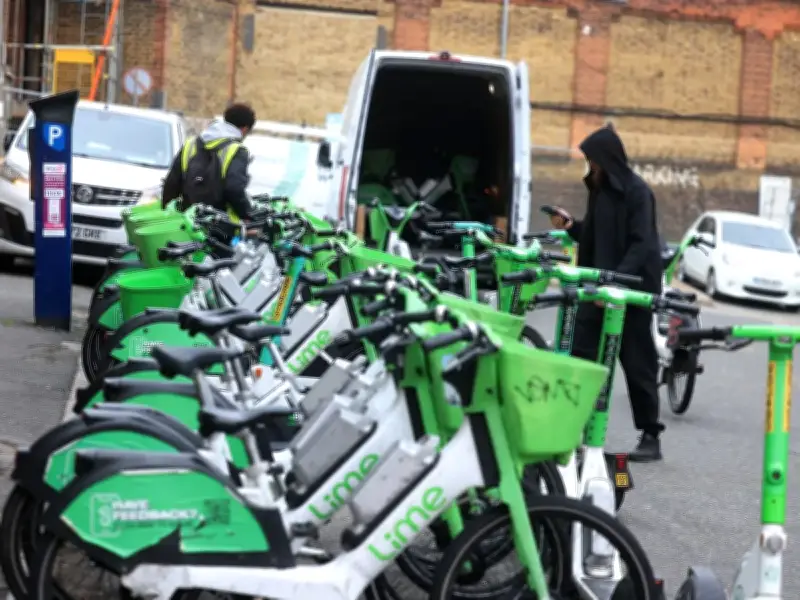
The Government has launched a consultation on new standards for rental e-bike schemes, with proposals covering geo-fenced parking areas and potential insurance requirements for operators. The plans aim to tackle overcrowded streets, antisocial behaviour and parking issues linked to shared e-bikes.
Transport Secretary Heidi Alexander said the Government "can't legislate for the idiots" as the Department for Transport (DfT) unveiled the proposals on Thursday, November 5. The new standards would apply to shared e-bike schemes such as Lime, Voi and Forest, covering issues including parking and fleet management plans to ensure bikes do not overcrowd streets.
Proposals to tackle antisocial behaviour
The proposals include plans to address antisocial and illegal behaviour such as drunk cycling, riding on pavements or underage users. Potential insurance requirements for operators would mean people can claim compensation if they are hit by a rider on a shared e-bike.
Transport Secretary Heidi Alexander said enforcement of any new rules would depend on licence conditions imposed by licensing authorities. She gave an example of geo-fenced parking areas – where riders cannot end their rental session unless the bike is parked in a specified area.
Licensing regime to bring order
“Now, any licensing regime can’t stop the small minority of people who want to commit a criminal act in terms of stealing a bike or using a bike without paying for it,” Ms Alexander told the Press Association. “I think the fact that we are consulting on this new licensing regime means that we can start to bring some order to the chaos that some people see in some parts of big cities where these e-bike schemes, rental schemes have popped up.”
She added: “But there are a small minority of people who choose to behave recklessly but sadly, that is true of any type of way that people move around in a town or a city, and you can’t legislate for the idiots, but we can take sensible steps to give local leaders more power over the way in which these types of schemes operate.”
Ms Alexander said she believed the “vast majority” of riders used rental e-bikes “in a responsible manner” and that she personally loves using them.
Local leaders to gain powers
For tackling antisocial behaviour, a licence may require e-bike scheme operators to work with police who have responsibility for enforcing the rules of the road, Ms Alexander said. “Whether you’re riding a rental e-bike or your own push bike, you have to observe the highway code in the same way as any other road user would,” she said.
“But we’ve got to give the powers to local leaders in the first place because at the moment, if you or I wanted to set up an e-bike rental scheme, we don’t have to ask anyone’s permission. We could just put a thousand bikes out on the road tomorrow, and so we have to end this sort of situation where it’s completely unregulated.”
Ms Alexander said that while the Government cannot legislate for “every single situation”, she believed the proposals would make a positive difference in ensuring the rental schemes work “with communities and not against them” and enables everyone to use their streets in a safe way.
National standards to end patchwork rules
Prime Minister Andy Burnham said that while e-bikes can make travel a bit easier, they can be a “real frustration” when they block pavements or are used “irresponsibly”. “I want to sort that by giving communities more control over where they are parked and making sure companies and riders play by the rules,” he said.
Establishing national standards will aim to end the current “patchwork of rules” for operating e-bike schemes in different areas, the Department for Transport said. In the capital, the Transport Secretary is working with London mayor Lord Sadiq Khan of Tooting on devolving new powers to Transport for London (TfL) to standardise the implementation and enforcement of e-bike rules across the city, ending differences between boroughs.
“The ‘Wild West’ approach to dockless e-bikes cannot continue,” the mayor said. “While these services are helping thousands more Londoners to cycle, their rapid growth has also brought challenges around safety, inconsiderate parking, and the lack of data needed to properly manage them.”
Agustin Guilisasti, founder and chief executive of Forest, said: “To see London becoming a cycling city is something to celebrate. But to achieve this, we need national standards, and a coherent, well-regulated, London-wide system – better for riders and, importantly, better for pedestrians and the city.”
Lime’s chief executive Wayne Ting said: “Lime’s unmatched experience in working with cities to build and grow UK e-bike schemes means we know what it takes to make shared cycling work at scale. It’s why we recognise the current patchwork approach is confusing for riders, councils and operators, all of whom deserve greater clarity and certainty. Today’s consultation is an important step forward.”
Eleanor Briggs, head of policy, public affairs and campaigns at charity Guide Dogs, said the national standards would give “much-needed powers to tackle dangerous parking and unsafe use”. “For people with sight loss, badly parked rental e-bikes are a barrier to independent travel, blocking pavements, creating unexpected obstacles and making it harder to navigate safely,” she said.