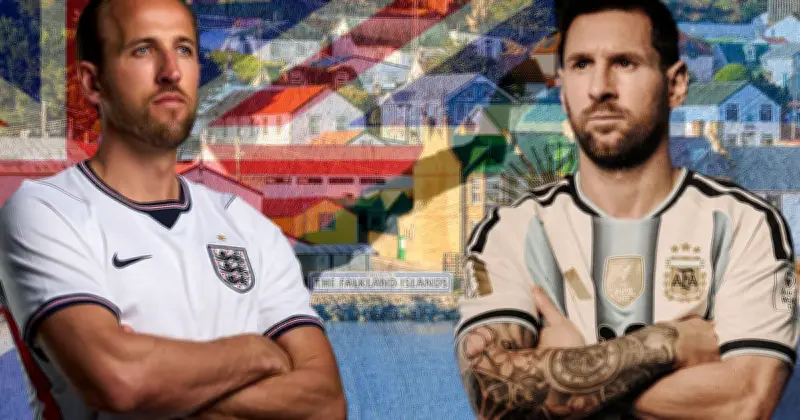
Tonight's World Cup semi-final between England and Argentina in Atlanta, Georgia, marks the latest chapter in one of international football's most embittered rivalries. The match pits England captain Harry Kane against Argentina's Lionel Messi, who at 39 continues to mesmerise opponents. England have not played a competitive match against Argentina since the 2002 World Cup, when David Beckham scored the only goal.
Historical Animosity on the Pitch
The rivalry dates back to the 1966 World Cup quarter-final at Wembley, where England won 1-0 amid a vicious struggle. Argentina employed tactics including spitting, ankle-kicking, hair-tugging and eye-poking, according to England striker Roger Hunt, who called it "the worst behaviour I had ever experienced." Teammate Geoff Hurst compared playing up front to "walking down a dark alley late at night in a strange town." Argentina captain Antonio Rattin was sent off after 33 minutes and spent eight minutes arguing before leaving the field.
England manager Sir Alf Ramsey, known for his monumental calm, was brought to fury. When defender George Cohen swapped shirts with his Argentine counterpart at full time, Ramsey ran onto the field and pulled him away, saying, "George you're not changing shirts with that animal." In a BBC interview, Ramsey repeated the word, stating England needed "the right type of opposition ... that comes out to play football and not act as animals." The comments sparked intense political controversy, with the British ambassador to Argentina, Sir Michael Cresswell, requiring extra police protection. FIFA expressed dismay and called for disciplinary action; Ramsey later made a half-hearted apology.
The Hand of God and the Falklands Factor
In the 1986 World Cup quarter-final, Diego Maradona produced two defining moments: the "Hand of God" goal, where he deliberately punched the ball past Peter Shilton and later cheekily claimed divine intervention, and a sublime solo run from the halfway line, considered one of the finest goals in World Cup history. Argentina won 2-1, and England manager Bobby Robson was left appalled by Argentine behaviour.
Since the 1982 Falklands War, the territorial dispute over the islands—known to Argentines as Las Malvinas—has added political friction. Argentina still claims sovereignty, as reiterated by President Javier Milei at the UN General Assembly in September 2025. In the build-up to tonight's match, footage emerged of Argentine players celebrating their quarter-final victory over Switzerland by singing the fan song Muchachos, which includes the lyrics: "I am Argentine from cradle to grave, for the Malvinas, for Diego, for Leo's final chapter."
England's Resilience and Tuchel's Unity
England manager Thomas Tuchel has forged strong bonds among his squad. Harry Kane, who ran an estimated 10 miles in the sweltering Miami heat during England's victory over Mexico, was dumped by Arsenal as a junior—a setback that deepened his ambition. Anthony Gordon's work ethic stems from a tough upbringing on a Liverpool housing estate; Everton coach Neil Dewsnip, who signed Gordon at age 11, said, "He had this self-belief that has constantly evolved. We must not forget how hard he has worked to get here."
England have shown resilience but lack fluency, aside from the second half against Croatia. Tuchel's side will need every ounce of talent, technique, temperament and tenacity to overcome Argentina's depth of skill and class.
Political Tensions and Warnings
Former England striker Gary Lineker, now a left-wing pundit, recently referred to the Falklands as "Las Malvinas" on Netflix, saying, "There's so much history between our nations, isn't there?" England fans have been warned they face a £1,000 fine for chanting about the Falklands during the match.
The first competitive meeting between the sides was at the 1962 World Cup in Chile, an uneventful England win. But the 1964 Little World Cup in Argentina saw a new aggressive edge. Arsenal midfielder George Eastham recalled Ramsey telling players not to get involved if Argentina "cut up rough." Eastham added, "He didn't need to tell me twice. I think Alf was just glad to get out of there. He detested them."
Ironically, Britain introduced football to Argentina, with the first recorded match in June 1867 between two teams of British railway workers at the Buenos Aires cricket club. By 1891, the country's first league was established under the guidance of Scottish school teacher Alexander Watson Hutton.
Tonight's match at the Atlanta Stadium promises to be ferociously tight and competitive. England will hope to end Argentina's World Cup journey and write a new chapter in this storied rivalry.