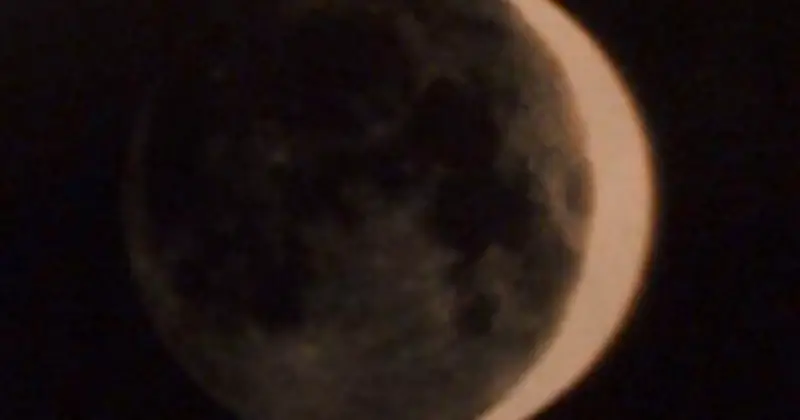
A rare solar eclipse will transform the skies above Britain and much of Europe on Wednesday, August 12, 2026, marking the first total solar eclipse visible from Europe since 1999. Millions of people across the continent will witness one of nature's most spectacular celestial events, with UK observers expected to see up to 90% of the Sun obscured as the Moon passes directly between Earth and the Sun.
When will the eclipse take place?
The eclipse will begin over the UK in the early evening of August 12. Observers will first see the Moon start to move across the face of the Sun, gradually covering more of it until the eclipse reaches its maximum extent. The precise timing of each stage will vary depending on the viewer's location. After the peak, the Moon will slowly move away, and the Sun will return to its normal appearance.
What will happen during the eclipse?
A solar eclipse occurs when the Moon moves between Earth and the Sun, blocking some or all of its light. Next month's event will be the first total solar eclipse visible from Europe since 1999, when people across parts of Cornwall and Devon experienced totality. This time, observers in the UK and Ireland will witness a partial solar eclipse, with the Moon appearing to take a large bite out of the Sun rather than covering it completely. The event will begin with "first contact," the moment the Moon starts to cross the Sun's disk, before reaching its maximum coverage. The eclipse will then gradually fade as the Moon continues its journey.
Will it be completely dark in the UK?
The UK will not experience complete darkness because the Sun will not be fully obscured. However, the Royal Observatory Greenwich states that enough sunlight will be blocked to produce a noticeable dimming of daylight and a slight drop in temperature at the eclipse's peak. Depending on cloud cover, daylight may briefly resemble the softer light of dawn or dusk. The effect will be most pronounced in south-west UK, where a larger portion of the Sun will be obscured. London is forecast to experience around 90% coverage, while observers in Cornwall could see as much as 95%. In south-western Ireland, coverage may reach nearly 97.7%. The partial eclipse will also be visible across other parts of Europe, Canada, and north-western Africa.
Where will the total eclipse be visible?
Anyone hoping to experience the dramatic darkness of a total solar eclipse will need to travel outside the UK. The path of totality will begin over Greenland, pass across Iceland, and continue through northern Spain and the Balearic Islands. A small remote area of northern Russia will also fall within the path. According to NASA, totality is expected around midday in northern Russia and later in the afternoon or early evening in Greenland and Iceland. In Spain and north-western Portugal, the Sun will be completely obscured shortly before sunset. For most locations along the eclipse path, totality will last less than two minutes, although those closest to the centre line in Greenland, Russia, and parts of the North Atlantic could experience up to two and a half minutes of complete darkness.
When will the next solar eclipse happen?
Britons who miss next month's eclipse will face a long wait for another total solar eclipse visible from the UK, with the next one not expected until 2090. Spain will enjoy another opportunity much sooner, with a second total solar eclipse scheduled for August 2, 2027. Additional total eclipses will be visible across various parts of the world over the next two decades, including southern Africa, Australia, North America, Asia, and Greenland, offering eclipse enthusiasts several chances to witness the phenomenon.