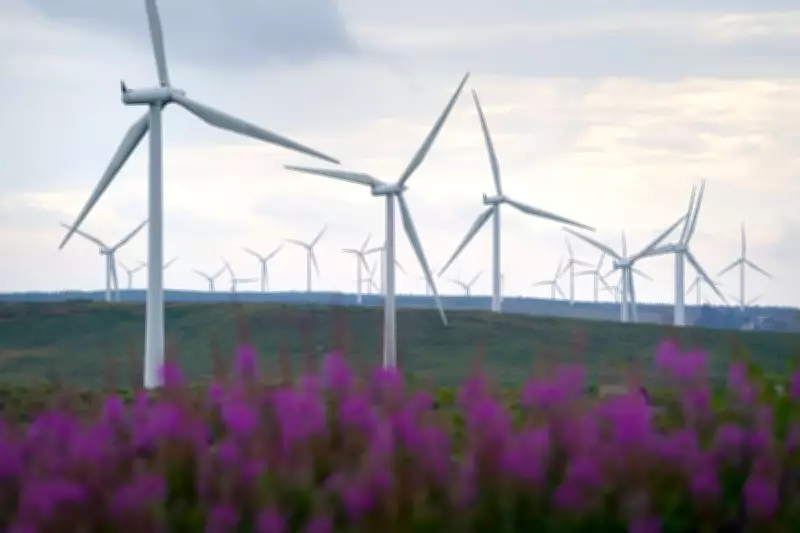
The UK Government's target for the country to be powered by clean energy by 2030 is 'extremely ambitious', a committee of MPs has warned. The Scottish Affairs Committee also urged the government to introduce a flat rate for electricity standing charges across the UK to create a fairer system for consumers, particularly in Scotland where charges are higher than average.
Community Benefits Must Increase
The committee called for local communities hosting renewable energy projects to receive larger benefits, suggesting the government should at least double its proposed community payments. The UK Government has suggested a contribution of £5,000 per megawatt (MW) of installed capacity, but the MPs said payments of £10,000 to £12,500 per MW 'seem appropriate'. This conclusion was reached after hearing from Highland Council, which stated that £12,500 is a fair level of compensation based on its experience with clean energy deployment.
Standing Charges Disparity
MPs noted that Scotland currently has higher-than-average standing charges on electricity bills, with London's charges being 31% cheaper. This disparity is particularly acute for remote and island communities, which also experience higher fuel poverty levels and often bear the brunt of infrastructure needed for UK-wide clean power ambitions. The committee warned that this risks undermining public confidence in the transition and exacerbating inequalities.

GB Energy's Role
The committee suggested that GB Energy, the publicly-owned energy company, must do more to accelerate renewable generation. They stated that if GB Energy is to become the catalyst required to meet the Clean Power 2030 target, it must move beyond the initial start-up phase and scale up delivery quickly.
Scotland's Pivotal Role
With over 1,000 new renewable energy projects in the planning pipeline in Scotland, with an estimated capacity of 83 GW, the MPs said Scotland will be a 'cornerstone' of the UK's clean power transition. However, they emphasized that communities must feel the transition is done with them, not to them.
Committee chairwoman Patricia Ferguson said: 'Scotland will play a pivotal role in ensuring that the UK Government achieves its ambitions for clean power. For these missions to succeed, it's crucial that communities – particularly those in rural and remote areas who have been asked to host new energy infrastructure – feel that the energy transition is being done with them, not to them.'
A spokesperson for the Department for Energy Security and Net Zero said: 'We have always been clear that communities hosting clean, homegrown power should directly benefit from it. That is why we are continuing to explore plans for mandatory benefits for those hosting energy infrastructure like onshore wind and solar farms, with communities deciding where funds go for their own specific area.'