
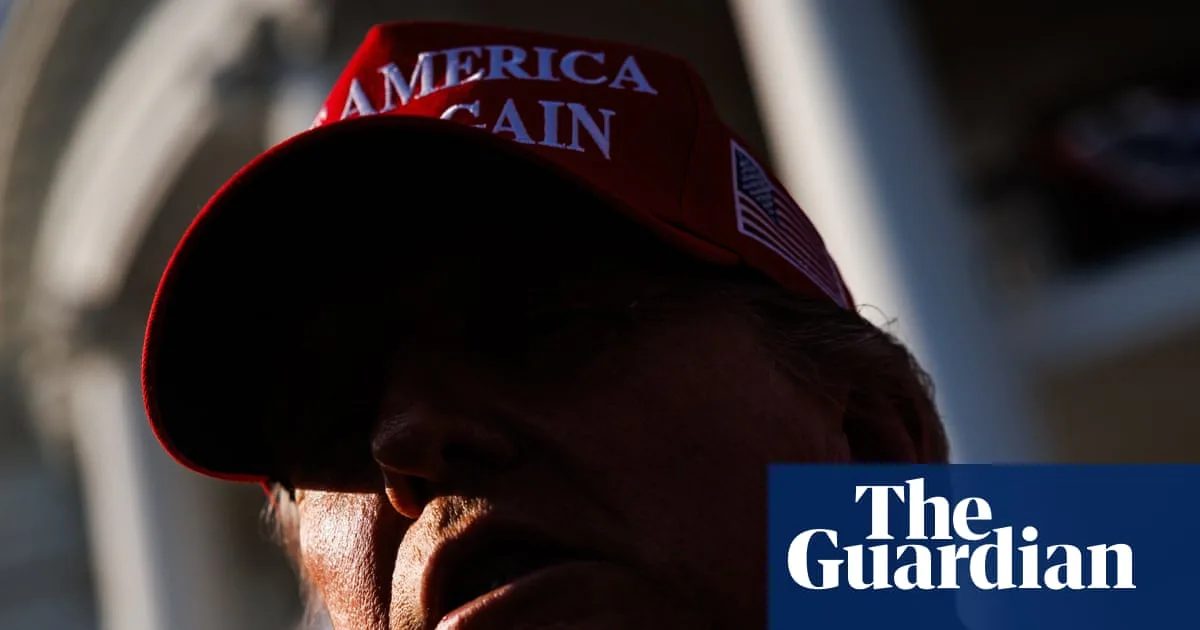
People who have experienced the kind of authoritarianism the US used to condemn abroad are highlighting worrying signs under Donald Trump’s second term. From the cult of personality in cabinet meetings to the criminalisation of political opponents, observers say the US is increasingly resembling the autocratic regimes it once criticised.
At a recent cabinet meeting, Trump’s top envoy Steve Witkoff praised the president in terms that could embarrass a seasoned strongman, saying: “There’s only one thing I wish for – that the Nobel committee finally gets its act together and realises that you are the single finest candidate since this Nobel award was ever talked about.” Meanwhile, adviser Stephen Miller called the Democratic Party a “domestic extremist organisation” on Fox News, while Trump himself called for the arrest of financier George Soros and his son on social media.
Other signs include the revocation of Secret Service protection for electoral rival Kamala Harris, an FBI raid on the home of former national security adviser John Bolton, and routine immigration raids near schools in Washington DC. Don Moynihan, a political scientist at the University of Michigan, wrote that “today, America is a competitive authoritarian system, with a rapidly increasing emphasis on the authoritarian part.”
Abdelrahman ElGendy, an Egyptian activist who spent six years in prison in Egypt on political charges, fled to the US but left in April after seeing similar patterns emerge. “I haven’t second-guessed leaving the US. In fact I feel very grateful that I made the choice that I did before things got even worse,” he said. “I left Egypt to escape political persecution … The reason I left the US is because I started to recognise those same patterns forming around me.”
ElGendy noted that the constant threat of political incarceration is a key characteristic of authoritarianism. “What really sustains authoritarianism is that quiet knowledge that the prison door is always within reach … that shadow is what shapes behaviour,” he said. From Russia to Turkey, activists and political scientists are watching the US with concern.




