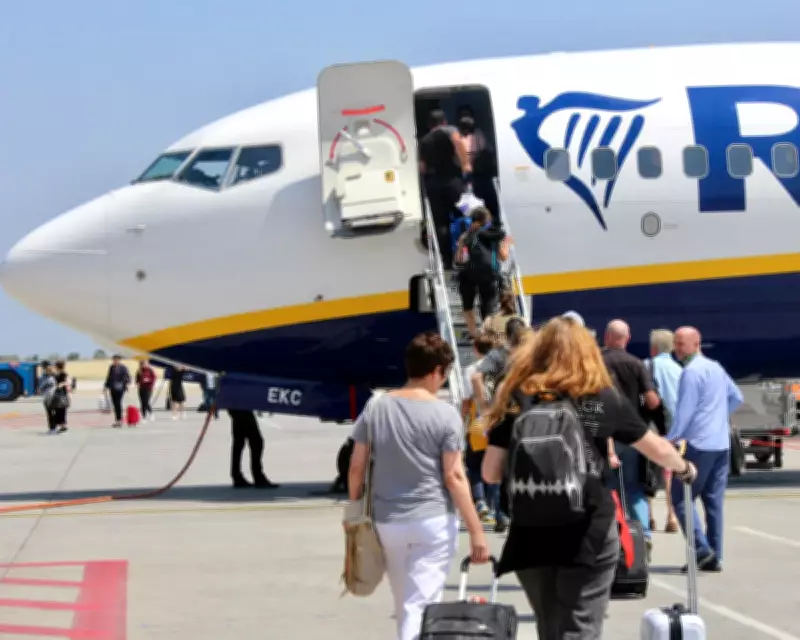
Ryanair has said it has "almost zero concerns" about its jet fuel supplies this summer amid fears over widespread cancellations linked to the Iran war, but warned that holidaymakers booking their flights later this year could face higher fares.
The budget airline's chief executive, Michael O'Leary, stated that Europe has now found plenty of alternative sources of jet fuel, but persistent consumer uncertainty has led to lower summer bookings than usual, keeping fares down.
"There was a real concern in Europe two months ago. We now have almost zero concerns over fuel supplies in Europe. The challenge remains price," O'Leary said.

Fuel Supply and Cost Concerns
The travel industry has been impacted by worries about jet fuel supply this summer, as shipping through the Strait of Hormuz remains restricted. Ryanair noted that Europe is well stocked with fuel thanks to shipments from West Africa, Norway, and the Americas.
While Ryanair has hedged 80% of its jet fuel requirements to April 2027 at about $67 a barrel, the carrier's unit costs could rise by approximately 5% if fuel prices remain elevated, the company said.
O'Leary expressed that he does not expect the war in Iran to continue or the Strait of Hormuz to remain closed by next year, but cautioned that a prolonged conflict could cause airlines with lower hedging to go bankrupt. "If it does continue over those 12 months, there will be airline casualties in Europe this winter," he warned.
Neil Sorahan, Ryanair's chief financial officer, said he is "increasingly confident that we will not see any supply shocks this summer."
Fare Trends and Consumer Behavior
The airline reported that fares have fallen in recent weeks due to uncertainty surrounding the Middle East conflict, with prices expected to decline by a "mid-single digit percentage" in the three months ending in June.
Ryanair also revised its outlook for summer fares, now anticipating prices to be "broadly flat" compared to last summer, after previously forecasting a modest increase during the peak travel season.
"Demand is still strong, but people are leaving it longer to book, so we do not have the visibility that we normally have for July to September," Sorahan explained. "Closer-in bookings are strong, but if people leave it late, they could face higher fares."
Holidaymakers have been delaying their summer trip bookings compared to previous years and showing increased interest in domestic travel.
Dan Coatsworth, head of markets at AJ Bell, commented that the market is "too fragile" to raise fares in response to rising costs, as higher inflation continues to squeeze consumer spending. "Airlines and holiday companies are having to drop prices, or at best keep them level, just to keep demand ticking over," he said.
Financial Performance and Outlook
Ryanair reported a record profit after tax of €2.26bn (£2bn) for its financial year ending in March.
However, the company suspended guidance for its 2027 financial year, stating it is "far too early" to provide forecasts due to potential increases in fuel, environmental taxes, and wage bills.
Ryanair also flagged that it expects its environmental taxes in the EU to increase by €300m this year to about €1.4bn, "which makes EU air travel even less competitive."
The company, Europe's largest airline by passenger numbers, added that it is in negotiations with O'Leary about extending his contract beyond 2028 to 2032.
Under the proposed new contract, O'Leary would be able to buy 10 million shares at the market price before the Iran war, but only if "very ambitious profit after tax or share price growth targets are achieved."
O'Leary has been CEO of Ryanair since 1994. Sorahan stated that details of his new contract would be confirmed over the coming weeks.