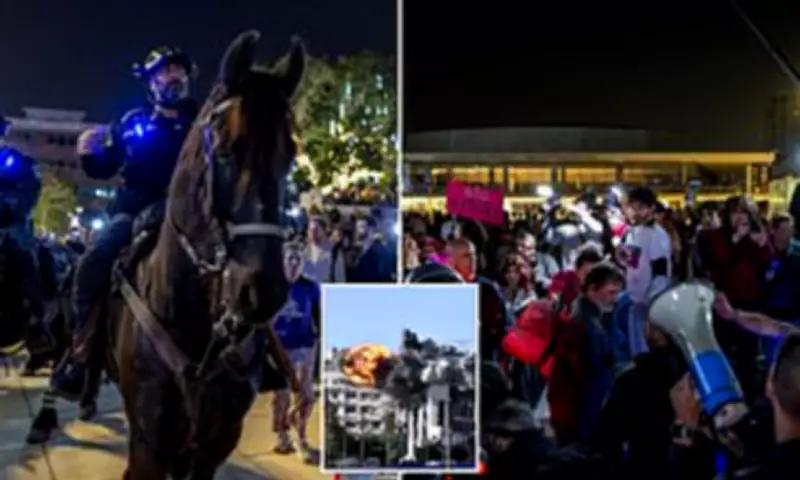
Israeli police deployed mounted units to break up a significant anti-war protest in downtown Tel Aviv on Saturday night, resulting in multiple arrests and dramatic confrontations. Mounted officers were seen riding horses into crowds of demonstrators who were carrying banners and chanting slogans against Prime Minister Benjamin Netanyahu, as the gathering was declared unlawful by authorities.
Protest and Police Response
Several hundred people had gathered at Habima Square, calling for an end to the ongoing war, with sirens sounding during the event to warn of incoming missiles from Iran and Yemen. Israeli wartime restrictions currently limit public gatherings to 150 people, but earlier on Saturday, supreme court justices issued an interim ruling allowing at least 600 people at Habima Square and 150 at other locations across the country.
At approximately 8 p.m., police declared the demonstration unlawful, claiming there were hundreds more participants than the court had permitted. This led to the dispersal of the crowd and the arrest of at least 17 individuals. Dramatic images from the scene showed horses being ridden into the crowds, highlighting the intensity of the police response.

Broader Context of Protests and Regional Tensions
This incident follows similar actions last week, when officers arrested over 20 people during anti-war protests in major cities including Tel Aviv, Jerusalem, Haifa, and Beersheba. The protests are part of a growing domestic dissent against the war, which has escalated since February 28, when the United States and Israel conducted joint strikes against Iran.
In retaliation, Iran has launched daily missile barrages targeting Israel and several neighbouring countries, exacerbating regional instability. The conflict has killed thousands, sparked an energy crisis, and threatened lasting damage to the global economy, particularly after Iran virtually shut the Strait of Hormuz, a critical waterway for oil and liquefied natural gas.
International Diplomacy and Threats
Amid these tensions, former U.S. President Donald Trump issued a threat on Truth Social, warning Iran to reopen the Strait of Hormuz within 48 hours or face destruction of its vital infrastructure. He wrote, "Remember when I gave Iran ten days to MAKE A DEAL or OPEN UP THE HORMUZ STRAIT. Time is running out. 48 hours before all Hell will reign (sic) down on them. Glory be to GOD!"
Iran's central military command rejected this threat, with General Ali Abdollahi Aliabadi calling it a "helpless, nervous, unbalanced and stupid action." In a statement, he warned that the "gates of hell will open" for the U.S. if tensions escalate further, echoing Trump's language.
Iran's foreign minister, Abbas Araqchi, left the door open for peace talks via mediation from Pakistan but showed no willingness to bow to Trump's demands. He stated on X, "We are deeply grateful to Pakistan for its efforts and have never refused to go to Islamabad. What we care about are the terms of a conclusive and lasting END to the illegal war that is imposed on us."
Military and Economic Implications
The U.S. and Israel have increased pressure on Tehran, with a senior Israeli defense official indicating preparations to attack Iranian energy facilities, pending U.S. approval. Iran has targeted not only Israel but also Gulf countries allied with the U.S., though these nations have refrained from direct involvement to avoid further escalation.
Trump's initial deadline was set for late March, but it was extended to April 6 at 8 p.m. ET after Iran requested more time. If the deadline lapses, Trump has expressed willingness to resume bombing Iran's energy infrastructure, potentially worsening the conflict and its economic impacts.
The ongoing war has led to significant casualties, disrupted global energy supplies, and fueled domestic protests in Israel, as seen in Tel Aviv. The use of mounted police to break up demonstrations underscores the challenges of balancing public dissent with security concerns during wartime.