

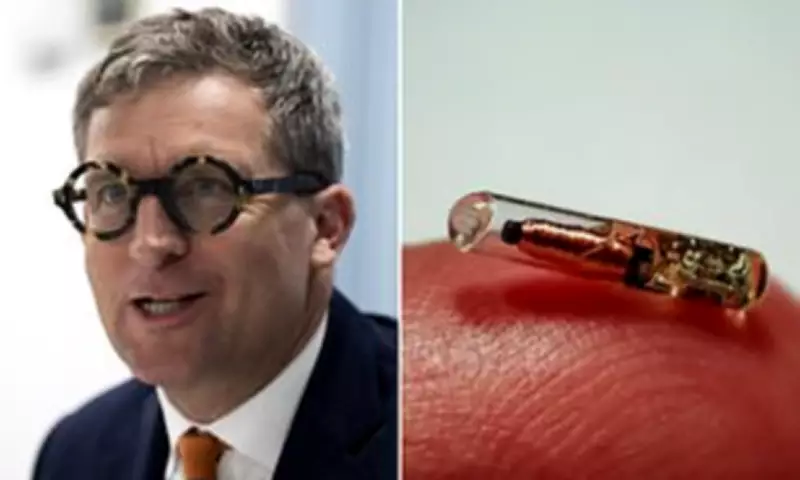
Microchips could be inserted under the skin of offenders to track their movements, tech bosses have suggested. The proposal was put forward as a way of monitoring prisoners in real time and around the clock.
Roundtable with Prisons Minister
The idea was suggested as part of a 'roundtable' event with the Prisons Minister Lord Timpson and representatives from tech firms. Other ideas put forward included driverless prison vans and robot-run jails. The meeting took place last year with representatives from more than 30 companies including Amazon, Google and Microsoft, but details have only started to emerge now.
Firms also suggested that AI could be used to predict the risk posed by certain individuals.

Minister's call for reform
Lord Timpson told the meeting that 'Once-in-a-generation reform is the only way we can truly deal with the scale of the crisis, cut crime and speed up justice.' He added: 'I want technology to play an integral role in tackling these problems and making our streets safer.' And he told the tech bosses that the meeting was 'just the start of a new conversation between us and you.'
Concerns over dystopian ideas
The minutes of the secretive meeting were released to Foxglove, a group that campaigns against the abuse of tech by governments and companies, following a Freedom of Information request. The group told prison newspaper Inside Time that the ideas sounded 'alarmingly dystopian'. They added: 'It's worrying that justice ministers have sat with the tech sector to discuss using robots to manage prisoners, implanting devices under people's skin to track their behaviour, or using computers to 'predict' what they will do in future.'
Government's stance
The Ministry of Justice kept most of the details of the meeting secret at the time, but said the discussion would focus on the 'potential for even more effective tracking of offender movement, using data to aid probation officers to perform better risk assessments and whether digital platforms can help offenders rehabilitate and integrate back into society, cutting reoffending'. Then-Lord Chancellor, Shabana Mahmood said at the time: 'We need bold ideas to address the challenges that we face – supporting our staff, delivering swifter justice for victims, and cutting crime. Today, we have an analogue justice system in a digital age. The UK has a world-leading and growing tech sector, and I know our tech firms have a huge role to play in delivering our Plan for Change to make streets safer.'
The MOJ said it was looking to follow up the meeting with an event open to the whole of the industry, inviting them to return and present their ideas to the department.
Early release figures
While ministers pondered the future of prisons in two decades' time, new figures from the Ministry of Justice showed 60,108 offenders were let out of prison onto the streets in the first 16 months of Labour's soft justice program. The astonishing number covered releases under a scheme - launched by then justice secretary Shabana Mahmood - which allows criminals to be freed after serving just 40 per cent of the sentence handed down by a court. With releases averaging more than 3,700 a month in the most recent quarter it means the true figure to have been freed so far is likely to be about 75,000.
Just under 1,500 serious criminals who were sentenced to more than a decade in jail have now been released early, the new data showed. It said 490 of those freed so far had been handed sentences of 14 years or more, while 980 had been ordered to serve between 10 and 14 years.
Political reaction
Shadow Justice Secretary Nick Timothy said criminals were being 'let out early as a deliberate political choice by a government too weak to build the prison places the country needs'. He added: 'Still Labour press ahead with plans to abolish jury trials, the cornerstone of British justice. Releasing criminals early and stripping defendants of the right to be judged by their peers, that is Labour's criminal justice record. What the British public wants and expects is more criminals being locked up for longer. Prison works, but Labour are ideologically incapable of getting tough on crime.'

In January the MOJ published an assessment which said jails would have run out of space as early as June this year if ministers had not introduced their current policies. Labour's sentencing reforms will slow the projected rise in the prison population by 7,500 by 2028, it said.





