
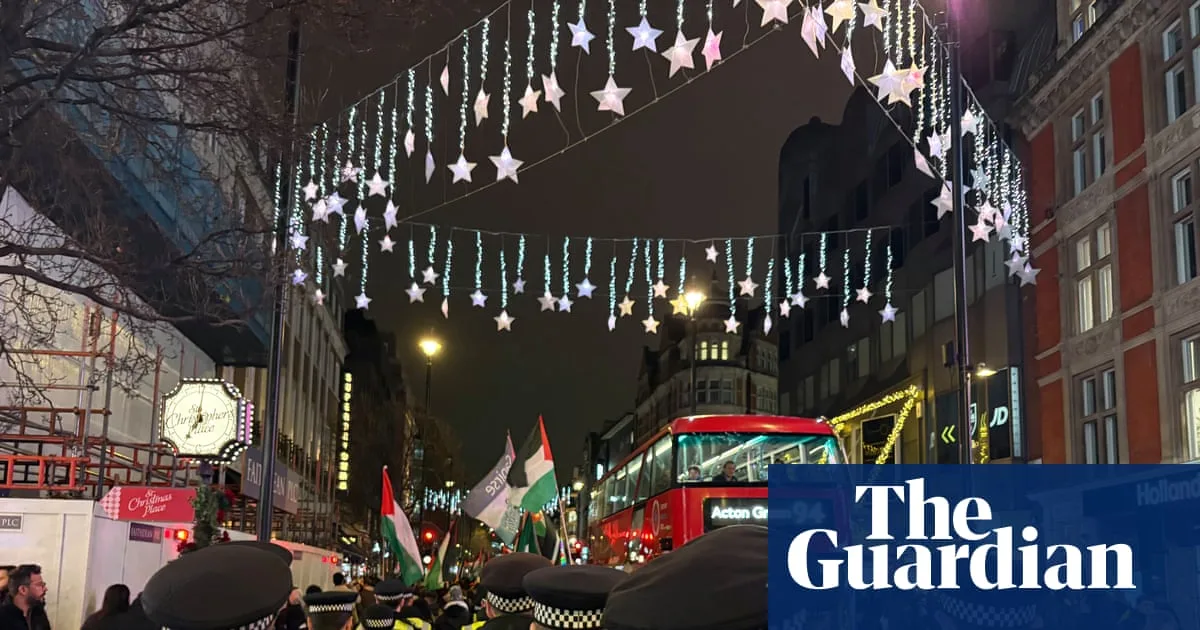
The Metropolitan Police have been using powers they no longer have to crack down on pro-Palestine protests, according to legal experts. Evidence obtained by the Guardian and Liberty Investigates shows that officers imposed restrictions on at least two protests based on their 'cumulative disruption' since the Court of Appeal quashed that power in May 2025.
Raj Chada, a partner at Hodge, Jones & Allen, said: 'There is no reference to cumulative disruption in the original legislation. The regulations that introduced this concept were quashed in May 2025, so I fail to see how this can still be the approach taken by police. There is no legal basis for this whatsoever.' The Network for Police Monitoring (Netpol) called the revelations an 'alarming point' in the 'ongoing crackdown on protest'.
On 7 May, five days after the regulations were quashed, the Met banned a Jewish pro-Palestine group from holding its weekly protest in Swiss Cottage, citing cumulative impact on the local Jewish community. In November, the Met forced the Palestine Coalition to change its march route at three days' notice, citing cumulative disruption to businesses during Black Friday.
Ben Jamal, director of the Palestine Solidarity Campaign, said officers told him decisions were based on 'the cumulative effect of your protests'. He described the repeated conditions as a 'demobiliser' that caused 'immense disruption'. Retired senior officer Nick Glynn said police 'stretch' their powers and 'go beyond what was intended', warning that 'more stifling of protest makes democracy worth less'.
The Home Office has announced plans to reintroduce cumulative impact powers through the Crime and Policing Bill. However, Met Police insist they can still consider cumulative disruption, despite removal from legislation. A Met spokesperson said the judicial review does not prevent officers from considering cumulative impact when assessing disruption to communities.




