First Lady Melania Trump and her son Barron have both voted by mail in Florida's recent special election, directly contradicting President Donald Trump's longstanding public assertions that postal voting constitutes "cheating." This development has ignited fresh accusations of hypocrisy against the president, who has spent six years vehemently criticising the practice as vulnerable to fraud.
Trump Family's Postal Ballots Cast from Mar-a-Lago
According to reports from USA Today, Melania Trump requested a postal ballot on Saturday, March 14, listing her home address as 1100 South Ocean Boulevard in Palm Beach, the location of the Trump family's Mar-a-Lago estate and private members club. Their son Barron, currently a student at New York University's Stern School of Business, followed suit, providing the same private club as his residential address for voting purposes.
The Palm Beach County Supervisor of Elections website confirms that both Melania and Barron's postal ballots were successfully cast, although the precise timing of their submission remains unspecified. The nearest physical polling station to Mar-a-Lago is the Morton and Barbara Mandel Recreation Center, situated approximately 3.9 miles away, equating to a thirteen-minute drive under normal traffic conditions.
Immediate Political Backlash and Accusations
President Trump's decision to vote by mail himself, despite being in Florida over the weekend when early in-person voting was available, has drawn sharp criticism from political opponents. Senate Minority Leader Chuck Schumer swiftly condemned the apparent double standard, addressing Congress to highlight the president's contradictory stance.
"Vote by mail is cheating when other people use it but perfectly fine when he does it himself," the veteran New York senator declared this week. "His decision to vote by mail shows just how hypocritical Donald Trump is about fraud and cheating."
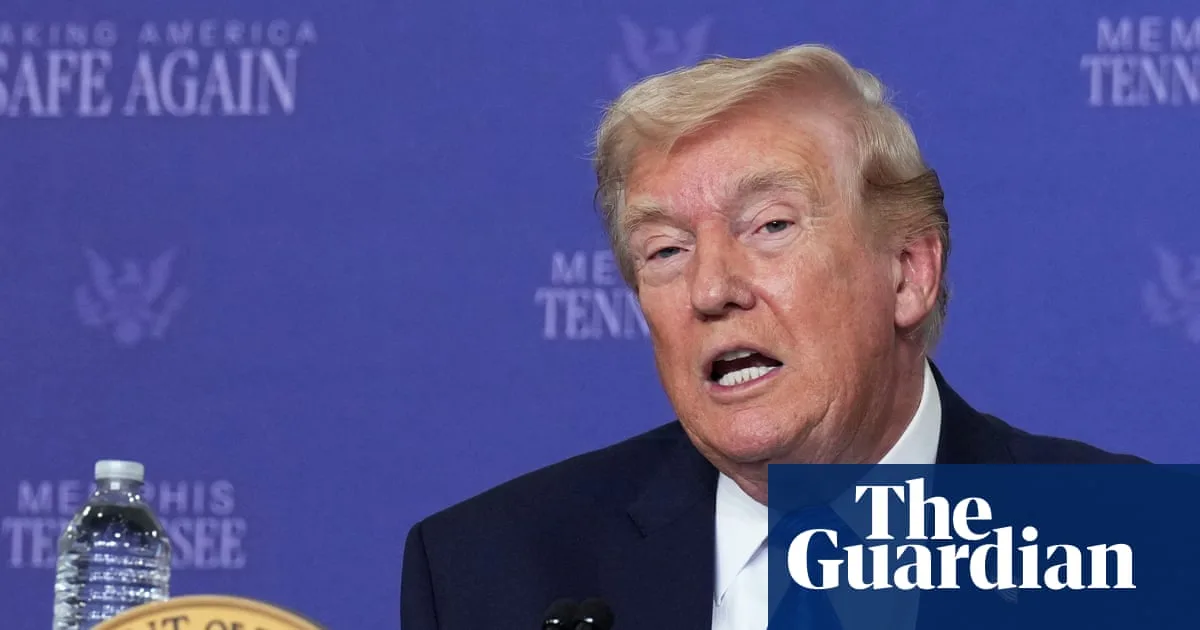
Unfazed by these accusations, President Trump reiterated his familiar rhetoric during a law enforcement roundtable in Memphis on Tuesday, stating emphatically, "Mail-in voting means mail-in cheating. I call it mail-in cheating, and we have to do something about it all."
Historical Context and Legislative Push
This is not the first instance of Trump utilising postal voting; he previously cast mail-in ballots during the 2020 presidential primary and a 2021 Florida election. The White House previously dismissed reports on this matter as "non-stories," attempting to downplay the inconsistency.
Concurrently, President Trump continues to advocate vigorously for the Republican Party's SAVE America Act, proposed legislation that would impose stringent identification requirements for federal elections. This includes mandating that citizens voting by mail provide photocopies of their identification alongside their ballots.
White House spokeswoman Olivia Wales clarified the administration's position, stating, "The proposed act contains commonsense exceptions for Americans to use mail-in ballots for illness, disability, military service, or travel, but universal mail-in voting should not be allowed because it's highly susceptible to fraud."
Political Stalemate and Electoral Setbacks
Negotiations surrounding this legislation have created significant gridlock in Washington D.C., with President Trump declaring he will not sign any new bills until the SAVE America Act reaches his desk. However, the Republican-controlled Senate appears unlikely to advance the proposal due to widespread Democratic opposition.
Republican senators remain apprehensive about eliminating the chamber's filibuster and its supermajority requirement, as demanded by Trump. In a recent appeal to his party, the president urged, "Don't worry about Easter, going home. In fact, make this one for Jesus, OK?"
The Florida special election itself delivered disappointing results for Trump's endorsements. Republican candidate Jon Maples, whom Trump backed for the state legislature in Palm Beach County, lost to Democrat Emily Gregory. Similarly, in a parallel race for the Florida Senate, Republican Josie Tomkow was defeated by Democrat Brian Nathan.
These electoral setbacks suggest growing momentum for opposition candidates in traditionally Republican states ahead of November's midterm elections, potentially reflecting increasing discontent with Trump's leadership and policy directions.