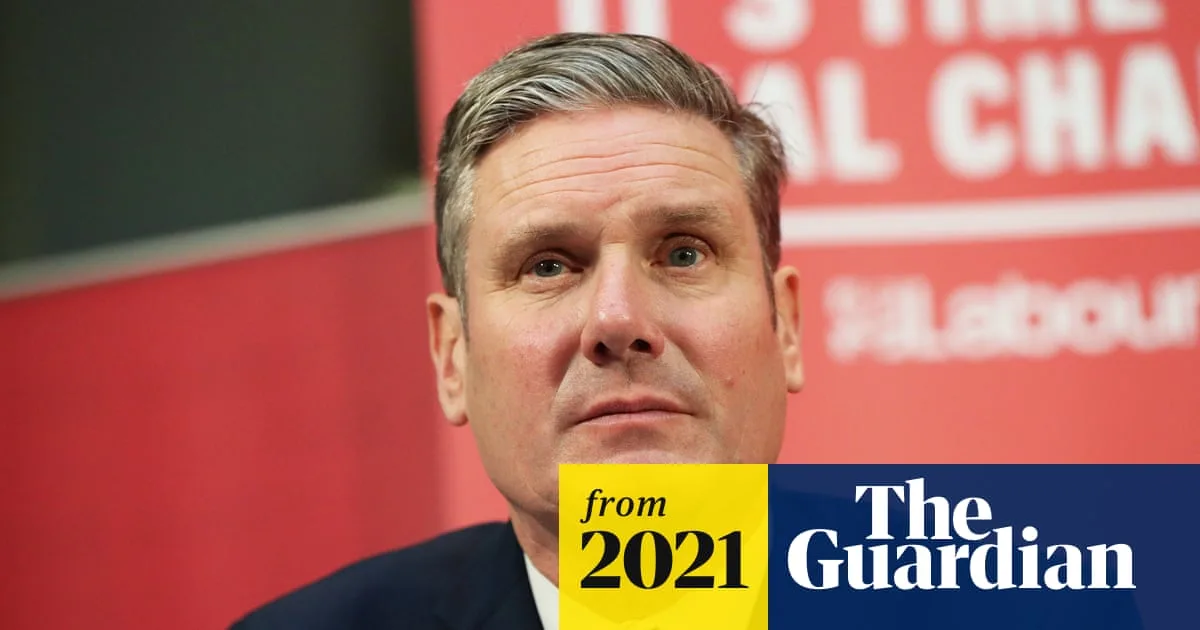
Labour's Essay Crisis: Starmer's Vision Lacks Substance Amid Blair Critique
Labour's Essay Crisis: Starmer's Vision Lacks Substance

Labour is hiding its lack of vision behind an essay crisis, as Keir Starmer publishes a 1,500-word rebuttal to the Labour heavyweights who criticised his government's failures. Andrew Grice argues that, with Whitehall already engulfed in a blame game over broken promises and questions about the prime minister's survival, this is no time for long political screeds.

The Battle of the Essays

It has been dubbed the battle of the essays. Keir Starmer has penned almost 3,000 words, hitting back at Tony Blair's 5,700-word demolition of Starmer's approach in government. Andy Burnham has also weighed in with a 1,500-word riposte to Blair, which included a sideswipe at Starmer, saying that mainstream politics has not delivered answers.

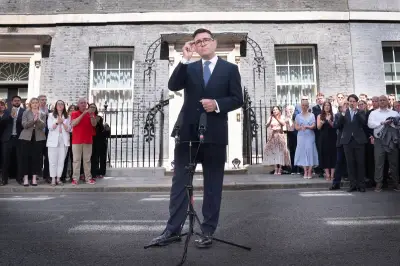
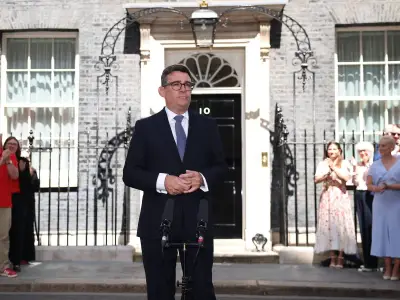
On Thursday, the prime minister took to the Substack platform to reply at length to what has been dubbed Blair's encyclical. His effort was padded with the familiar roll-call of his government's achievements that ministers are ordered to weave into every media interview.

Wide Pickt banner — collaborative shopping lists app for Telegram, phone mockup with grocery list

Starmer's Response

Starmer rejects Blair's criticism of his policies, claims he has been vindicated by their results, and insists that he has got the big political choices right. His lesson from this month's local elections disaster is that his government needs not just to be better, but also to be bolder. This is a typically vague and annoying Starmer soundbite.

True, he concedes his government needed a bigger response than anticipated in 2024 on economic growth, defence, Europe, and energy. But he is unrepentant about Ed Miliband's net zero agenda despite growing pressure from within the government to rethink its opposition to new North Sea drilling.

Fair Points and Concessions

Starmer makes a fair point about his inheritance being much worse than the growing economy that Blair enjoyed in 1997. He concedes some mistakes – the winter fuel payment, and that he asked a lot from business by raising its national insurance contributions. He rightly accepts that his government's early mood music was too negative and did not offer enough hope.

Starmer welcomes a discussion about policy and ideas, but his prospectus is less meaty and convincing than Blair's. While any debate is better than none, I cannot help thinking that Labour is having an essay crisis. It would have been much better to have had a battle of ideas before the 2024 election; it is never easy to do in government.

Values Over Policies

Many of the words pumped out this week are more about values than hard policies. Of course, few voters will plough their way through them. Perhaps this highlights the gap in the market for a politician who can speak human. Nigel Farage can – but so can Burnham and Wes Streeting.

This week's essays repeat the 2024 election campaign, correctly dubbed a conspiracy of silence by the Institute for Fiscal Studies, for eschewing the tricky trade-offs on tax and spending. The essays largely avoid the issues in the too difficult box, such as how to fund the higher defence spending the UK needs; removing the unaffordable triple lock on the state pension (though Blair addressed that); social care (though Burnham wants to tackle that); and university and student funding.

Heavyweight Interventions

This week's interventions by two heavyweights, Blair and Alan Milburn, in his powerful report on youth unemployment, made me think that previous generations of politicians would be better at handling today's intractable problems than those now in charge.

After 45 years as a Westminster watcher, I know the danger of looking back through rose-tinted spectacles at a golden generation which no longer exists. But I believe the calibre of our leaders is lower than when I came in.

Historical Comparison

Fifty years ago, Labour's leadership candidates after Harold Wilson resigned were Denis Healey, Tony Benn, Roy Jenkins, Michael Foot, Anthony Crosland, and the winner, James Callaghan – all heavyweight contenders. I do not doubt the commitment to public service of today's generation, but just compare that line-up to the possible runners in a Labour contest this year: Starmer, Burnham, Streeting, Miliband, and Angela Rayner.

Pickt after-article banner — collaborative shopping lists app with family illustration

The prospect of the UK having its seventh PM since the Brexit referendum 10 years ago has sparked a sotto voce debate in Westminster and Whitehall: has the country become ungovernable when voters demand instant gratification, whatever the state of the economy? You will not find mainstream politicians saying it in public, of course; that would only drive even more voters into Farage's arms.

Blame Game Behind the Scenes

Behind the scenes, there is a blame game in which some current and former ministers accuse a weak and ineffective civil service of no longer being up to the job, while civil servants complain that their political masters – Starmer included – cannot take tricky decisions or level with the public about those awkward trade-offs.

Some Starmer allies view the efforts to depose him as a symptom of this crisis in governance as voters – and both Tory and Labour MPs – demand the heads of PMs without giving them time to let their policies work.

Lack of Political Skills

However, I think our long list of PMs since 2016 is more about their lack of political skills (Starmer, Liz Truss); their ability to communicate a coherent argument as Blair and Milburn did last week (Starmer, Truss, Theresa May); or having the wrong temperament for Downing Street (Boris Johnson). Such qualities are even more vital when events, often beyond their control (Brexit, Covid, Ukraine, and Iran), demand exceptional leadership.

Blair and Milburn have done us a service by forcing today's politicians to set out their stall more clearly. Today's leaders should listen and learn from their elders rather than dismiss them, while applying their words of wisdom to today's challenges.