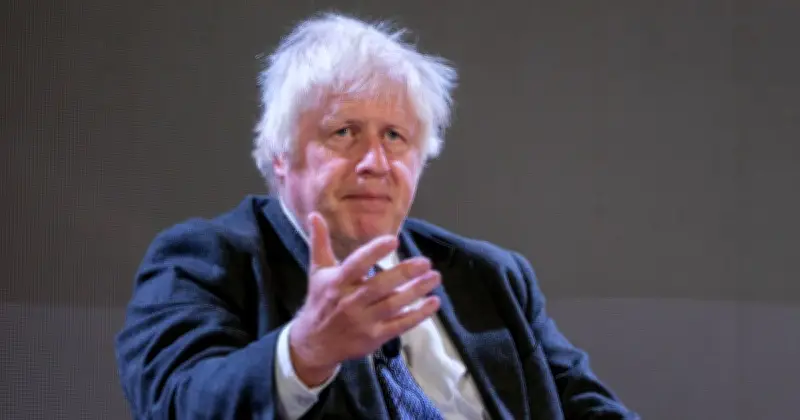
Former Prime Minister Boris Johnson has launched a blistering attack on plans to pay slavery reparations, revealing his own great-great-grandmother was sold as a child. In his weekly column, he branded the push a "fiasco" and pure "madness".
Mr Johnson tore into Prime Minister Andy Burnham for opening the door to official apologies and compensation. He said family ancestry research confirmed he is the direct descendant of a slave girl bought at a 19th-century Istanbul market.
Family ancestry revelation
Mr Johnson said his ancestor, Hanife Feride, was a Circassian refugee fleeing Russian imperial aggression in the Caucasus who was shipped across the Black Sea and put up for auction in the Grand Bazaar. She was later purchased by a Turkish woman and married to a 43-year-old businessman at just 13.
"Her name was Hanife Feride and she is my great-great-grandmother. Yes, folks, it's true... it seems undeniable: that we Johnsons are descended from slavery," he wrote.
Attack on reparations plans
Seizing on the discovery, the ex-Prime Minister turned Daily Mail columnist ridiculed calls for British taxpayers to fund historic atonement packages. "Let me ask you: does anyone out there seriously think that the large, sprawling, and broadly affluent Johnson family deserve any kind of taxpayer-funded compensation?" he asked.
"Would you like to see me get some sudden wodge of cash, in compensation for the undoubted injustice suffered by my great-great-grandmother? Of course you wouldn't."
Targeting the current occupant of No 10, Mr Johnson branded Mr Burnham a "muppet" after he pledged to launch a year-long "structured dialogue" on making amends and offered £40 million in assistance to Caribbean nations. He warned the move would expose hard-working Britons to a financial black hole that could cost "literally hundreds of billions of pounds."
Wider criticism and fallout
Taking aim at both the Government and the Church of England - which established a £100 million fund over historic links to slavery - he argued the UK taxpayer was being dragged into a "fatuous shakedown campaign." "We should not pay a red cent to the descendants of slavery. It is the quintessence of insanity. You might as well pay me," he added.
Warning of the endless precedent it would set, Mr Johnson pointed out that Britain had invaded 171 of the 193 UN member states throughout history, concluding: "If we concede this ridiculous principle, of paying compensation for the regrettable deeds of our distant ancestors, we will be in the dock for eternity."
The row erupted after Mr Burnham ditched Britain's longstanding refusal to apologise for the transatlantic slave trade. Despite ruling out direct cash payouts, he confirmed he is "open" to an official state apology, and unveiled a £40 million Caribbean aid package and a year-long "structured dialogue" to explore how the UK can make amends.
The move backfired on both sides. Caribbean leaders and campaigners dismissed the £40 million as inadequate, demanding full restorative justice, while critics warned any formal apology would open the door to claims worth hundreds of billions. Buckingham Palace stepped in to distance King Charles from the crossfire, clarifying that his role as head of the Commonwealth is about "inspiring and convening, rather than policy making."