
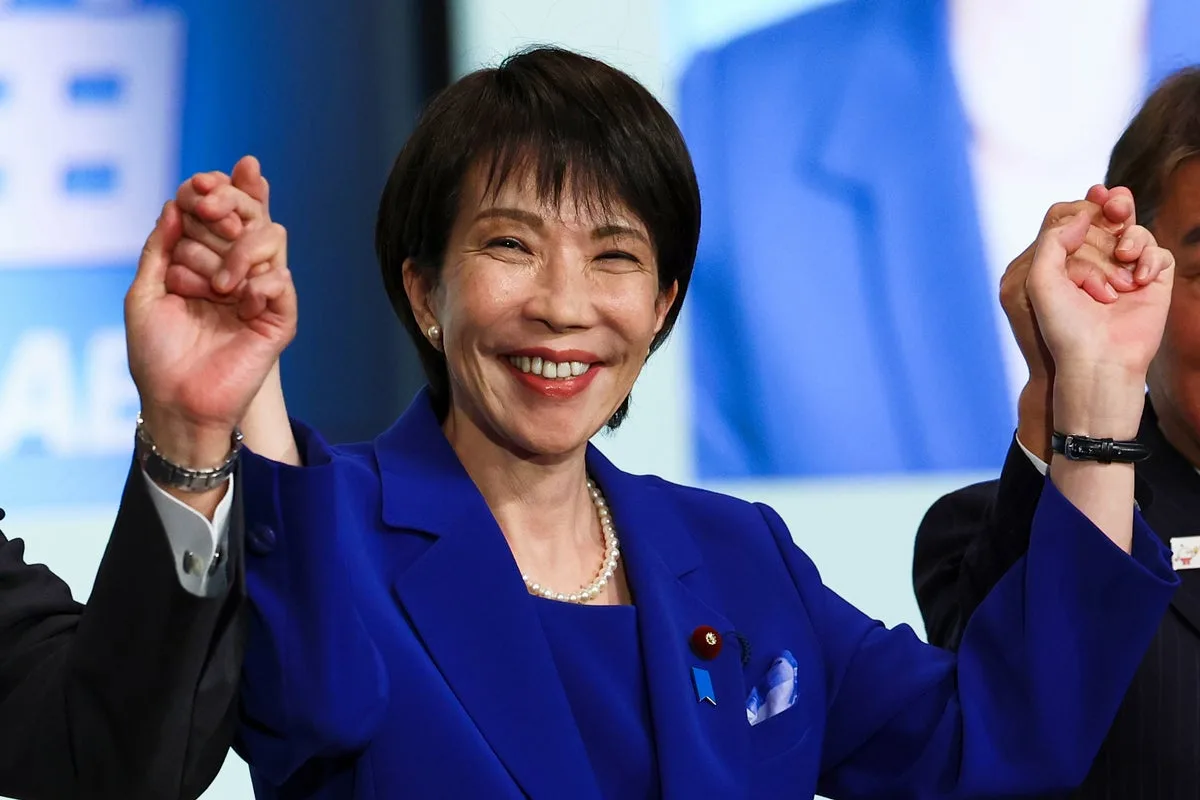
Sanae Takaichi was elected Japan's first female prime minister on Tuesday, breaking the country's political glass ceiling and setting the stage for a pronounced shift to the right. The hardline conservative, a close ally of the late Shinzo Abe, secured 237 votes in the 465-seat lower house and was subsequently approved by the upper house, becoming the nation's 104th prime minister.
Her appointment follows a coalition deal between her Liberal Democratic Party (LDP) and the right-wing Japan Innovation Party (Ishin), ending a three-month political vacuum that began with the LDP's historic electoral blow in July. That defeat left the party without a majority, forcing a scramble for allies. Ms Takaichi, who admires Margaret Thatcher, inherits an economy grappling with sluggish growth and rising prices, and her expected stimulus measures helped push Japan's Nikkei 225 index close to the never-broken 50,000 mark, while the yen weakened to about ¥151 per US dollar.
The new prime minister is anticipated to follow the same mix of high government spending and easy monetary policy that defined Abenomics, with an economic relief package expected by December. She has stressed the need for political stability to pursue a strong economy and diplomacy, yet her hawkish and nationalistic views are underscored by the coalition agreement, which prioritises fiscal stimulus, economic security, and a stronger military posture amid regional tensions.
Ms Takaichi's policy positions, however, stand in contrast to her historic role. She has long opposed measures to boost gender equality, supports the imperial family's male-only succession, and opposes same-sex marriage and separate surnames for married couples. She has, meanwhile, expressed support for tax incentives for companies offering childcare facilities, a nod to Japan's record-shrinking population and falling birthrate.
Japan ranks 118th out of 148 countries in the 2025 Global Gender Gap Index, with women holding just 16 per cent of lower-house seats and 26 per cent in the upper house, a reflection of the entrenched male dominance in Japanese politics that Ms Takaichi has now broken.




