
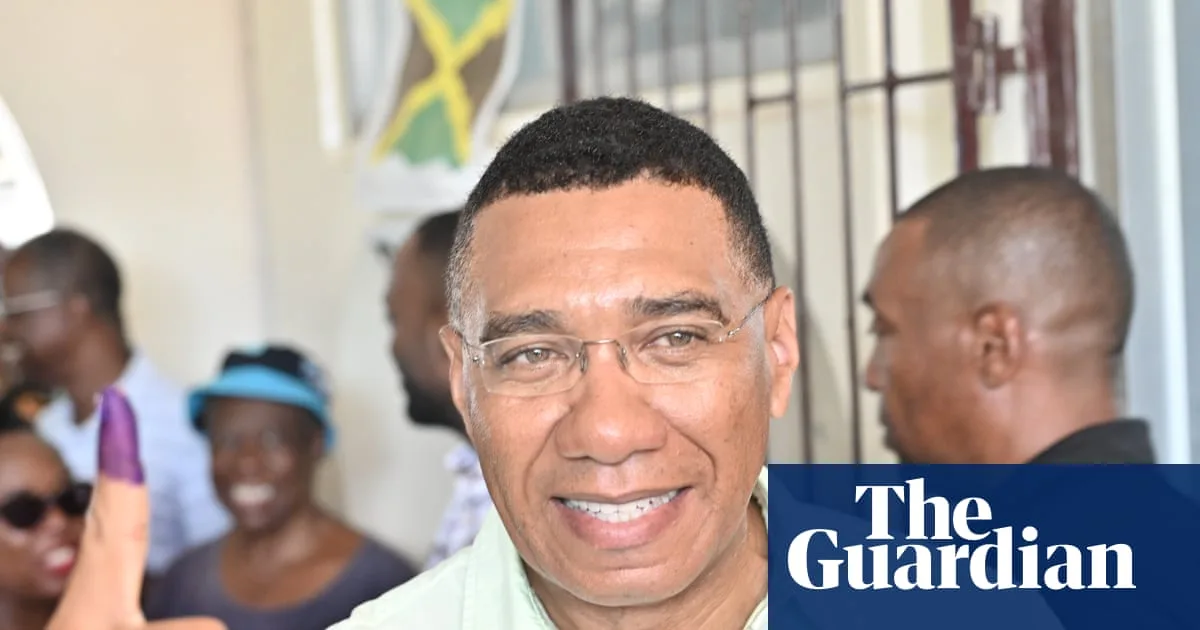
Jamaica's Prime Minister Andrew Holness has led his Jamaica Labour Party (JLP) to a third consecutive term in government, defeating the opposition People's National Party (PNP) in a closely fought election. Preliminary results show the JLP winning 34 of the 63 parliamentary seats, with the PNP taking 29. Holness, who has been in power since 2016, described the victory as a mandate to continue the country's development trajectory.
In his victory speech, Holness highlighted the progress made during his tenure, including economic improvements and a significant reduction in crime. The World Bank has noted Jamaica's reduction in public debt from over 140% of GDP in 2013 to 73.4% in the 2023-2024 financial year, with the economy projected to grow by 1.7% this year. Homicides have dropped by 43% so far this year, the largest decline in decades, attributed to increased firearm seizures and a stronger security presence.
The election campaign was marred by controversy after the Integrity Commission raised questions about Holness's income and asset declarations, recommending further investigation. Holness denied any wrongdoing, calling the report unlawful and unfair, and obtained permission from the Supreme Court to challenge it. During a pre-election debate, he stated that a year-long forensic audit had found no evidence of corruption.
Opposition leader Mark Golding conceded defeat, acknowledging the democratic process despite disappointment. He noted that the PNP had made significant gains since the last election in 2020, winning 15 seats. However, voter turnout was low, with under 40% of registered voters casting ballots. Holness acknowledged the low turnout but stressed that the majority of those who voted had chosen the JLP, reaffirming Jamaica's democratic integrity.




