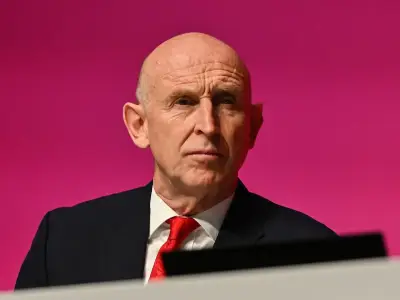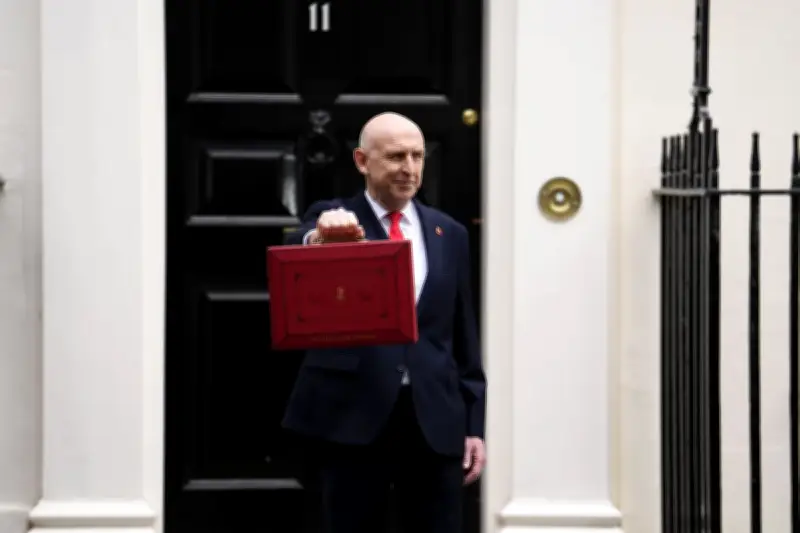
Chancellor John Healey has promised his first Budget would “steer us through the economic storms”, with a financial package aimed at supporting the “working people of Britain” as well as “business big and small”.
Delivering his first autumn statement in the House of Commons, Mr Healey opened by saying the Budget is for “the working people of Britain, for British businesses, big and small”, built on “fiscal discipline”.
He outlined three aims: giving Britain “breathing space on the cost of living and the cost of business”, backing “the enterprise of British business to unleash innovation and growth in every postcode”, and tackling “the big challenges on energy, on national security, on public service transformation and on housing”.
Energy Support and Fuel Duty Measures
Mr Healey announced a £100 household energy payment to people in council tax bands A to D to help them deal with soaring bills “through to the spring”.
The cut to VAT on electricity will be extended to July, taking £50 off the annual price cap, the Chancellor announced.
He also said he will extend the fuel duty cut until July 2027. He told MPs: “Earlier this year, the Government extended the 5p cut to fuel duty and slashed red diesel to its lowest rate in over 20 years.”
“With the war in the Middle East still driving high fuel prices, I am extending these tax cuts for motorists through the winter and spring to July, supporting households, hauliers, and farmers.”
“And for anyone who relies on their car for their work, from care workers to engineers, I am increasing the higher mileage rate from 25p to 35p per mile, and making permanent the increase to the standard mileage rate introduced earlier this year.”
Fiscal Discipline and Economic Forecasts
Mr Healey said fiscal discipline is his first commitment as Chancellor. He told the Commons: “More than ever, it underwrites every promise this Government makes to the British people.”
“In the Budget today, I meet the fiscal rules – the stability rule, the day-to-day spending must be covered by tax receipts. And the investment rule, that Government debt, defined as public sector net financial liabilities, must be falling as a percentage of GDP.”
The Office for Budget Responsibility has confirmed that headroom against the Government’s fiscal stability rule is £15 billion in 2029/30 before rising to £22 billion in 2030/31, the Chancellor said.
The budget watchdog predicts the Government will spend £14 billion more on debt interest this year, Mr Healey said as he vowed “fiscal discipline” in the face of economic “storms” the UK must weather.
Mr Healey said he believes the UK will beat its economic forecasts with the action he is taking in the Budget. “Three months ago, the Bank of England upgraded their forecasts for UK growth this year. Two weeks ago, the IMF did the same,” he said.
“And today, the OBR has upgraded its forecast too to 1.2% this year, followed by 1% next year, 1.6% in 2028, 1.8% in 2029, 1.7% in 2030 and 1.6% in 2031.”
“Yes, there are real challenges ahead, but Britain has beaten the forecasts this year, and with the action I’m taking today, I believe Britain can beat the forecasts again.”
Isa Allowance Reports and Industry Reaction
Mr Healey is reportedly planning to reverse the decision to slash the annual Isa allowance from £20,000 to £12,000 in his inaugural Budget, according to the Financial Times.
Former chancellor Rachel Reeves announced the Isa cut for savers aged under 65 at the autumn budget last year, with the change set to come into effect in April 2027, as she looked to encourage investment in the stock market.
Holly Mackay, chief executive officer of Boring Money, said: “If indeed the Chancellor reverses this change, I think that’s a hugely positive move. This was going to add cost and complexity with little evidence of any behavioural change.”
Katie Horne, banks relationship manager at Flagstone, said: “We’re continually told we don’t save enough, and cutting the threshold would only have punished rather than rewarded those who do.”
Prime Minister Andy Burnham said: “Abolishing gas standing charges is about basic fairness and giving people more control over their bills. I am determined to reform our broken energy market, so it better serves the public interest.”
In a video message ahead of the autumn statement, the Chancellor said: “This Budget is designed to give households breathing space from some of the everyday costs, provide targeted support for businesses and self-employed people, and to start the long-term action needed to get energy costs down for good.”