
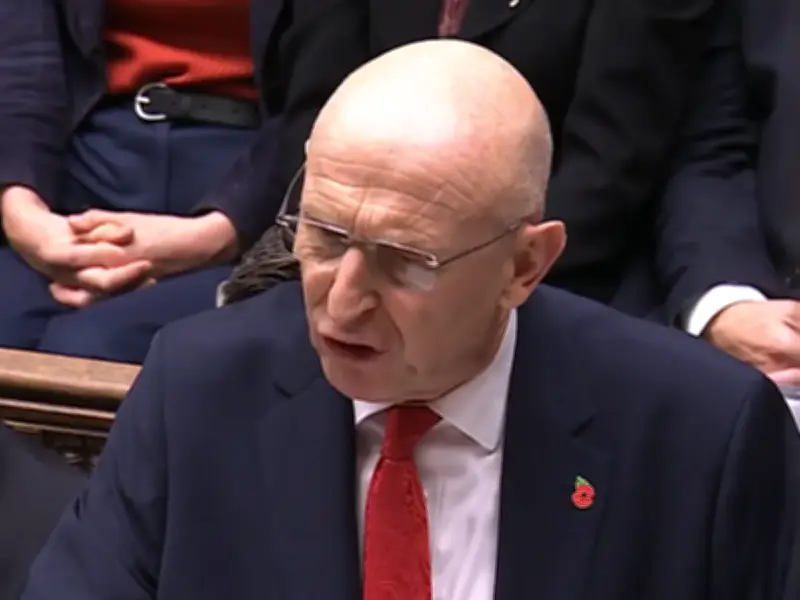
Chancellor John Healey has confirmed that households in council tax bands A to D will receive a £100 energy payment directly into their bank accounts this winter, as part of a £2.6 billion scheme to help with rising energy bills.
The payment was announced during the Autumn Budget speech, alongside measures to extend the VAT cut on electricity bills to July and shift gas standing charges onto unit rates. The Chancellor said the support would give families “breathing space” on energy costs amid the economic impact of the Iran war.
Support for 20 million households
Mr Healey said the payment would reach 20 million households in council tax bands A to D, with funds paid directly to bank accounts to deal with rising energy bills. He described it as a £2.6 billion scheme to take pressure off during the coldest months and see people through to spring.
Speaking during his Budget speech, Mr Healey said: “Let me say this to families at home. I know that with the conflict in the Middle East, rising energy bills are a real worry. I know that people look to Government at times like this, not to solve all their problems, but to give them a bit of breathing space.”
Reaction to the energy measures
Campaigners had warned that action was needed after Ofgem’s price cap rose by 3.6% to £1,723 for a typical household on October 1, with a further rise of around 22% forecast in January. Simon Francis, co-ordinator of the End Fuel Poverty Coalition, said the Chancellor had “talked the talk on energy bills, but ultimately failed to walk the walk”.
Cornwall Insight principal consultant Craig Lowrey said scrapping the gas standing charge from as early as 2027 was a “broadly progressive move” that may help lower-income households, though savings would be small compared with recent bill rises. Dhara Vyas, chief executive of Energy UK, welcomed the move as “good news” for many customers but stressed the importance of supporting low-income households who could lose out.
Impact on household bills
Richard Neudegg, director of regulation at Uswitch.com, said moving gas standing charges onto the unit rate was a “sensible idea for the longer term”. Based on current rates, a household using 7,000 kWh of gas a year could be about £40 better off, while a home using 14,000 kWh could be £25 worse off. A household using the typical 11,500 kWh should not see any change.
The Treasury says these changes will happen “in 2027 or as soon as possible after”. In the meantime, consumers face a difficult winter with further price cap increases on the horizon.




