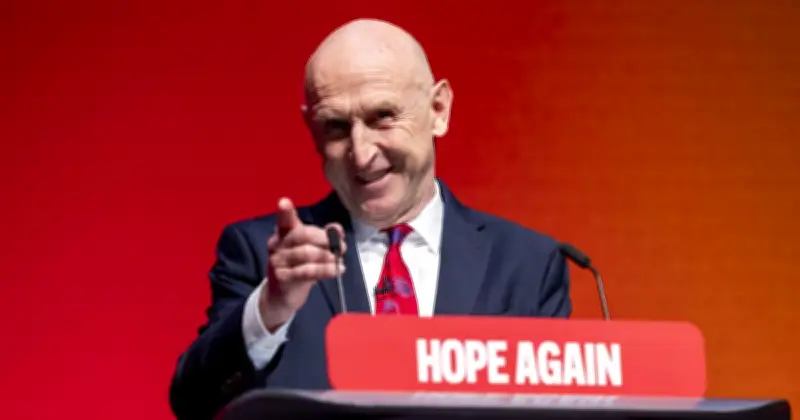
John Healey has been warned that his first Budget could drag the UK closer to a punishing 1970s fiscal environment. Nigel Green, CEO of independent financial advisor deVere Group, urged the Chancellor not to increase dividend tax, which is levied on the share of a company's post-tax profits paid out to shareholders or directors.
Speculation over tax rises
There is speculation that the levy could be increased, with a sharp rise in the bank profits surcharge already widely tipped, Mr Green said. From 1973 to 1984, the UK levied a 15% investment income surcharge on dividends, interest and rents above around £2,000. After Denis Healey's 1974 Budget lifted the top rate to 83%, the highest slice of investment income was taxed at 98%.
“It’s quite something that another Chancellor called Healey now holds the pen,” Mr Green said. “The last one presided over a 98% top rate on investment income, and wealthy families, entrepreneurs and their capital left in droves. Nobody’s predicting a return to 98%. But the direction of travel looks the same, and money moves far faster today.
“In the 1970s, getting capital out of Britain meant exchange controls and paperwork. Now it takes an afternoon.”
Impact on investors
He added: “Everyone’s bracing for a Budget day crash. I don’t think that’s where the damage lands. Markets look to have already priced in the bank surcharge. What they can’t price is the slow squeeze on every pound people earn from owning shares, holding savings, or letting property.
“Dividend tax is fatally flawed, and we expect it could get worse still following the Budget.”
The expert highlighted that, since April 6, dividends held outside ISAs and pensions have been taxed at 10.75% for basic rate taxpayers and 35.75% at the higher rate, with the additional rate held at 39.35%. Meanwhile, the tax-free dividend allowance has shrunk to £500, compared to £5,000 a decade ago.
Concerns over capital flight
“A dividend comes out of profit that’s already been taxed,” Mr Green said. “The company pays 25% corporation tax, then the shareholder pays again on what’s left. For a higher rate investor, almost 52p of every pound of profit ends up with the Treasury. Then Westminster wonders why Britain struggles to keep companies and capital at home.
“Punishing the people who own British businesses is a strange way to grow them.”
This morning, the Prime Minister said the Budget will set out a path for defence spending to hit 3% of national income by 2030. Changes are also expected to be aimed at easing the impact of rising household and business costs. Moreover, a capital gains tax increase has been ruled out, but the Chancellor is reportedly considering increasing the surcharge on bank profits from 3% to 8%, reversing a tax cut for the sector launched by former chancellor Jeremy Hunt, PA reports.