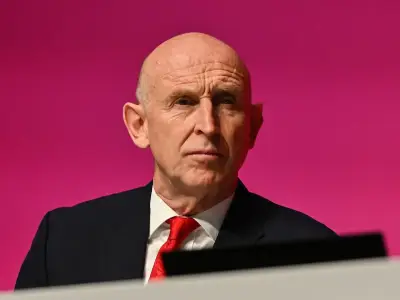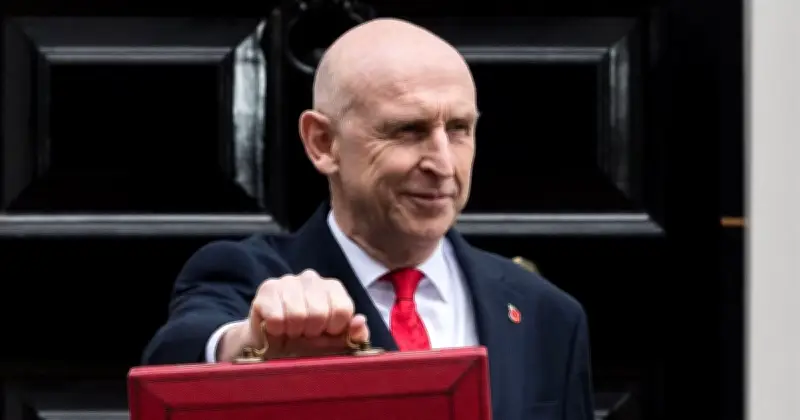
Chancellor John Healey has been accused of pushing up energy bills for pensioners and people with disabilities, as his Budget pledge to create “breathing space” for cash-strapped households began to unravel. Key announcements in his first Budget included axing standing charges on gas bills, expected to save six in 10 households an average of £45.
But the move will be funded by raising the price per unit of gas consumption, and experts warned this would mean higher bills for people who use large amounts of energy – including big families, people in poorly insulated properties and the elderly.
Experts warn of unintended consequences
Josie Irwin, spokesperson for campaign group Later Life Ambitions, said: “There is a real danger here of unintended consequences because older people are yet again treated as an afterthought. Older people often face high and unavoidable heating costs due to the nature of their housing or due to health conditions. Many will already be concerned about heating their homes this coming winter and how they will be able to pay their energy bills.”
Craig Lowrey, principal consultant at Cornwall Insight, said the move “may help lower-income households who tend to use less energy”. But he warned: ”Higher unit rates mean people in badly insulated homes, larger families or those who need to keep the heating on to manage a health condition, could end up paying more.”
Charity Mencap said disabled people who depend on specialised equipment could face higher costs. Dan Scorer, Mencap’s director of public affairs, said: “While some households may benefit from the abolition of gas standing charges, people who rely on higher energy use could end up paying more if costs are shifted onto unit rates.”
Treasury admits some households may lose out
Documents published by the Treasury alongside the Budget said: “While a significant majority will benefit from better control of their energy bills, a number of households may be less able to make the most of the reform.” The Treasury said “targeted mitigation” would be introduced to help struggling households, with details to be published in the future.
Delivering his speech to the House of Commons, Mr Healey promised “to steer us through the global economic storms today, to chart a new course for Britain in the years ahead, to give people fresh hope for Britain’s future”.
But figures from the Treasury and the Office for Budget Responsibility (OBR), the official watchdog, showed that British families are set to be poorer as inflation rises, unemployment grows, and mortgage payments soar. The average mortgage interest rate is forecast to rise from 4% in 2026 to about 5% in 2031, meaning higher bills for many homeowners.
Economic forecasts paint a bleak picture
Inflation is set to rise to 3.75% in early 2027, almost double the Government’s official target of 2%. And unemployment is also set to rise, “peaking at just above 5% in the second quarter of 2027”, according to the OBR.
It said: “We expect no growth in real earnings in 2027 and 2028, and a slight fall in real household disposable income per person in the near term.” The watchdog highlighted war in the Middle East as a “risk to the economy”, which had pushed up energy prices and created uncertainty.
But it also warned that Labour’s decision to freeze income tax and National Insurance thresholds to 2031 meant workers were paying an extra £2.5billion in taxes – and could lead to 215,000 fewer people in work. It said: “The tax-to-GDP ratio is expected to surpass its historical high of 37.2% in 2027-28 and continue increasing in every year of the forecast.”
Political reaction and delayed reforms
Tories accused the Chancellor of hiking up taxes to pay for schemes such as a £100 rebate on energy bills for £20million families. Mr Healey said the £2.6billion policy, funded by a temporary increase on bank taxes, would give people “breathing space” on energy bills.
Mr Healey also announced a 2% increase in property income tax rates, but the OBR warned this would lead to higher rents as some domestic landlords quit the market, allowing those that remained to increase prices. Conservatives accused Mr Burnham of failing to explain how he would fund his plan for a “national care service” similar to the NHS. The Prime Minister has said proposed changes to the state pension triple lock would help fund the scheme and Budget documents showed this is expected to save taxpayers £50 billion by the late 2040s, but it will raise little money before the late 2030s.
Experts at the Institute for Fiscal Studies also pointed out that big decisions on boosting defence, cutting benefits and reducing the number of young people not in education, employment or training had also been delayed. The think tank’s researchers said in a statement: “This Budget has a raft of fiddly measures but very little that will move the dial on growth. But on many other big areas – disability benefits, support for young people, plans for social care, and the path for defence spending – we are still waiting.”
William Nixon, senior research fellow at think tank Policy Exchange, said: “The Chancellor’s ‘do no harm’ Budget fails to address the UK’s underlying economic and fiscal problems. Key and necessary reforms on energy, housing, tax and welfare spending have been kicked down the road. The incremental support for households is dwarfed in comparison to coming headwinds from higher energy prices and interest rates – which could lead to higher costs of up to £1,000 per household per year.”
Ryan Shorthouse, executive chairman of Bright Blue, said: “This country needs a change in direction. But this is just a continuity chancellor. We need bold, brave, broad tax reforms and spending cuts to make Britain more prosperous and fairer for younger and future generations.”