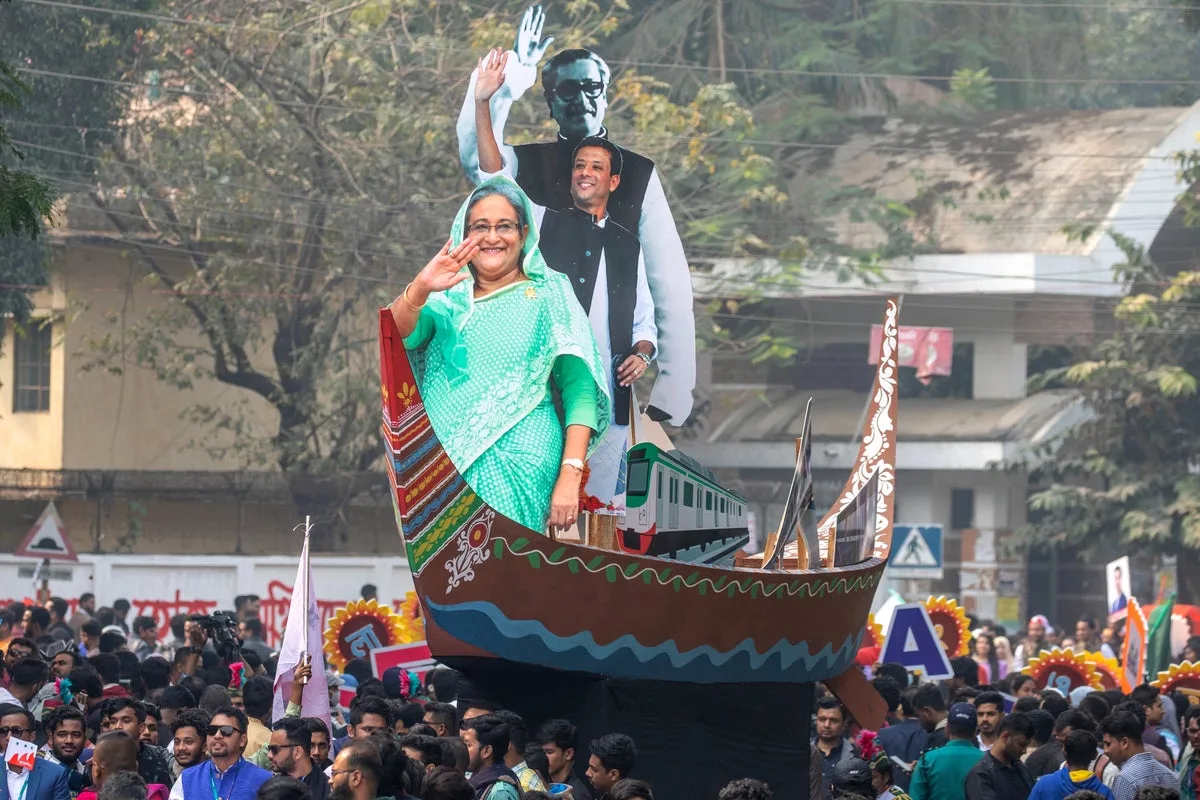
Sheikh Hasina's Son Admits Government Mishandled Bangladesh Gen Z Protests
Hasina's Son Admits Government Mishandled Bangladesh Protests

Sheikh Hasina's Son Criticises Government Handling of 2024 Gen Z Uprising

Sajeeb Wazed, the son of Bangladesh's ousted prime minister Sheikh Hasina, has made a rare public admission that his mother's government "completely mishandled" the volatile situation during the 2024 Gen Z protests that ultimately brought down the country's longest-ruling political party. In an exclusive interview with The Independent, Wazed reflected on the events that led to the Awami League's removal from power.

Failure to Engage with Protesters

Wazed stated that the government's critical error was its failure to "sit down with the protesters" when the demonstrations began as a student movement. He described a "failure of communication and a failure of judgement" that allowed the situation to escalate dramatically.

"And then you had the Islamists taking advantage of the protests, the militants jumping in... armed attacks... taking this as an opportunity to try and overthrow the government," Wazed explained. "And the protests turned violent. And at that point, our government completely mishandled it as well."

Wide Pickt banner — collaborative shopping lists app for Telegram, phone mockup with grocery list

Excessive Force and Regrettable Outcomes

The son of the former prime minister acknowledged that law enforcement used excessive force during the crackdown, which according to UN estimates led to up to 1,400 deaths. "We let it, our government let it completely get out of hand. It should never have gone that far. And, you know, it's regrettable," he said.

Wazed revealed that Hasina had met with families of those killed in the uprising and promised them justice, even forming a judicial committee to investigate the killings. However, this body was disbanded by the interim administration of Nobel laureate Muhammad Yunus, who took over governance after Hasina fled to India in the summer of 2024.

Current Election Called a "Sham"

As Bangladesh heads to the polls on Thursday with over 128 million voters eligible to cast ballots, Wazed has urged Awami League loyalists to boycott what he calls "sham" elections. He claims the current electoral process has been manipulated to give the once-outlawed Jamaat-e-Islami party a greater proportion of parliamentary seats than they would achieve in a fair contest.

"This is a completely manipulated election, in particular to give Jamaat a much greater proportion of seats in parliament than they would ever get in a fair election," Wazed said from Washington, where he gave the phone interview.

Distancing Hasina from Responsibility

Despite his criticism of the government's actions, Wazed stopped short of directly blaming his mother for the situation. Instead, he placed responsibility on senior party leaders who had been in power for too long.

"What happened is, I think because the party was in power for so long, you had several people high up in the government, and it definitely wasn't my mother, but there were people who had been in key positions for far too long," Wazed explained. "They became far too, how should I put it, authoritarian, frankly speaking."

He revealed that he had recommended Hasina replace these members, but his pleas went unheard, resulting in the entire party being blamed for the government's actions.

Current Political Repression

Wazed described a worsening situation in Dhaka since the summer of 2024, claiming that over 500 Awami League members have been killed and "hundreds of minorities murdered." He alleged that authorities have arrested over 20,000 activists in recent weeks through operations dubbed "Devil Hunts," with tens of thousands of senior leaders imprisoned without justice for a year and a half.

The political heir also expressed concern about the rise of Jamaat-e-Islami, warning about "fears of Islamisation of Bangladesh" following reports of targeted violence against minorities.

Hasina's Current Situation and Legacy

Sheikh Hasina, who was Bangladesh's longest-serving prime minister with consecutive elections from 2009 onwards, now lives in "good health" near the corridors of power in New Delhi. Wazed confirmed that the Indian government is treating her as a head of state with full security provisions.

Pickt after-article banner — collaborative shopping lists app with family illustration

While Hasina's legacy includes lifting millions out of poverty through a boom in garment exports and walking a careful diplomatic line between China and India, it has been overshadowed by allegations of the bloody crackdown and elections repeatedly criticised for falling short of democratic standards.

Future Prospects for Awami League

Despite the current repression, Wazed believes the Awami League retains deep-rooted support tied to Bangladesh's independence history and will eventually return to power. "It is not a matter of if but when about the Awami League's return to active politics in Bangladesh," he asserted.

Interestingly, Wazed suggested that Gen Z voters, who comprise nearly a third of Thursday's electorate, may be reconsidering their opposition to the Awami League. He cited polls showing that half of young people regret what happened in 2024, given the economic crash, collapse of law and order, and climate of fear that has developed in the past eighteen months.

The Awami League is currently reaching out to European governments and US lawmakers to highlight the threat of Islamic fundamentalism in Bangladesh, while Wazed maintains that his mother has been "deeply frustrated" by recent election developments but remains healthy and safe in her Indian exile.