

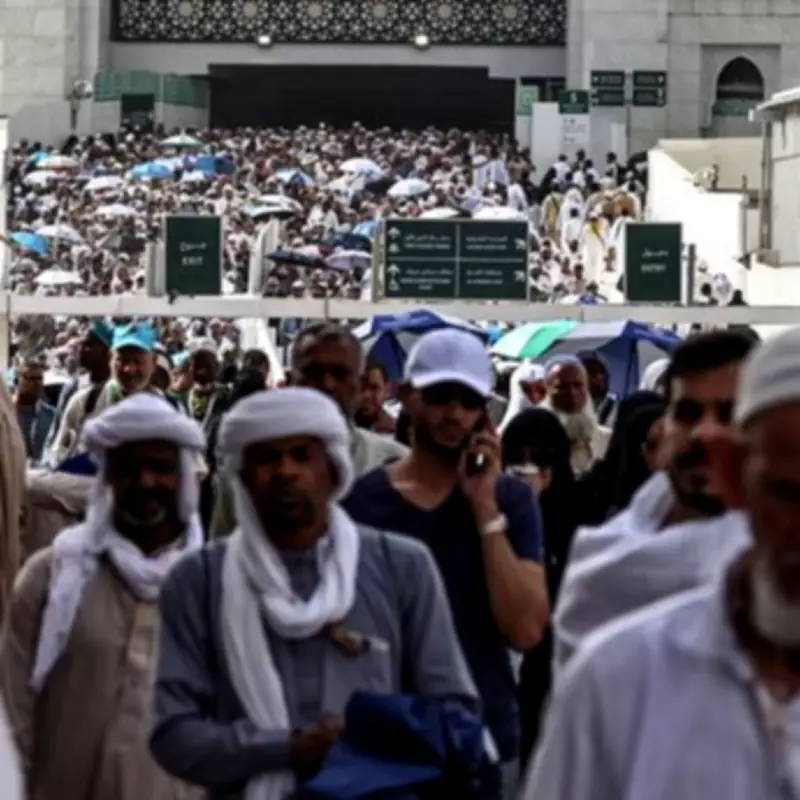
More than 1.5 million Muslims have gathered in Saudi Arabia for the annual Hajj pilgrimage, one of the largest religious gatherings on Earth. Each year, millions of worshippers travel to the holy city of Mecca to take part in the sacred journey, a key pillar of Islam that many Muslims hope to complete at least once in their lifetime.
Pilgrims Brave Intense Heat
As they brave the intense heat to perform religious rituals, many pilgrims have been seen using umbrellas for shade and carrying handheld fans. Volunteers are handing out water bottles to help them stay hydrated, and fans spray fine mists of water. Mecca has recorded sweltering highs of 44°C today, with maximum temperatures expected to range between 42°C and 44°C and lows of 26°C to 29°C.
Hajj Amid Regional Tensions
This year's Hajj comes amid major regional tensions due to the war between the US and Israel and Iran. Worshippers have been pouring into Saudi Arabia, with the mass gathering taking place against a backdrop of a fragile ceasefire in the US-Iran war. Diplomatic efforts are ongoing, focusing on wider Middle East tensions and concerns around Iran's nuclear programme. The US has repeatedly called for Iran to give up its enriched uranium, while Iranian foreign ministry spokesman Esmaeil Baqaei said nuclear issues were not part of the initial framework and would be dealt with in later negotiations.

Impact on Pilgrims from Abroad
Authorities in Indonesia, home to the world's largest Muslim population, have issued instructions to avoid pilgrims incurring extra travel costs. High fuel prices have pushed up travel costs for pilgrims in India.
What is Hajj?
Hajj is an Arabic word that literally means "to intend a journey" or "to set out with a specific purpose." In Islamic belief, its roots are linked to the Prophet Abraham (Ibrahim) and his son Ishmael (Isma‘il), who are said to have been commanded by God to build or rebuild the Kaaba in Mecca. The pilgrimage rituals associated with Hajj were restored and formalised later by the Prophet Muhammad in the 7th century CE.
Key Steps of the Hajj Pilgrimage
Hajj unfolds through a series of sacred rites carried out over several days in and around Mecca, each marking a different stage of the spiritual journey.
Day 1
- Ihram: Pilgrims enter a state of spiritual purity, wearing simple white clothing and declaring their intention to perform Hajj.
- Tawaf: Worshippers circle the Kaaba seven times in the Grand Mosque at Mecca.
- Sa’i: Pilgrims walk back and forth between the hills of Safa and Marwah, retracing a historic act of devotion.
- Mina: Millions gather in a vast tent city outside Mecca, spending time in prayer and reflection.
Day 2
- Arafat: Considered the most important day, pilgrims gather at Mount Arafat for prayer and reflection.
- Muzdalifah: Worshippers sleep outdoors and collect small stones for the next ritual.
Day 3
- Stoning of the pillars: Pilgrims symbolically throw stones at pillars representing temptation and evil.
- Eid al-Adha sacrifice: The festival begins, marking an act of devotion linked to Prophet Ibrahim.
- Shaving or cutting hair: Pilgrims mark spiritual renewal by cutting or shaving their hair.
- Final Tawaf: A farewell circling of the Kaaba before leaving Mecca.
Days 4 and 5
Return to Mina to repeat the stoning ritual at all three pillars before completing the pilgrimage.
Pilgrims' Experiences
Egyptian pilgrim Samya Abdul Moneim said she is grateful to God to have made it to Hajj. "I am in a state of blessing and happiness," she told AFP. "It's an indescribable feeling, truly. Thank God, I am in a blessing." Youssef Chouhoud, a political scientist at Christopher Newport University in Virginia, said from the tent city of Mina that this Hajj "is, in effect, a hard reset for me." He added, "It is for many pilgrims the most difficult thing they will ever do in their lives. But nothing this meaningful is ever going to be easy."

Why Muslims Touch the Holy Kaaba
Touching the holy Kaaba is a deeply symbolic act of devotion for Muslims. While they do not worship the structure itself, many touch the surface to follow the tradition of Prophet Muhammad and honour the historical legacy of the prophets. Touching the Kaaba is believed to bring spiritual blessings and the forgiveness of sins.
Eid al-Adha at the End of Hajj
The majority of Muslims will celebrate Eid al-Adha on May 27. The festival follows the end of the annual Hajj pilgrimage and is known as the "Feast of Sacrifice." Muslims around the world take part in Qurbani—the ritual sacrifice of livestock, typically a sheep, goat, cow, or camel—reflecting the legacy of Prophet Ibrahim and his unwavering obedience to Allah.





