
It seems inevitable that Andy Burnham will become the UK's seventh prime minister in a decade, after Keir Starmer announced his resignation on Monday morning and, hours later, Burnham's most likely challenger, Wes Streeting, backed the former mayor of Greater Manchester.
Starmer leaves office barely two years after his landslide victory that swept Labour into power on a mandate of change. Six weeks after the party's humiliation at the hands of Reform across English councils, and historic defeats to progressive nationalists in the Welsh Senedd and Scottish parliament, Burnham offered the country another “change moment”: winning an emphatic victory over Reform in last week's Makerfield byelection, cementing the view that he can defeat the hard right at the next general election.
Starmer's Resignation and Burnham's Coronation
Just after 9.30am yesterday, Keir Starmer stood before staff and supporters on Downing Street and confirmed that, after a weekend of intense pressure from Labour MPs and cabinet ministers, he had offered his resignation to King Charles. There was bitter irony that the section of his brief resignation speech where he set out his achievements in office was almost drowned out by the EU anthem Ode to Joy, blasted by anti-Brexit campaigner Steve Bray beyond the Downing Street gates.
While Starmer's remaining allies spoke of his sense of profound unfairness at being booted out by a mayor with only a byelection mandate, he offered a dignified public face, saying he would do “everything I can” to ensure an orderly handover and offering his successor “my full and unequivocal support”. As he made his final thanks to his “beautiful children” and “fantastic wife Vic”, Starmer came close to tears.
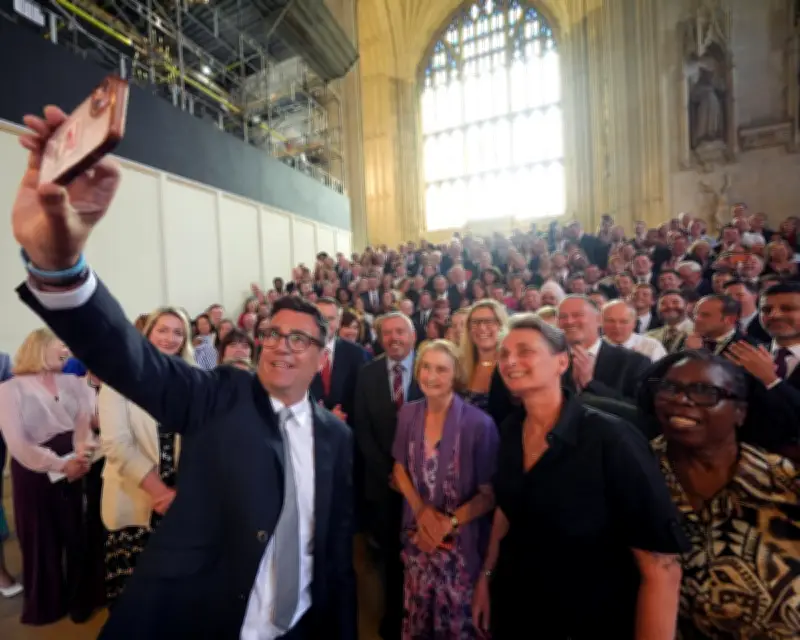
The merciless spotlight then moved on to Burnham, who was flexing his selfie arm in Westminster Hall with over 200 Labour MPs who had assembled to greet the new MP for Makerfield after he was officially sworn in. With a Burnham coronation now most likely, he has just under a month to pick his cabinet and confirm his policy priorities.
Economic Challenges and Fiscal Constraints
During the Makerfield campaign, we heard ambitious long-term plans from Burnham to bring water and energy into public control, and radically overhaul the property tax and social care systems, alongside more immediate cost-of-living interventions on rent and energy levies. But there's a big difference between spitballing on the stump and navigating the Treasury's tight fiscal rules – which he's already signed up to.
“He has limited room for manoeuvre realistically,” says Heather Stewart, the Guardian's economics editor, noting that the UK government is due to borrow £250bn this year, inflated by the long tail of bank bailouts and Covid. Heather thinks he has some wriggle room, “but it means he has to be very, very careful the sort of messages he sends”. “It's one thing for the markets to lend you money because you want to do a long-term project with long-term returns,” she says. “It's another for the market to think that you can't control your day-to-day spending and they're lending you money that's going straight out the door for benefits.”
During the campaign, Burnham was pressed repeatedly on previous remarks that politicians were “in hock” to the bond markets, saying they had been misinterpreted by his opponents and that his argument was about politicians retaking control of fiscal levers. While his Makerfield win failed to prompt the bond market panic that Rachel Reeves's backers had warned of, as Heather sets out in her column this week, she believes Burnham would be wise to set clear expectations about tax and spend, and be upfront about the fact that not everyone can be a winner. During the campaign he claimed he was “not squeamish” about reducing welfare spending to fund defence. But there are options for tax increases, she says, “that don't step on the live wire of Labour's manifesto pledges” – capital gains tax again, for example, a bank tax or increasing the tax on high-value homes, due to come into force in 2028. “Announcing a wealth tax would be a powerful symbol of intent, too, though the practicalities are challenging”.
Foreign Policy and EU Relations
Foreign policy is widely acknowledged as an area in which Burnham is inexperienced and one of his first challenges in office is likely to be a reset summit with the EU on 22 July. The UK's relationship with Europe has “immeasurably improved” since the Tories left government, our Europe correspondent, Jon Henley, tells me on a video chat from Paris. Glowing tributes from figures like Canadian premier, Mark Carney, who said yesterday “the world is safer and allies are more united” because of Starmer's efforts, are testament to the international respect he earned for his leadership on Ukraine, managing the vicissitudes of US president Donald Trump.
But there remains a degree of frustration among EU countries, Jon adds that for all of Starmer's warm words about closer ties, “there are the famous red lines in Labour's manifesto” on the single market, customs union and free movement, which Burnham will be boxed in by, too. Burnham was accused of reversing his position in favour of rejoining the EU, as he campaigned in Leave-voting Makerfield. He later clarified that, while he respects the result of the Brexit referendum, “I'd like to see us rejoin in my lifetime.” “The problem is there's very little Burnham can do to improve relationships with Europe that doesn't involve a major about-turn on those red lines,” says Jon.
Devolution and the North
In his victory speech in the wee hours of Friday morning, Burnham said the people of Makerfield had “voted for more power for the north and everywhere forgotten by Westminster”. “We've heard all this before with Boris Johnson and levelling up,” our northern correspondent, Hannah Al-Othman, tells me when I catch her driving through Northumberland, “and the consensus here is that those areas have further declined. But with Burnham it does feel more authentic.” She reminds me that Burnham lives in the Leigh area, next to the constituency he's been elected to represent and a similar sort of place. “There is a sense that he's lived it and he knows what its issues are.”
With growing numbers of regional leaders wielding different levels of power, Hannah wonders whether Burnham might effect some standardisation, devolving further responsibilities. “He has strong relationships with the other regional mayors. I imagine they'll have his ear and will be holding him to account.”
Telling Labour's Story
A perennial criticism of Starmer was that he was too much the technocrat, unable to draw together the threads of incremental progress into a narrative powerful enough to convince a public whose trust had been eroded by decades of austerity, stagnation and broken promises. We know Burnham's story so far: it's called Manchesterism, and it means a more interventionist approach to the economy, bringing essential assets such as transport, water and energy into greater public control, a closer partnership between the state and business to spread the proceeds of wealth, and a major expansion of devolution.
That's the ambition, and what Labour MPs are excited about this morning. But how realistic are they, given Burnham's constraint by manifesto commitments and the economy? Much will depend on who Burnham picks as his chancellor. A briefing war has already broken out between advocates for Streeting and those close to Ed Miliband. Senior political correspondent Peter Walker, who was on Downing Street to watch Starmer at the podium, recalls Burnham's campaign launch in Makerfield: “The message very much was, ‘If I become PM, I can't really go beyond what the manifesto said because I haven't got a mandate to do that.’ And the sheer state of public finances means there's not much he can do, unless he wanted to significantly change taxation, which he said he's not going to do.” And that, says Peter, leaves a problem many Labour MPs fear: “Is Burnham just going to be Starmer with a slightly more human presentation style?”




