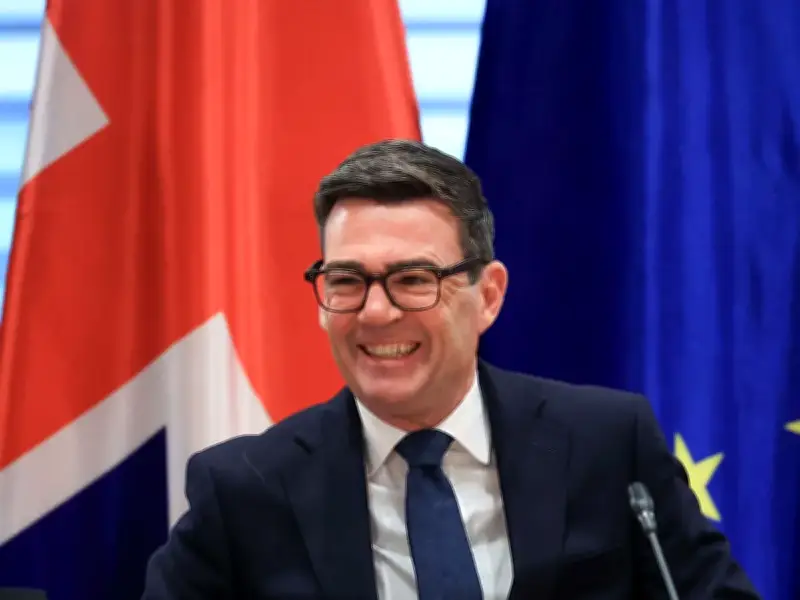
Prime Minister Andy Burnham has said the country needs a 'rounded' and 'honest discussion' about the prospect of returning to free movement between the UK and the European Union. In an interview with the Sunday Times, he said immigration into Britain had been 'different' since Brexit, with more foreigners moving permanently.
Remarks on Migration and EU Ties
His remarks are the latest in a series of comments he has made since entering Number 10 in June, on wanting to form closer ties with Brussels or even re-joining the EU, 10 years since the country voted leave in the referendum. Free movement allowed people from EU countries to move to the UK and was seen as a key reason why many British people voted to leave the bloc.
The Prime Minister has previously committed to Labour's 2024 election manifesto, which ruled out a return of free movement, single market membership or a customs union. He has said any changes would require a mandate at a general election. Asked if returning to EU free movement was a red line, the Prime Minister suggested it was not.
Prime Minister's Comments and Opposition Response
“Freedom of movement had very significant challenges associated with it and I spoke about them in my previous time in parliament,” he told the Sunday Times. “But at the same time, it was a type of immigration that perhaps wasn’t as difficult [as now]. Revolving door migration where people would come and then go back is different. The balance of migration has changed, hasn’t it, since then? I think we’ve just got to have an honest discussion about those things.”
He added: “I can’t see myself ever recommending anything that would involve joining the euro or Schengen.” Mr Burnham recalled when his father was able to take advantage of free movement to work in Germany in the 90s, building the nation’s mobile phone infrastructure. “I think we just need a rounded discussion about it,” he said.
Mr Burnham's latest statements were rounded upon by the opposition. Reform UK leader Nigel Farage said he would 'fight this dishonesty', while Conservative Party leader Kemi Badenoch said the Prime Minister 'hasn’t thought this through or the implications'.
“This is yet another example of Burnham’s foot in mouth syndrome. He hasn’t thought this through or the implications,” Kemi Badenoch said on X. “Most people who voted for Brexit did so because they didn’t want free movement. Too many politicians have failed to understand the significance and impact of immigration on communities. We have had more than enough experience of what happens when politicians (including previous Conservative governments) promise control but fail to deliver it. The answer is to learn from those mistakes, not reopen free movement.”
Mr Farage said: “This is a total betrayal of Brexit Britain and Burnham's Makerfield pitch. He is also deluded to say immigration was different when we were members of the EU. We will fight this dishonesty.”
Upcoming Summit and Government Support
More details of what a closer relationship with the EU would look like may emerge during a summit in Brussels on November 20. Mr Burnham will meet EU chiefs including European Commission president Ursula von der Leyen, as he seeks to strike a better deal with the bloc. Elections in 2027 in key member states – France, Spain, Poland and Italy – could test the EU’s resilience. Marine Le Pen, of France’s far-right National Rally, could be president by then. Asked if he would work with her, Mr Burnham said: “The job requires you to work with who’s in position.”
Angela Rayner has supported the Prime Minister's comments, saying nothing should be off the table. The housing and communities secretary told BBC’s Sunday with Laura Kuenssberg: “We’re saying, as we go forward into the future, we have a summit coming up, we have a 10-year plan that we’re writing. It’s 10 years on since we left the European Union. We can’t go backwards. That’s not a possibility for us. We have to go forwards, and therefore you have to look at what that future relationship will look like.”
She added: “I want to see the best deal for the people of my constituency and for Britain. We haven’t got the best deal at the moment because we’ve seen exports reduced by 20 pc, we’ve seen the red tape and the friction that has meant that a lot of our businesses are not able to trade in the way that they would like with our biggest trading partners. So, I would like us to have an honest conversation about what the trade-offs could be and then put that to the people at a general election.”