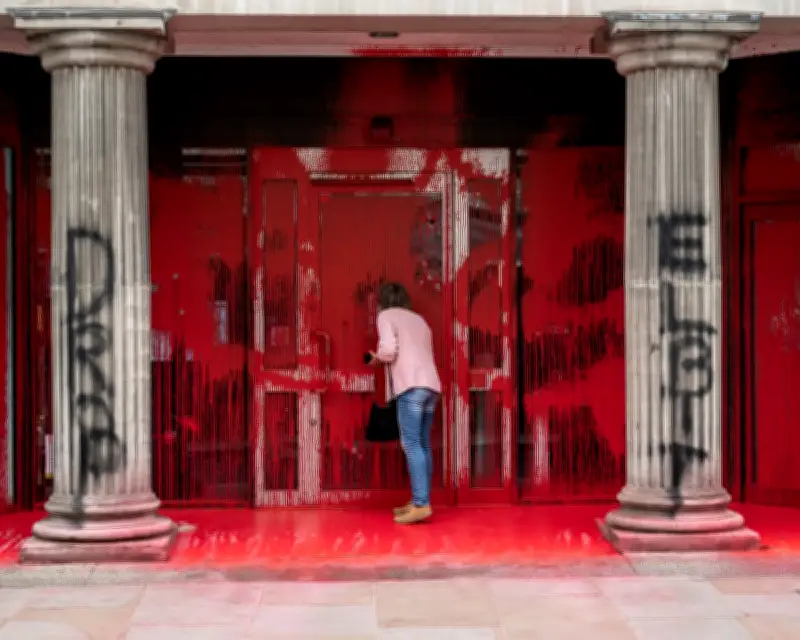
Five Palestine Action activists face being sentenced as terrorists for breaking windows and throwing red paint at a Barclays branch in Burnley, Lancashire. Brendon O’Hagan, 28; Amanda Kelly, 31; Hmeera Atiqnisar, 31; Mohammed Malik, 28; and Alma Yaniv, 70, were found guilty of causing £212,000 damage during a direct action protest in August 2024. They targeted the bank because it held shares in the Israeli weapons firm Elbit Systems.
Judge Considers Terrorist Connection
After last month’s verdicts, Judge Philip Parry told the prosecution and defence he intended to consider a “terrorist connection” to the offending, despite neither the jury nor the defendants having previously been informed of the possibility. This follows a case where four other Palestine Action activists were convicted of property damage during a raid on Elbit’s Filton factory near Bristol, with Mr Justice Johnson deeming their offending to have a “terrorist connection” post-conviction.
Defendants and Critics React
Malik said: “The judge and the CPS are now seeking to sentence us as terrorists for red paint and a few splintered windows. This goes far beyond the charges before the court and raises serious concerns about the increasing use of counter-terrorism legislation to persecute political dissent.” Palestine Action co-founder Huda Ammori called it an example of “the floodgates flowing” from Johnson’s decision.

The bank protest took place before Palestine Action was banned as a terrorist group and was not assessed by the home secretary nor officials to be a terrorism incident. Responding to Parry, the Crown Prosecution Service argued that the five should be sentenced as terrorists, despite not having raised the possibility before or during the trial. The Guardian understands the CPS argues the terrorist connection came from admissions made by the defendants at trial, including their affiliation to Palestine Action and that the protest was part of a wider campaign against Barclays.
Wider Criticism and Comparisons
Akiko Hart, director of human rights organisation Liberty, said the case further highlights “the deep flaws in the UK’s counter-terror laws which capture activity most people would never consider terrorism”. Labour MP John McDonnell said: “Trying direct-action protesters under criminal law but then sentencing them under terrorist legislation cannot be seen in any way as fair or just. It is a practice that seems to be specifically targeted to silence the voices of people speaking out against the genocide in Gaza.”
Similar offending by climate activists has not been deemed to have a terrorist connection. For instance, seven Extinction Rebellion protesters received suspended sentences for causing over £100,000 damage by breaking windows at Barclays’ London headquarters in 2023.
Sentencing Implications and Barclays' Share Sale
In the Filton case, activists received lengthy custodial sentences and will be subject to 15 years of terrorist notification requirements on release, including informing police of any new device, relationship, bank account or address. A terrorist sentencing also means defendants serve at least two-thirds of their tariff in prison, and to obtain parole they must rescind their political views. It was reported in October 2024 that Barclays had sold all its Elbit shares. The bank had previously said it held them only in relation to client driven transactions. Sentencing in the Burnley case is scheduled for 4 September. The CPS and judiciary declined to comment.