
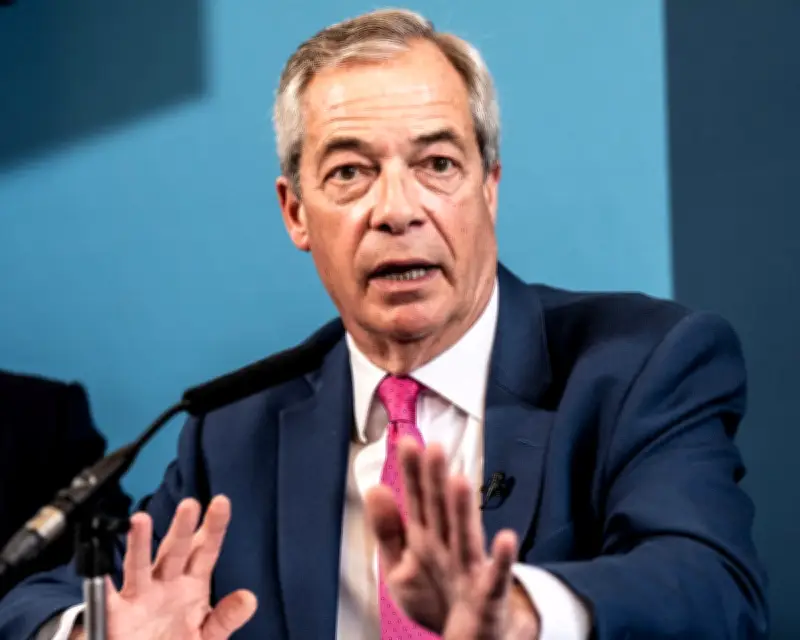
UK unions have strongly rejected Nigel Farage's Reform party, accusing it of 'cosplaying' workers' rights while promoting policies that undermine labor protections. The criticism comes as Farage seeks to position his party as a champion of working-class interests ahead of the next general election.
Union Leaders Speak Out
Several prominent union leaders have condemned Reform's approach, labeling it as superficial and disingenuous. In a joint statement, the Trades Union Congress (TUC) described the party's stance as 'a dangerous masquerade' that threatens hard-won workers' rights. 'Nigel Farage and his party are cosplaying as defenders of workers while pushing an agenda that would weaken unions, cut wages, and erode employment protections,' said a TUC spokesperson.
Reform's Policy Platform
Reform has proposed measures such as reducing the power of trade unions, lowering taxes on businesses, and deregulating labor markets. These policies, unions argue, are at odds with the party's claims of supporting workers. 'You cannot claim to stand up for working people while simultaneously advocating for policies that would make it easier to fire them and harder for them to organize,' added the TUC spokesperson.
Farage's Response
Nigel Farage has dismissed the criticism, asserting that Reform is the only party truly representing the interests of ordinary Britons. 'The unions are out of touch and defending a broken system that has failed workers for decades,' Farage said in a statement. 'Reform will bring real change by freeing businesses from red tape and giving workers more choice.'
Political Reactions
Other political parties have weighed in on the controversy. Labour accused Reform of 'masking its anti-worker agenda with empty rhetoric,' while the Conservatives criticized unions for 'resisting necessary reforms.' The Liberal Democrats called for a 'honest debate' about workers' rights and economic policy.
Public Opinion
Recent polls indicate a mixed public response. While some voters are attracted to Reform's message of economic freedom, others remain skeptical of the party's commitment to labor standards. The debate is expected to intensify as the election approaches.
In conclusion, the union backlash highlights the deep divisions over workers' rights in UK politics, with Reform's attempts to appeal to working-class voters facing significant resistance from organized labor.




