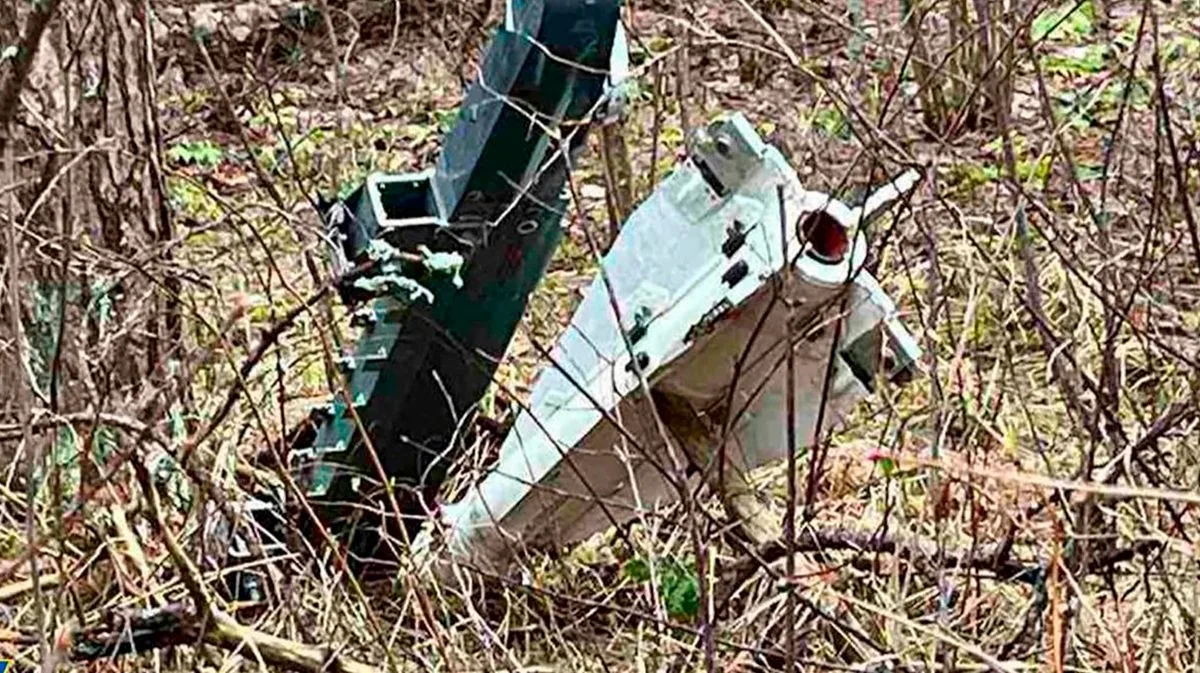
Ukrainian authorities have reported detecting dangerous levels of radiation on debris from a Russian missile, which they claim contains components of depleted uranium warheads. The debris, from an R-60 air-to-air missile used in an attack on Chernihiv Oblast last month, was found in the village of Kamka on April 7.
According to the Security Service of Ukraine (SBU), a gamma radiation level of 12 microsieverts per hour was recorded near the debris, significantly exceeding natural background radiation and posing a health risk. The SBU stated that the missile's combat part included depleted uranium warheads identified as Uran-235 and Uran-238.
The R-60 missile, an infrared-homing heat-seeking weapon, was attached to a modified Shahed-136 drone. Ukraine has set up a no-go zone around the site and launched a war crimes investigation into the finding. The SBU urged citizens to be cautious when encountering drone or missile debris, as damaged or burned ammunition can release radioactive material.

These developments come as Russia and Belarus began a three-day series of nuclear weapons drills in Belarus, involving over 64,000 personnel and 7,800 units of equipment. Belarusian residents have been banned from entering forests near the borders with Lithuania, Poland, and Ukraine during the exercises.