Around the world, many were shocked by a third assassination attempt on Donald Trump, at the White House Correspondents' Dinner. For those of us within the United States, however, what stands out is not the violence itself, but how quickly the country is moving on.
Where I work, for the Los Angeles city council, the atmosphere is one of fatigue rather than alarm. Political violence no longer feels like an interruption to American life. Increasingly, it feels like part of its background. Trump himself has brushed it off, saying he “wasn’t worried” by the failed attack, adding simply: “We live in a crazy world.”
It was a response that captured something of the national mood – but it also showed how quickly events that once would have united Americans in concern now pass without a shared moment of reckoning.

The Symbolic Importance of the White House Correspondents' Dinner
The White House Correspondents' Dinner matters symbolically in ways that can be difficult for non-Americans to appreciate. It is one of the few remaining civic rituals where power and accountability still meet face to face: presidents, journalists, critics and supporters sharing the same room. When violence reaches even the perimeter of that setting, it signals strain not only on security but on democratic culture itself.
There was a time when threats against elected leaders produced a shared reaction across society. Today, responses fragment almost instantly along partisan lines. Some Americans interpret incidents primarily through loyalty to, or opposition to, whomever is targeted. Others assume political theatre. Too many reach for conspiracy theories. Many simply shrug.
Democracies do not fail only when institutions weaken. They also falter when citizens lose agreement about what should alarm them.
Changing Profile of Political Attackers
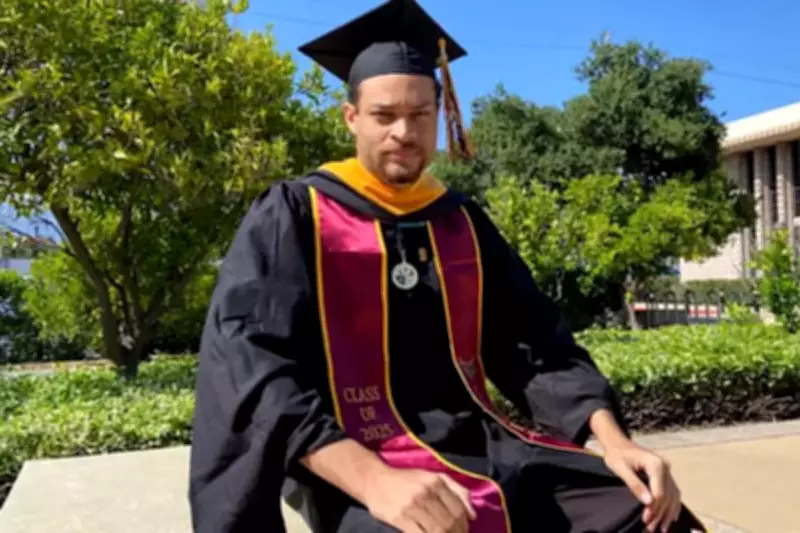
Another pattern is becoming harder to ignore: the profile of the political attacker is changing. Increasingly, those responsible are not socially isolated extremists in the traditional sense. They are young men shaped by school-shooter drills, online ideological ecosystems and a steady exposure to national crisis. Several recent attackers have left manifestos or carefully framed political statements. Cole Tomas Allen, the 31-year-old computer engineer from California accused of opening fire at the hotel dinner, reportedly left behind a note accusing senior administration figures of misconduct, and calling himself a “Friendly Federal Assassin”.
Violence is no longer only an act of rage. In some cases, it is becoming an attempt to communicate.
For observers in the United Kingdom, where firearms are tightly regulated and political shootings rare, this can be difficult to interpret. But in the US, the cumulative effect is unmistakable. A generation of Americans that grew up rehearsing what to do if someone opened fire in their classroom now lives in a country where even formal democratic gatherings are no longer assumed to be safe.
Political violence in the United States is becoming as performative as populism itself – designed to be seen.
Context of Low Approval Ratings and Religious Tensions
Context also matters. President Trump's approval ratings are currently low, which helps explain the muted national response. Historically, threats against the presidency produced a rally-around-the-flag effect. Today, that instinct is weaker. The office itself no longer commands the same automatic solidarity.
Recent tensions involving religion – including an ongoing feud with Pope Leo, and controversy over an AI-generated image in which the president appeared to liken himself to Jesus – have made it harder for him to project the kind of moral authority Americans have traditionally looked to the presidency for in moments of national stress. That is one reason the state visit by King Charles – who, as Supreme Governor of the Church of England, embodies both constitutional and spiritual leadership – now carries particular symbolic weight.
None of this means American democracy is about to collapse. The danger is subtler than that. Political violence rarely transforms a country overnight. More often, it becomes normal slowly – until one day it is simply expected.

What worries many of us in public life is not that Saturday night's shooting happened. It is that so many Americans seemed unsurprised and unbothered that it did.
Paulina Velasco is chief of staff for the Los Angeles City Council, a journalist, and a Democratic political strategist.