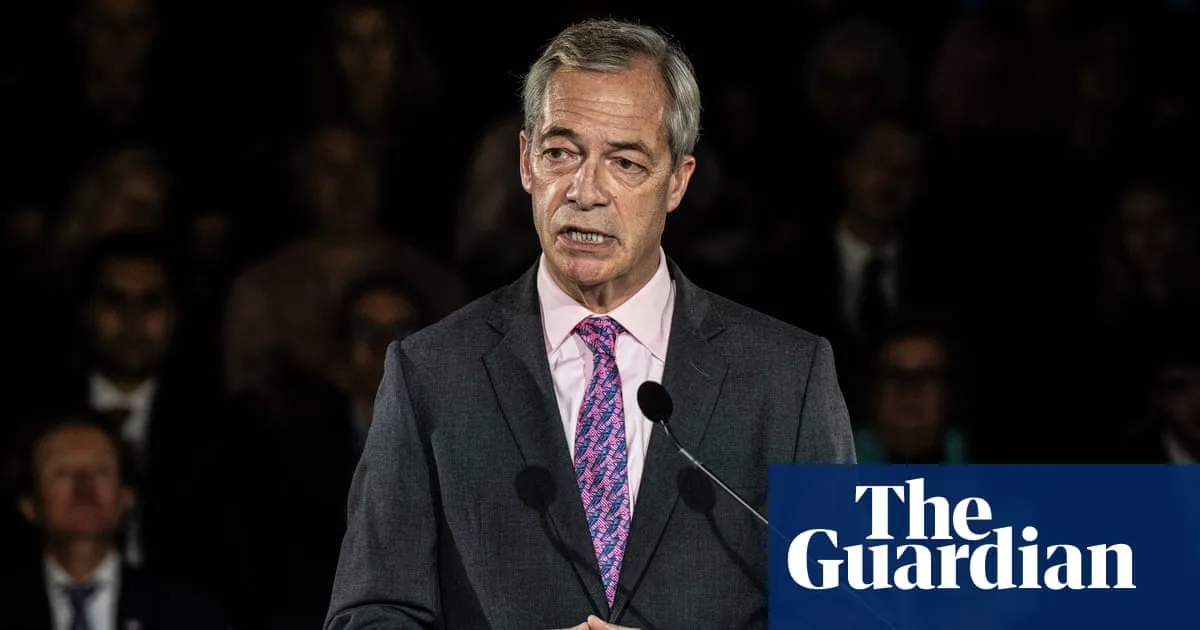
Reform UK risks breaching data protection laws with its competition to win free energy bills for a year, lawyers and data experts have warned. Nigel Farage announced the lottery on Tuesday as a way to advertise his latest policy to cut energy bills, encouraging British people to sign up via a website for a chance to have their energy bills paid for a year, as well as those of their entire street.
To enter the competition, entrants must disclose not only their name, email and telephone number, but also how they voted at the last election and how they intend to vote at the next one – something experts warned could be unlawful. Mariano delli Santi, legal and policy officer at Open Rights Group, said: “Reform are asking the public to hand over sensitive data about their voting habits without being transparent about how it will be used.”
Delli Santi said this appeared to be a clear breach of transparency obligations under UK data protection law. He added: “Political opinions are among the most sensitive types of personal data, and voters must be able to engage in campaigns without feeling pressured to trade their privacy for the chance of material benefit. The Information Commissioner’s Office [ICO] must investigate and take a stand against political parties exploiting data in this way.”

Eleonor Duhs, a privacy barrister, said: “You have to be clear, open and honest about how and why you are collecting data and you shouldn’t be collecting more data than you need. If you say your purpose is a raffle, why are they asking for people’s voting intention? That seems to go beyond the purpose of the raffle.” A second lawyer, who did not want to be named, added that the form asks for data beyond what is necessary for the prize draw.
Reform UK defended the contest. A spokesperson said: “We are entirely confident that this competition is legal. Reform UK is the only party serious about cutting energy bills.” The party also said the raffle complied with electoral laws, which forbid bribing voters to vote a certain way at an election. The ICO said it is in regular contact with political parties about data use and encouraged people with concerns to complain.