Freshly disclosed correspondence has exposed that Prince Andrew actively promoted the interests of financier Jeffrey Epstein during an official state visit to the United Arab Emirates alongside the late Queen Elizabeth II. The emails, released by the US Department of Justice, provide startling evidence of the Duke's conduct while serving as the UK's Special Representative for International Trade and Investment.
State Visit Communications
The former Duke of York messaged Epstein in November 2010 following a meeting with Sheikh Abdullah bin Zayed Al Nahyan, the UAE's Foreign Minister. Andrew wrote enthusiastically: 'Hey! You are in big time. He thinks you are great and would like to introduce you to Sheikh Mohammed [sic], the Crown Prince.' He signed the email simply 'A' from an address labelled 'The Duke', promising to 'discuss further and report back.'
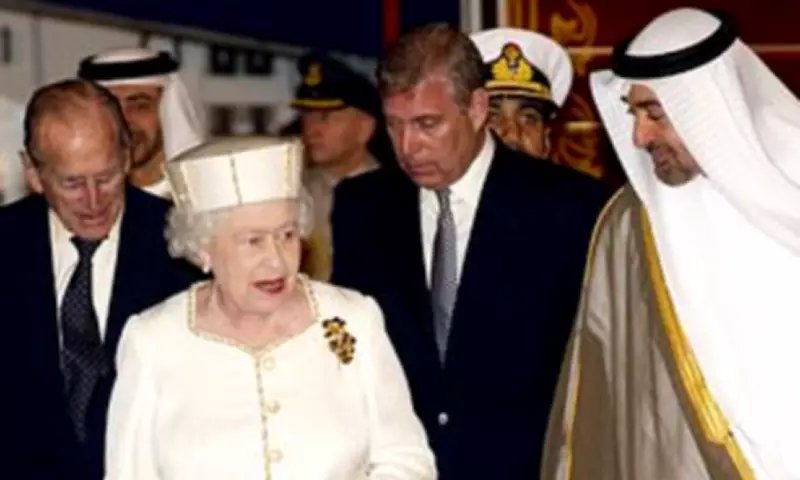
This communication occurred precisely while Andrew was participating in a high-profile state visit to the UAE with the late Queen, Prince Philip, and then-Foreign Secretary William Hague. The timing underscores how the royal utilized official diplomatic engagements to advance his personal connections.

Epstein's Response and Background
Later that same day, Epstein replied to Andrew's message, proposing they all vacation together. He wrote: 'Ask Abdullah for a date when we can all go on vacation. I am also willing to return to Abu Dhabi.' These exchanges occurred shortly after Epstein's release from prison, where he had served 13 months for soliciting prostitution from a minor.
The files suggest Epstein had met Sheikh Abdullah himself just before Andrew's state visit. In October 2010, Epstein emailed Andrew with talking points to persuade the Sheikh, listing: '1 trust, 2 financial expertise, 3 funder of extreme science (way out there), 4 fun.'
Broader Implications and Criticism
These revelations represent further proof that Andrew exploited state-funded trips to endorse his controversial associate. Graham Smith of the campaign group Republic commented: 'This revelation adds to the wider picture of Andrew having no judgment and no moral compass. It also raises more questions about his relationship with Middle Eastern rulers and dictators.'
Smith added: 'Andrew was under great public scrutiny at the time, but the fact is, he has never concerned himself with criticism from other people. He just brushed it off and thought, I can do what I want.'
Controversial Gifts and Relationships
During the 2010 visit, Andrew's official capacity was to greet his mother upon arrival. However, he faced significant criticism for accepting a £1 million golfing and holiday villa in Abu Dhabi from the UAE's royal family. This four-bedroom townhouse, described by sources as a 'heavily gilded mini-palace', was available for his use whenever desired, leading to accusations of 'a clear conflict of interest.'
Andrew defended the relationship at the time, stating: 'There is a long-standing relationship between the UAE and the United Kingdom which reaches back over 40 years. There's been an increased level of concern for this particular region in terms of investment, in terms of business opportunities.'
The Duke, nicknamed 'Air Miles Andy' for his frequent overseas travels, visited the UAE regularly in his trade role. He and Crown Prince Mohammed bin Zayed Al Nahyan (now President of the UAE) have maintained a friendship since their school days. The Crown Prince's family ranks among the world's wealthiest, with assets believed to exceed £1 trillion.
Aftermath and Current Status
Prince Andrew was compelled to relinquish his royal duties in 2019 and was stripped of his titles and honours last year due to his association with Epstein, the convicted paedophile and child sex trafficker. It should be noted that there is no suggestion of any wrongdoing by Sheikh Mohamed or Sheikh Abdullah in these matters.
Andrew's representative did not respond to requests for comment regarding these latest disclosures. The emails collectively paint a troubling portrait of how official diplomatic functions were potentially leveraged for personal advocacy, casting further shadows over the Duke's tenure as a trade envoy and his relationships with powerful international figures.