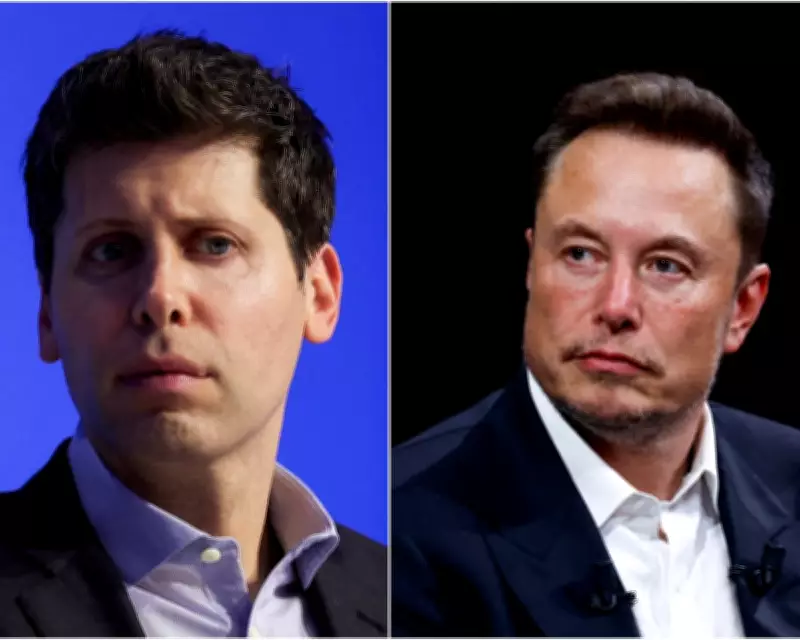
In theory, the courtroom battle between Elon Musk and Sam Altman could have addressed pivotal questions about the future of artificial intelligence. However, the reality of the trial, which began on Monday, is dominated by personal grievances and financial motivations rather than any noble pursuit of AI safety.
Musk's Allegations and OpenAI's Defense
Musk, a co-founder of OpenAI, is suing the company and its CEO, Sam Altman, for breach of contract. He claims that Altman violated the founding agreement by restructuring OpenAI into a for-profit enterprise. In response, Altman and OpenAI argue that Musk, who left the company in 2018 after internal disputes and subsequently launched his own AI venture, xAI, is simply a sore loser. Musk seeks remedies including the removal of Altman and president Greg Brockman, as well as over $134 billion in damages, which he says would be redirected to OpenAI's non-profit arm. OpenAI has denied all allegations.
A Missed Opportunity for AI Safety
While the case pits the world's richest man against the creator of the most famous chatbot, it could have raised critical issues: Should AI be oriented toward benefiting humanity or maximizing profit? What does responsible AI look like? What happened to OpenAI's original mission? Unfortunately, the trial has devolved into a spectacle of personal pettiness, with Musk's history undermining his credibility as an AI safety advocate. His company's chatbot, Grok, was involved in a disturbing incident where users generated non-consensual images of women and minors. Additionally, xAI has faced accusations of environmental negligence. If Musk wins, he would cripple a rival AI company, while an Altman victory would allow OpenAI to continue its for-profit trajectory. Neither outcome seems promising for an AI industry aligned with humanity's collective benefit.

Dirty Laundry and Public Interest
The public stands to gain little insight into AI from this trial. Instead, discovery has revealed embarrassing diary entries, questions about Musk's ketamine use, and his correspondence with Mark Zuckerberg. Even the mother of four of Musk's children, who serves on OpenAI's board, is expected to testify. While the feud may offer some entertainment, it does little to advance understanding of AI or send a meaningful message to the industry.
AI Investment and Job Cuts
Meanwhile, major tech companies like Meta and Microsoft are investing heavily in AI infrastructure while reducing their workforces. Meta announced layoffs affecting about 10% of its staff, while Microsoft offered voluntary retirement to 7% of its US workforce. Both companies are spending billions on AI, with Meta's CEO Mark Zuckerberg citing a "major AI acceleration" and Microsoft forecasting $100 billion in AI infrastructure spending. Analysts suggest that AI is increasingly handling employee workloads, leading to concerns that tokens—the unit of measurement for AI usage—may soon surpass employee salaries in cost. This trend raises questions about the future of work and the balance between AI investment and human employment.