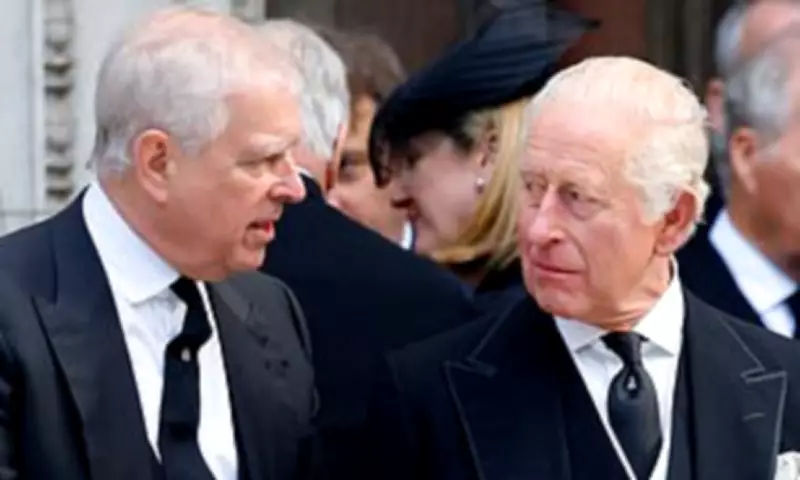
King Charles May Never Speak to Prince Andrew Again Over Epstein Scandal
Royal sources have disclosed that King Charles may never speak to his brother Prince Andrew again due to Andrew's involvement in the Jeffrey Epstein sex scandal. This revelation comes amid speculation about a potential thaw in royal family attitudes towards the disgraced duke.
Recent Visits Fuel Speculation
Earlier this week, news emerged that Prince Edward had secretly visited Andrew during his exile on the Sandringham estate. This was followed by reports that Princess Anne had also reached out to Andrew to express concern about his wellbeing following his recent arrest. These developments prompted speculation that King Charles might consider a similar gesture of reconciliation.
However, royal insiders have now moved to dampen such expectations, insisting there is "no chance whatsoever" that the King will follow his siblings' lead. The silence between Charles, 77, and his younger brother has been profound since long before Andrew's arrest in February on suspicion of misconduct in public office related to his connections to convicted paedophile financier Jeffrey Epstein.

The King's Unyielding Position
A source close to the royal family told the Daily Mail: "The hard reality is that the King may never speak to Andrew again." The source elaborated: "It would take an enormous shift in the King's thinking for them even to be in the same room."
The insider explained that while Edward's visit and Anne's outreach might suggest Charles could be contemplating some form of rapprochement, this interpretation is "completely wrong." The brothers were never particularly close, with tensions between them predating the Epstein scandal by many years.
"While in the context of the Epstein case the King feels that he was lied to and that's not easy to forgive," the source added. "And Charles is not just a brother in this situation but also the King - and in that capacity he has to protect the monarchy above all other considerations, even personal ones."
Constitutional and Legal Nightmares
This distinction between blood and duty lies at the very heart of the crisis. Those familiar with the inner workings of the Royal Household indicate that Charles made this calculation long ago. The situation extends beyond past scandals and reputational damage to encompass potentially catastrophic legal peril.
"With Andrew being arrested and facing possible criminal charges," another source explained, "the risks are enormous." The concern is far from theoretical. In the current climate surrounding Andrew, any new development or revived line of inquiry could quickly become entangled in legal proceedings.
"One must remember," the source continued, "If Andrew is charged and there were conversations with the King, his lawyers could say they are important and, as a result, try to call Charles to give evidence — which His Majesty cannot do, as the case is brought in his name, Rex v Mountbatten-Windsor. It would collapse."
This presents a chilling prospect: the King—constitutionally unable to appear in court—being drawn, even indirectly, into a criminal case involving his own brother. With widespread public disapproval towards Andrew, any perception that the King had helped him avoid prosecution would likely cause significant uproar.
Historical Precedents and Royal Brand Protection
Palace veterans recall the extraordinary intervention of the late Queen during the 2002 trial of former butler Paul Burrell, who was accused of stealing items from Princess Diana's estate. When it emerged that Queen Elizabeth had been told by Burrell he was holding items for safekeeping, the trial abruptly collapsed.
The implication is clear: even seemingly innocuous interactions between monarch and subject can have profound legal consequences. Charles, mindful of history, appears determined not to repeat such scenarios. Consequently, the silence continues—no private meetings, no conversations that could later be scrutinized in a courtroom.
This amounts to a form of quarantine, imposed not against a virus but against legal jeopardy. There is also the risk of tarnishing the royal brand, which Charles has been determined to avoid at all costs.

"The unequivocal advice he has been given in regard to Andrew is that he is damaging the monarchy," the source added, "so the King has to completely disassociate himself both publicly and privately from him."
Decades of Strained Relations
Those close to the situation suggest this decision is rooted not only in present danger but in decades of strained relations between the two brothers, who were always distant growing up with more than eleven years separating them. The toxic mix of disdain and resentment stretches back years—even decades—to when Andrew was widely regarded as the late Queen's favourite, while Charles bore the burden of being heir apparent.
There were differences in temperament, outlook, and—crucially—judgment. Charles, cautious and often introspective, was wary of Andrew's more cavalier approach to public life. He reportedly harboured serious reservations about his brother's role as a trade envoy, fearing the position exposed both Andrew and the monarchy to unnecessary risk.
"Charles has always been wary of his brother," says a former courtier. "He didn't want him to be trade envoy in the first place. He could see the potential for reputational damage." That damage has since been done—far more catastrophically than Charles could ever have envisaged.
Family Concerns and Royal Duty
Meanwhile, Andrew reportedly believed he should have been next-in-line to the throne rather than Charles, as his biographer Andrew Lownie has indicated. "He has a long-standing hatred of his brother Charles, who he sees as weak," Lownie said. "[Andrew] detested the attention and adulation Charles received as the future king, feeling he was best suited for the role and superior, in general, to the then Prince of Wales."
The overriding motivation behind Anne and Edward's welfare checks are fears about Andrew's mental state following his isolation and the toll exacted by years of scandal, scrutiny, and exile from public life in his Norfolk retreat.
"Edward and Anne are worried," one insider confided. "They're family, first and foremost. They don't want to see him completely cut off."
Some may view Charles' stance as ruthless; others as a display of the necessary mettle required in his role. For Charles, the Crown comes first. It always has, and when the time comes for his son to ascend to the throne, the King wants to ensure he leaves the institution in the best possible state. If that means sacrificing what little personal relationship he had with Andrew, so be it.
Following the discreet contact from the Duke of Edinburgh in person and the Princess Royal by phone, Charles's silence has been cast into even sharper relief. While Edward and his wife Sophie quietly visited Andrew at Sandringham and Princess Anne made her own overtures, insiders insist this is not the beginning of a thaw—but rather the clearest signal yet that Charles has drawn a definitive line in the sand.