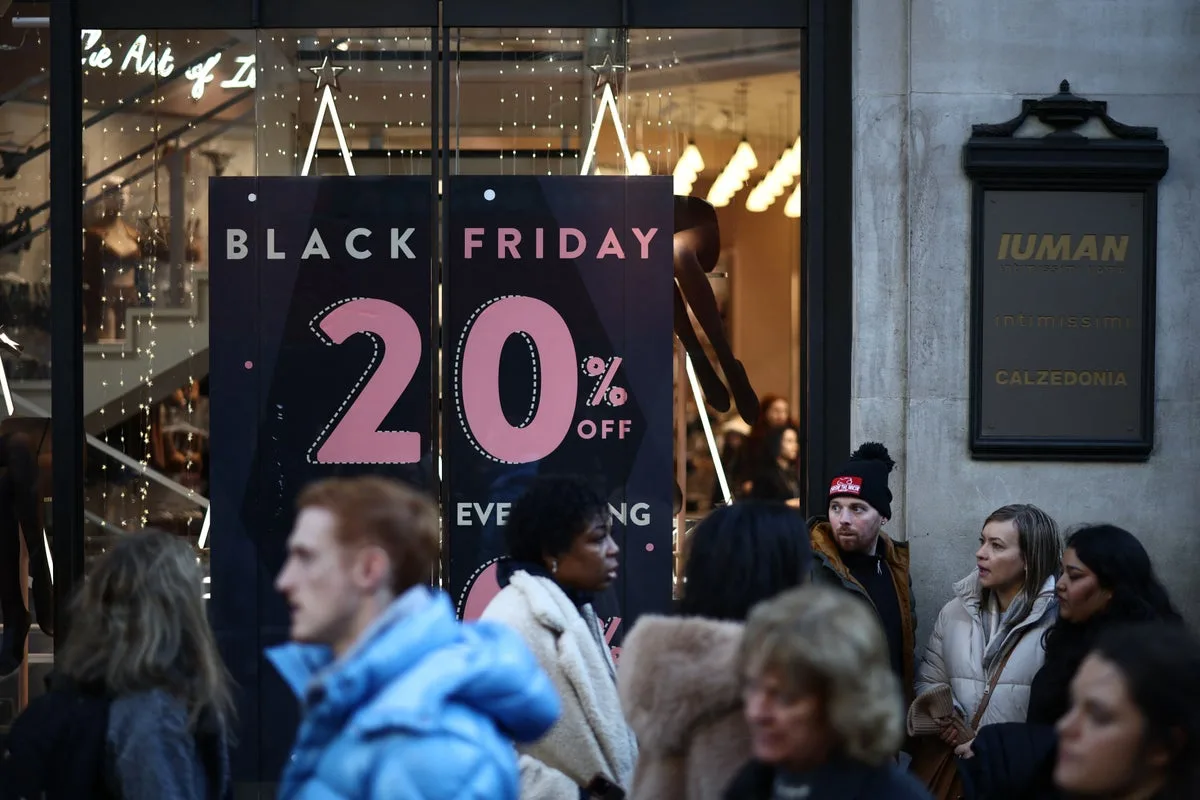
Major high street retailers John Lewis, Boots, and Debenhams have been found to have misled customers with their Black Friday promotions last year, according to a ruling by the Advertising Standards Authority (ASA). The watchdog used AI-powered monitoring to identify the breaches, which involved overstated price reductions and insufficient evidence of genuine savings.
John Lewis faced two complaints regarding advertisements for a MacBook Air and an ASUS laptop. The MacBook Air was offered at £699 with a claimed £150 saving, but the ASA found that the product had only been sold at the higher price of £849 for a single day in July 2025. Similarly, a £450 price drop on an ASUS laptop during the Black Friday event lacked adequate evidence to demonstrate a real saving.
Debenhams was criticised for two ads: one claiming “44 per cent savings” on home products and another featuring “21 per cent savings” on various items, including a hair styling tool. Both were deemed misleading. Boots advertised a Hugo Boss fragrance reduced from £80 to £60, but the ASA discovered it had only been sold at the higher price for 21 days when first launched.

Emily Henwood, operations manager at the ASA, said: “People rightly expect the deals they see around Black Friday to be genuine. These rulings send a clear message to retailers and brands that promotional events aren’t exempt from the rules.” Sue Davies, head of consumer protection policy at Which?, added: “It’s unacceptable that well-known businesses have been reeling in customers with misleading deals.”
In response, a John Lewis spokeswoman apologised for “two errors which weren’t picked up when we lowered our prices to match others”. A Boots spokeswoman described the issue as “an individual case of human error”. A Debenhams spokesman noted that the retailer operates a marketplace model where third-party sellers set prices, but said it had taken steps to reinforce compliance.