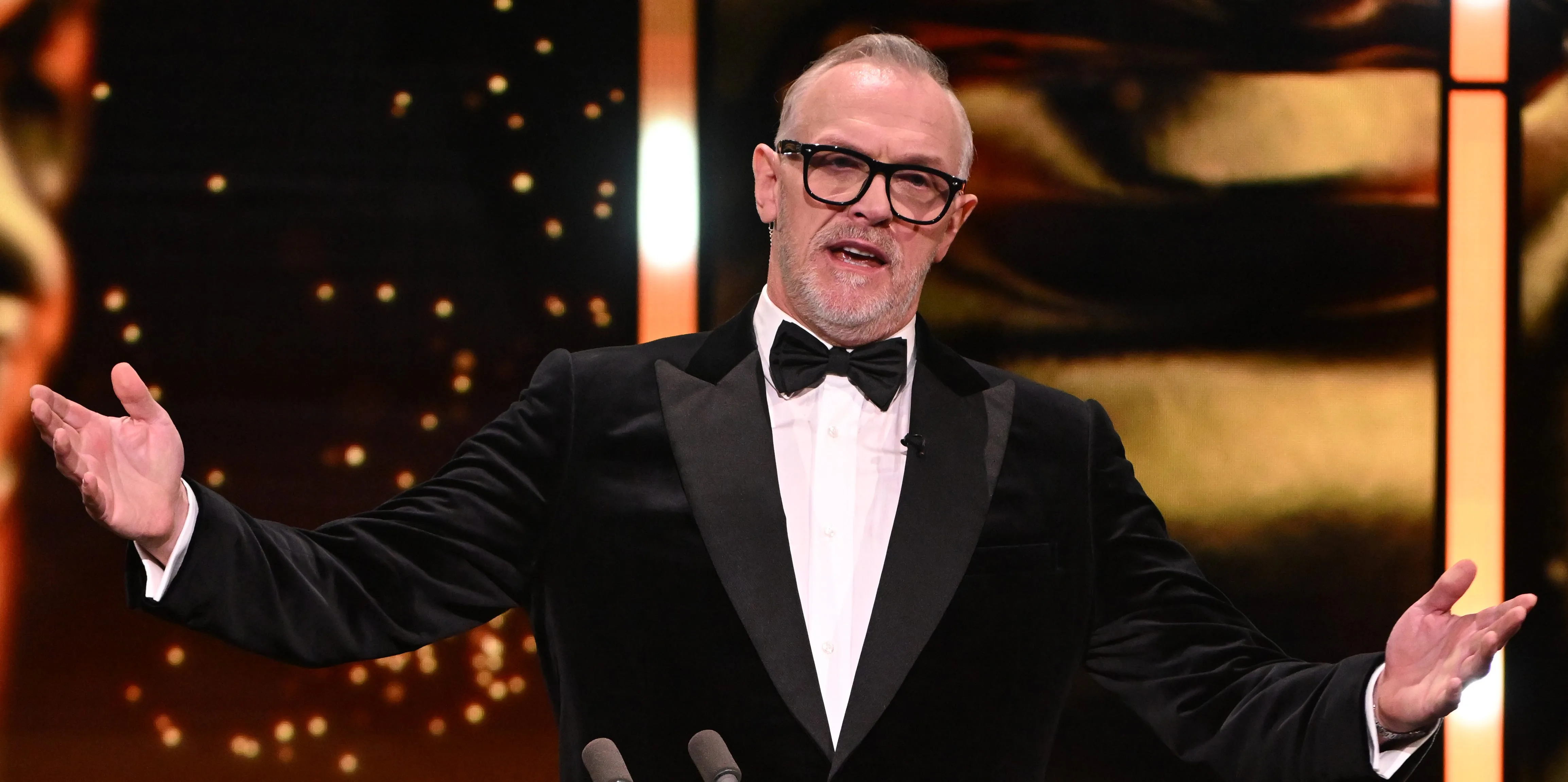
Greg Davies has been widely praised for his turn as presenter at Sunday night's BAFTA TV Awards, with viewers commending him for doing 'a great job'. The 57-year-old Inbetweeners star took to the stage at the Royal Festival Hall to host the star-studded evening, where the great and good of television were in attendance. Last year's show was presented by Alan Cumming, but Davies took over the role to riproaring praise on Sunday night, particularly for his opening skit.
Opening Skit Earns Acclaim
The skit featured a history of television and saw Davies put on a dazzling performance. One viewer wrote: 'Greg Davies commands the #BaftaTV opener like a boss, covering all the bases including a brief history of telly.' Other fans took to X to express their admiration: 'Greg Davies genuinely the best presenter The Baftas have ever had #baftas... obsessed with greg davies hosting the bafta’s... Great job by Greg Davies... I thought Greg Davies did well on the BAFTAs. He didn’t try too hard... Greg Davies has been lauded for his turn as presenter at Sunday night's BAFTA TV Awards, with viewers praising him for doing 'a great job'. Can Greg Davies host every year please #BAFTATVAwards... Greg Davies the BAFTA host we never knew we needed #Baftatv #GregDavies... Honestly having greg davies presenting it amazing!!!! #BAFTATVAwards... Greg Davies commands the #BaftaTV opener like a boss, covering all the bases including a brief history of telly. There's no equivalent to him in other countries' TV awards.'
Adolescence Dominates the Night
Stephen Graham's acclaimed Netflix drama Adolescence dominated the British Academy Television Awards at London's Royal Festival Hall on Sunday. The ceremony, hosted by Greg Davies, saw Stephen, 52, win Best Actor for his portrayal of a father confronting the aftermath of a brutal crime involving his teenage son. It was a landmark moment for Stephen, who had missed out on seven previous nominations for shows including Help, Time, and This Is England '90.
The four-part Netflix show, which received a staggering 11 nominations when they were announced in March, achieved the most ever wins for a series as it also took home Best Supporting Actor, Best Supporting Actress, and Limited Drama. Adolescence, created by actor Stephen and writer Jack Thorne, tells the story of British teenager Jamie Miller (Owen Cooper), who is found guilty of murdering a female classmate after being influenced by the manosphere online. Each episode is filmed in one continuous shot and has been widely praised for addressing topics such as online radicalisation and misogyny.
Historic Wins for Young Stars
Owen Cooper, 16, who made history by becoming the youngest winner of the Best Supporting Actor award at both the Golden Globes and the Emmy Awards, continued his award-winning streak as he took home the BAFTA for Best Supporting Actor. Meanwhile, Christine Tremarco, who played Owen's mother in the show, won Best Supporting Actress in a surprise result, beating co-star Erin Doherty, who previously took home the Golden Globe and Emmy Award. Stephen wiped away tears as Christine took to the stage and said: 'I hold this BAFTA high to Hannah Walters and Stephen Graham, thank you so much.'
Other Winners
Code Of Silence scooped Best Drama, while the Lead Actress BAFTA went to Narges Rashidi for Passenger 951. Amandaland, starring Lucy Punch, won the BAFTA for Scripted Comedy. However, Lucy and her co-star Philippa Dunne missed out on the Actress In A Comedy gong, which went to Katherine Parkinson for her performance in BBC One's Here We Go. Meanwhile, The Celebrity Traitors won Best Reality, days after the BBC announced the celebrity line-up for the second series of the hit spin-off, with comedian Alan Carr being recognised in the public-voted memorable moment category after breaking down in tears during the series.
Documentary Controversy
Elsewhere during the ceremony, the documentary Gaza: Doctors Under Attack won the Current Affairs category after becoming embroiled in controversy surrounding the BBC’s decision not to broadcast the film over impartiality concerns. The documentary was later picked up by Channel 4. Journalist Ramita Navai criticised the BBC while accepting the award. Channel 4 additionally received recognition for its reporting on the Iran conflict, while historian Simon Schama won for his BBC Two documentary The Road to Auschwitz. The factual series category went to Channel 4’s See No Evil, which examined the Church of England abuse scandal surrounding serial abuser John Smyth and contributed to renewed scrutiny surrounding safeguarding failures within the institution.