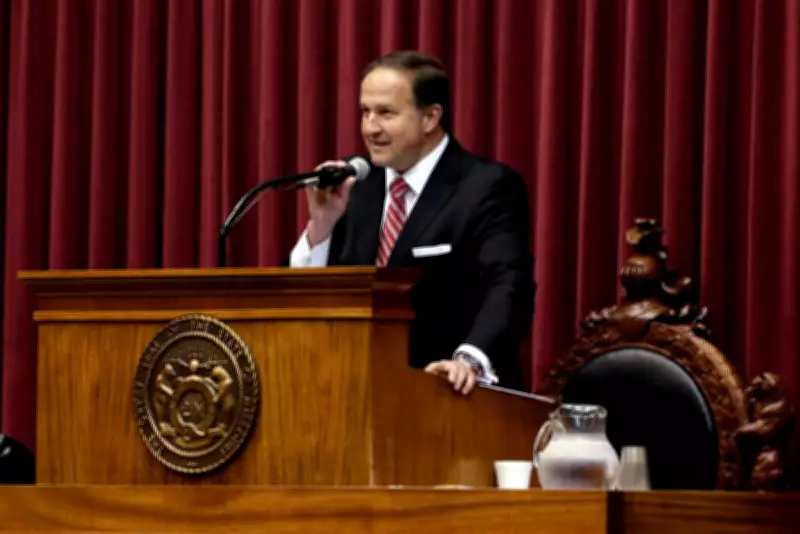
John Diehl, the former Missouri House Speaker, has been sentenced to 21 months in prison after pleading guilty to wire fraud for misusing federal Covid-19 relief funds. The sentencing, delivered on Monday, follows his admission of diverting approximately $380,000 in pandemic loans intended for his law firm to cover personal expenses.
Misuse of Federal Funds
Between 2020 and 2022, Diehl received the funds through a program designed to assist businesses impacted by the coronavirus pandemic. However, instead of using the money for operational costs, he allocated it for personal benefits. These included payments for country club dues, swimming pool maintenance, his home mortgage, and vehicle payments for a Tesla, Audi, and Jeep.
Prosecutors revealed that more than half of the misappropriated funds were directed into his law firm's defined benefit plan, where he was the sole participant. Additionally, Diehl used part of the money to settle a civil lawsuit related to his tenure as House Speaker.

Previous Controversies and Legal Issues
Diehl's legal troubles are not new. He resigned as House Speaker in 2015 after the Kansas City Star reported that he had exchanged sexually suggestive text messages with a college intern at the Capitol. At that time, he publicly acknowledged "making a serious error in judgment by sending the text messages."
In 2023, the Missouri Ethics Commission fined him roughly $47,000 for campaign finance violations, which included allegations that he used nearly $6,800 of campaign funds for personal expenses. This pattern of misconduct underscores a history of ethical breaches.
Sentencing and Court Proceedings
During the sentencing, Diehl requested leniency, arguing that he had already repaid all the misused funds to the Small Business Administration. Despite this, the US attorney's office recommended a prison term of 21 to 27 months, citing the severity of the fraud.
Hal Goldsmith, an assistant US attorney, emphasized in a court filing that Diehl, given his education and public office, "had every privilege and opportunity, and to put it bluntly, he knew better than to engage in the charged fraud scheme." In addition to the prison sentence, the court ordered Diehl to pay a $50,000 fine.
Broader Implications
This case highlights ongoing concerns about the misuse of Covid-19 relief funds and the accountability of public officials. It serves as a stark reminder of the legal consequences for those who exploit emergency financial aid for personal gain, potentially eroding public trust in government programs.