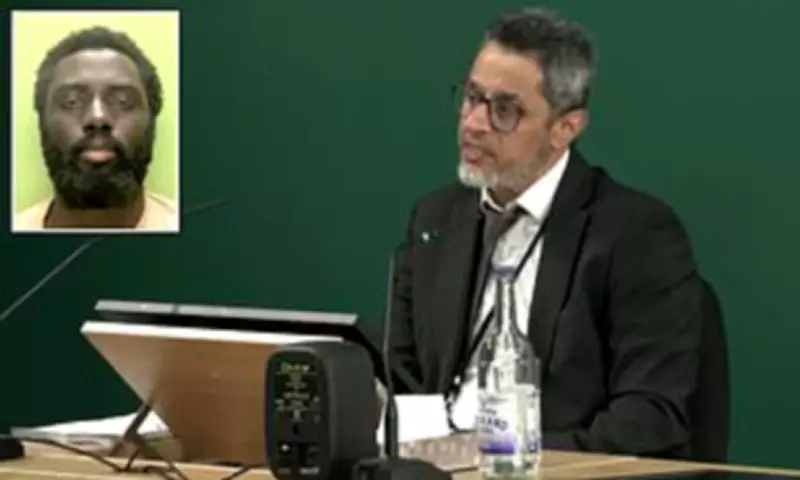
A doctor who warned that the Nottingham stabber 'will end up killing someone' three years before he struck has rowed back from his claim. Dr Faizal Seedat floated prescient concerns about mentally ill Valdo Calocane in 2020 after his patient's violence left a woman with a broken back after she jumped out of a second storey window to escape him.
But in what appeared to be a remarkable U-turn, the consultant psychiatrist said he only made the remarks to 'shock' Calocane. And he said he did not believe paranoid schizophrenic Calocane would actually go on to kill - more that a repeat of his violent behaviour could lead to worse consequences for his victims.
Background of the Attacks
Calocane went on to stab three people to death - students Barney Webber and Grace O'Malley-Kumar, and school caretaker Ian Coates - during a violent rampage in Nottingham in June 2023. The former mechanical engineering student had been sectioned four times under the Mental Health Act in the years prior, and had a history of violence including the month before he struck.

Inquiry into Mental Health Care
An inquiry is looking into how Calocane was free to kill. The probe previously heard how Calocane's behaviour was so troubling that Dr Seedat warned in July 2020 that Calocane 'will end up killing someone', yet he was discharged two weeks later. Dr Seedat is recorded to have stated that Calocane seemed to have no insight or remorse for the broken back incident, and that it would happen again. Calocane stated it would not.
Giving evidence to the inquiry in London, Dr Seedat, who treated the killer at Highbury Hospital in Nottinghamshire, said he made his grave prediction in order to encourage Calocane to change his violent ways. He said: 'I wanted to have a very frank conversation (with Calocane). I painted a worst-case scenario in terms of what could happen if he continued with his behaviours. I reminded him that if you recall during (your) first admission, due to your behaviours, an individual jumped and hurt themselves. If this continues because you are not fully taking on board the implications of your illness on you and your behaviour, next time if you did continue doing this, you could end up killing someone.'
He said he did this 'to shock or highlight the importance of the implications of his behaviour, to help him start to develop some sort of understanding of the gravity of his situation'. He told Rachel Langdale KC, counsel to the inquiry, he did not think he would actually kill someone with the intention to do so. Asked why he said it, Dr Seedat replied: 'If he went and did the same thing again and somebody jumped out of the window and maybe they were on a higher floor, the consequences could be very different. Not that he would kill someone physically by his hands.'
Text Messages and Missed Signs
The inquiry heard Calocane sent a series of text messages in 2020 in which he told his brother he was 'thinking about red rum', which is 'murder' backwards, and about wanting to hurt people 'permanently'. Dr Seedat said he did not understand what 'red rum' meant at the time he saw Calocane's messages, and thought it was a religious reference because of the context of the text conversation.
Legal Outcome
Calocane was handed a hospital order after pleading guilty to manslaughter on the grounds of diminished responsibility. The victims' families remain angry prosecutors did not push for a murder trial and accepted guilty pleas to the lesser charge. The inquiry continues.